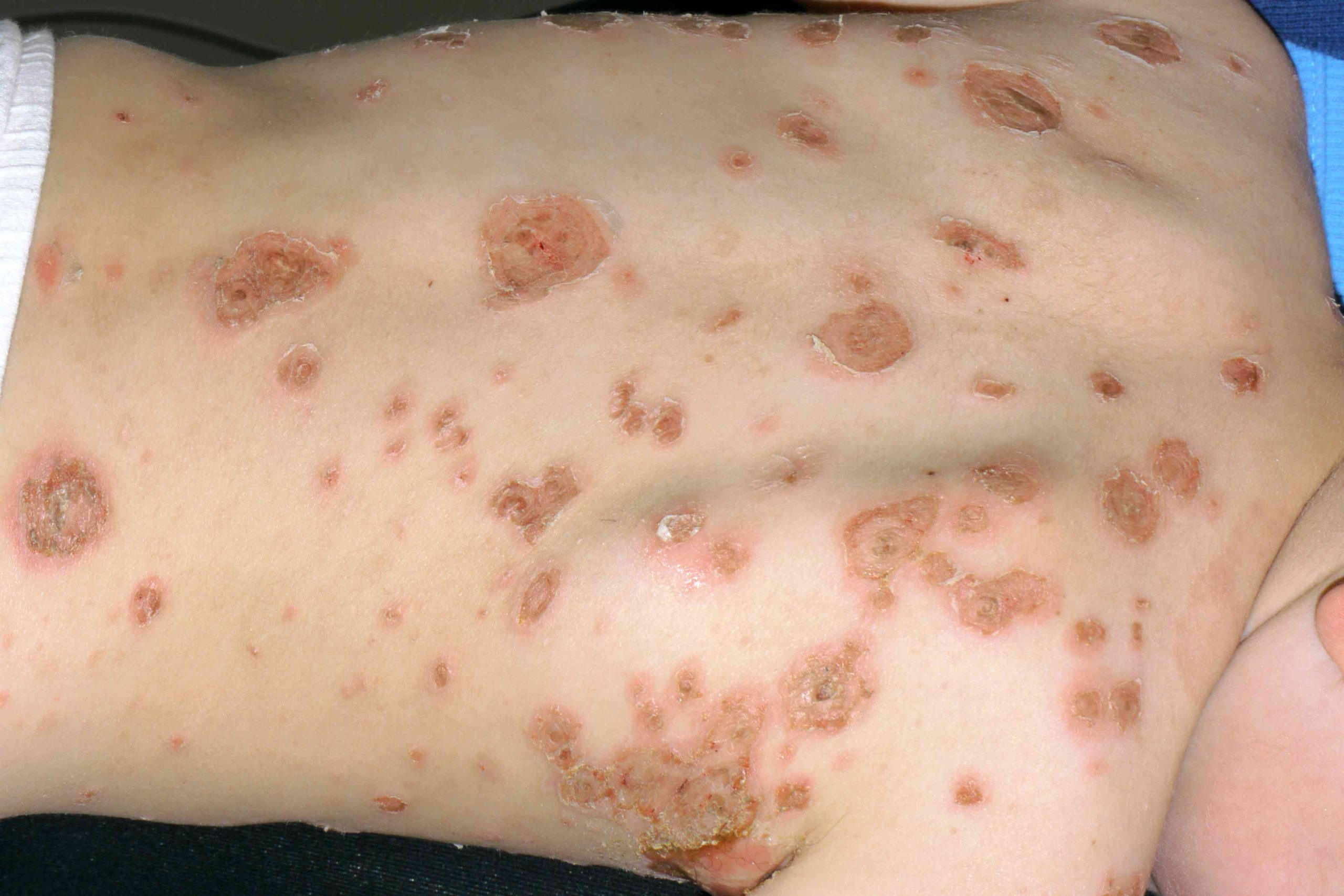
Facts
What is ringworm (tinea)
Ringworm (tinea) is a common infection of the skin and scalp, which is caused by a fungal infection. The fungus that causes tinea lives and grows on the skin.
The term “ringworm” comes from the shape of the infection on the skin, which usually has the shape of a circle or ring.
Ringworm (tinea) infection can be transmitted from person to person, through the following ways:
- Having direct contact with the infected person’s rash
- Sharing clothes with an infected person
- Sharing sports equipment with an infected person
- Sharing towels with an infected person
- Touching anything an infected person has touched
Ringworm (Tinea) can also be transmitted from animal to humans, through direct contact with the open lesion on the animal. Both domestic animals and livestock can be infected with ringworm.
The different types of ringworm (or tinea) are:
- Tinea barbae – the beard in men is infected
- Tinea capitis – the scalp is infected (occurs regularly in children)
- Tinea corporis – various areas on the are infected
- Tinea cruris – “jock itch” where the groin is infected
- Tinea faciei – the face is infected (but not the beard)
- Tinea manus – the hands, especially the palms and spaces between the fingers are infected
- Tinea pedis – or “athlete’s foot” where the area between the toes and /or the heels, are infected
- Tinea unguium – the fingernails and toenails are infected
Facts about ringworm
- Ringworm (tinea) is highly contagious, especially if contact is made with an open sore of an infected person
- People with lowered immunity are more susceptible to disease such as ringworm
Symptoms
Symptoms of ringworm (tinea)
General symptoms of ringworm (tinea)
- Itchy rash in various places on the body
- Jock itch, that affects the folds of the groin area (but may spread to the thighs and buttocks)
- Red and scaly rash
- Rash may be a few mm to a few cm in width
- Rash that may blister and ooze pus
- Round or circular shaped rash patches with red raised edges with a clear centre
Other symptoms of ringworm (tinea)
- Whitening and thickening of the nail, with some crumbly white material under the nails
Ringworm of the scalp (tinea capitis) symptoms
- Round, scaly patches on the scalp where there is some hair loss
- Scaling like dandruff on the scalp
Causes
Causes of ringworm (tinea)
There are a number of causes of ringworm:
- Fungal spores – certain fungal spores that exist in the air and soil can enter the body through broken skin – that is either cut or scratched. Fungal spores also live on the dead layers of skin of people (as well as animals) that can easily enter the body through broken skin (cut or scratch)
- Fungus from animals – there is a fungus that can be transferred from cats or dogs which produces a more rare, but serious ringworm (tinea) infection
- Referred infection – sometimes fungal spores from one area in the body can spread to other areas. If a person has an athlete’s foot infection, they can inadvertently spread it to their groin area (jock itch) if they touch the infected area of the feet with their hand and then infect their groin area if they touch it with their hand (that has the fungus spores). In addition to this, touching someone else with an active ringworm infection can cause the same referred infection to another part of their body
Prevention
Prevention of ringworm (tinea)
Non-preventable risk factors
Ringworm (tinea) may be unpreventable in certain circumstances:
- People with lowered immunity – certain people have a much higher predisposition to catching ringworm (tinea) because they have much lowered immunity and their body is not able to fight off the fungal infection as readily as people with stronger immune system. The people that have more likelihood of a ringworm (tinea) infection are people with with diabetes mellitus and HIV/ AIDS
Preventable risk factors
There are ways to prevent ringworm from occurring:
- Don’t share towels or other personal items – ringworm (tinea) is highly infectious and it is especially common in children, so it is really advisable to teach children not to share any towels or personal items as a precautionary measure, to prevent infection
- Don’t walk barefoot in communal areas – the ringworm (tinea) infection athlete’s foot is extremely easy to catch in warm, moist communal areas (such as swimming pools, showers, changing rooms), so always wear your shoes when walking around in any type of communal areas to prevent infection
- Keep children away from infected people – ringworm (tinea) is a highly infectious condition and occurs very commonly in children, as they tend to play in very close proximity to one another, making infection of other children very likely if there is just one child with ringworm (tinea). Children most commonly get scalp ringworm (tinea capitis), but they are at more risk to all forms of ringworm (tinea) too
- Stay away from infected people – if a person has a known ringworm infection, it is advisable to avoid any physical contact with them, to avoid getting infected with the fungal infection
- Strengthen the immune system – a healthy and strong immune system is necessary to help fight off the fungal infection that causes ringworm (tinea) more quickly and effectively or prevents it from occurring in the first place
Complications
Complications of ringworm (tinea)
Complications of ringworm (tinea) can occur rarely in some situations, especially when the infection is severe or has been left untreated for too long.
The most common complications of ringworm (tinea) are:
- Bacterial skin infection – if the rash is very itchy and severe and is scratched too often, this can open the skin up and make it more easy for a bacterial infection to occur. A bacterial infection will make the skin more red, inflamed and there could be pus, discharge and fever. A bacterial infection is a complication that requires further treatment to prevent it from worsening (usually antibiotics to kill off the bacteria)
- Contact dermatitis – ringworm (tinea) can cause severe inflammation of the skin which can result in contact dermatitis symptoms to occur from the constant scratching and itchiness
- Infection spreading to other areas – one of the most common complications of ringworm (tinea) is the infection spreading to other parts of the body if the infected area is touched and the hands are not washed to prevent the new infection
Diagnosis
When to see a doctor about ringworm (tinea)
People who have any of the symptoms of a ringworm (tinea) infection need to make an appointment to see their doctor who can diagnose this condition (or rule it out) and prescribe appropriate treatment to relieve symptoms.
People who have been diagnosed with ringworm (tinea) need to see their doctor if:
- Their symptoms suddenly get worse and none of the medications or other strategies to alleviate symptoms are effective
- They experience different symptoms to the ones they normally experience
Diagnosis of ringworm (tinea)
Initial diagnosis of ringworm (tinea) is done through the following tests:
- Medical history of symptoms – the doctor will ask a series of questions about your symptoms (especially the duration and severity), your family medical history (if anyone else has similar symptoms), onset of symptoms and location of symptoms
- Physical examination – the doctor will examine various parts of the body (including the legs, feet and hand)s for signs of the infection and also perform a general checkup of lungs and heart (blood pressure), if needed
Further tests
If further testing is required to confirm diagnosis, the following tests can be requested:
- Skin exam – sometimes a little bit of the infected skin is scraped off by the doctor, in order to be examined under a microscope by a lab technician for a definite diagnosis
Treatment
Conventional treatment of ringworm (tinea)
Conventional treatment of ringworm (tinea) includes a combination of a number of strategies:
Medication
- Anti-fungal creams or ointments – these medicated creams and ointments will usually clear up a ringworm infection very quickly
- Anti-fungal tablets – this medication is used mainly to treat ringworm infections of the scalp. The main drug used is Griseofulvin, which is normally prescribed for about ten weeks to clear up the infection
- Corticosteroid cream – this medication is usually prescribed for use on infections that are very inflamed and irritated
- Nail paint – this type of medication treats ringworm infections of the nails
Lifestyle recommendations
The following will also be recommended to prevent ongoing symptoms and prevent infection of other people:
- Change underwear and socks every day
- Don’t scratch or touch the affected areas
- Don’t share towels, clothes or other person items with other people, including family and friends
- Keep the affected areas clean and dry
- Washing bedding and pyjamas frequently (every day if possible)
Alternative
Alternative / complementary treatment of ringworm (tinea)
There are a number of alternative/complementary strategies which may help reduce incidence and severity of symptoms of ringworm (tinea).
Herbs
There are several herbs which have the ability to kill fungal infections:
- Echinacea – the herb echinacea boosts the immune system to help to get rid of the fungal infection more quickly, reduce symptoms and prevent recurrence
- Garlic – the herb / food garlic has potent anti-fungal properties, which may be useful to fight the infection and resolve symptoms
- Tea tree oil – this is is one of the most best and powerful fungicides available from plant sources and many studies show that tea tree oil can help to resolve symptoms and infection very quickly. There are various creams, powders and shampoos available with medicated tea tree formulas for the different types of ringworm infections
Vitamins
A good antioxidant formula will help boost the immune system so that it can work to resolve the infection itself. The antioxidant vitamins are: vitamin A, vitamin C and vitamin E – all these vitamins have potent antioxidant properties that help the immune system fight off the fungal infection.
Minerals
A good antioxidant formula will help boost the immune system so that it can work to resolve the infection itself. The antioxidant minerals are: selenium and zinc – all these minerals have potent antioxidant properties that help the immune system fight off the fungal infection.
Other nutrients
A good antioxidant formula will help boost the immune system so that it can work to resolve the infection itself. The antioxidant other nutrients are: alpha-lipoic acid and glutathione – all these nutrients have potent antioxidant properties that help the immune system fight off the fungal infection.
Dietary modifications
There are no specific dietary modifications for treating ringworm (tinea).
Lifestyle modifications
The following will also be recommended to prevent ongoing symptoms and prevent infection of other people:
- Change underwear and socks every day
- Don’t scratch or touch the affected areas
- Don’t share towels, clothes or other person items with other people, including family and friends
- Keep the affected areas clean and dry
- Washing bedding and pyjamas frequently (every day if possible)
Alternative treatments
There are no specific alternative treatment for treating ringworm (tinea).
Always ensure that you notify your medical practitioner of any supplements that you want to take – it may interfere with other medication or conditions you have. Confirm with your doctor it is safe to take before you try it.
Self care
Living with ringworm (tinea)
Self care strategies
There are a number of strategies which are recommended to help deal with ringworm (tinea):
- Apply a topical cream on the rash – apply a medicated cream (or powder) on the ringworm (tinea) rash every day to help clear up the infection. There are a number of conventional creams that can be used as well as alternative ones, usually made with tea tree oil, which has proven effective anti-fungal properties
- Change bed linen every day – while it is cumbersome to do, it is necessary to change the bed linen every day with clean ones. This will ensure that the fungus has no chance to grow further. Always wash the bed linen in hot water to kill off the fungus and dry in direct sunshine
- Change socks and underwear daily – people with athlete’s foot and jock itch especially need to ensure they change their socks and underwear daily, to stop the fungus from growing further
- Keep skin dry – always dry off your skin if it becomes wet and after a shower or swimming, especially the areas which tend to stay more moist (under the armpits, the genitals, buttocks, inner thighs, between the toes) to provide the least hospitable environment for the fungus
- Use your own towel and personal items – don’t share any of your personal items (brush, clothes and towels) with anyone else, as you could easily spread the infection to other people
- Wear clean night clothes each nigh – it is also necessary to wear cleanly washed night clothes every day in order to prevent the fungus from growing further. Always wash the night clothes in hot water to kill off the fungus and dry in direct sunshine
- Wear natural fibres – ensure that your socks, pantyhose and under garments are made from natural fibres (cotton, linen, flax, hemp, wool), which allow the skin to breathe. Natural fibres allow air to circulate around and do not provide a moist, warm environment for the fungus to grow
Caring for someone with ringworm (tinea)
Partner
There are a number of strategies that can be used if you have a partner with ringworm (tinea):
- Don’t share towels or other personal items – don’t share any of your personal items (brush, clothes and towels) with your partner, as they could easily spread the infection to you
- Don’t touch their rash – if your partner has an active ringworm (tinea) rash, it means they are highly contagious and if you touch it, you could become infected yourself, so keep your distance from their rash
- Use separate showers or wear thongs – if your partner has ringworm (tinea), especially if they have athlete’s foot, use a separate shower to avoid infection. If you do not have two showers available, use thongs (or flip-flops) on your feet to avoid infection
Friends
There are a number of strategies that can be used if you have a friend with ringworm (tinea):
- Don’t share towels or other personal items – don’t share any of your personal items (brush, clothes and towels) with your friend, as they could easily spread the infection to you
- Don’t touch their rash – if your friend has an active ringworm (tinea) rash, it means they are highly contagious and if you touch it, you could become infected yourself, so keep your distance from their rash
Parents
There are a number of strategies that can be used if you have a child with ringworm (tinea):
- Don’t share towels or other personal items – don’t share any of your personal items (brush, clothes and towels) with your child, as they could easily spread the infection to you. Teach your child to ensure they do not share their personal items with anyone else at school too
- Don’t touch their rash – if your child has an active ringworm (tinea) rash, it means they are highly contagious and if you touch it, you could become infected yourself, so keep your distance from their rash
- Use separate showers or wear thongs – if your child has ringworm (tinea), especially if they have athlete’s foot, use a separate shower to avoid infection. If you do not have two showers available, use thongs (or flip-flops) on your feet to avoid infection
References
References
- Ajose FO. Some Nigerian plants of dermatologic importance. Int J Dermatol. 2007 Oct;46 Suppl 1:48-55
- Ali S, Graham TA, Forgie SE. The assessment and management of tinea capitis in children. Pediatr Emerg Care. 2007 Sep;23(9):662-5; quiz 666-8
- Arroll B, Oakley A. Preventing long term relapsing tinea unguium with topical anti-fungal cream: a case report. Cases J. 2009 Jan 21;2(1):70
- Bassiri-Jahromi S, Khaksar AA. Outbreak of tinea gladiatorum in wrestlers in tehran (iran). Indian J Dermatol. 2008;53(3):132-6
- Chang CH, Young-Xu Y, Kurth T, Orav JE, Chan AK. The safety of oral antifungal treatments for superficial dermatophytosis and onychomycosis: a meta-analysis. Am J Med. 2007 Sep;120(9):791-8
- Inouye S, Uchida K, Nishiyama Y, Hasumi Y, Yamaguchi H, Abe S. Combined effect of heat, essential oils and salt on fungicidal activity against Trichophyton mentagrophytes in a foot bath. Nippon Ishinkin Gakkai Zasshi. 2007;48(1):27-36
- Larangeira de Almeida H Jr, Dallazem RN, Dossantos LS, Hallal SA. Bilateral tinea nigra in a temperate climate. Dermatol Online J. 2007 Jul 13;13(3):25
- Mittal A, Khar AK, Jain S, Sharma A. Weekly fluconazole in the treatment of tinea capitis. Indian J Dermatol Venereol Leprol 2002;68:247
- Murray M, Pizzorno J. Encyclopedia of Natural Medicine, 2nd Edition. Prima Publishing USA, 2000
- Osieki H. The Physicians Handbook of Clinical Nutrition. BioConcepts Publishing, 6th Edition, 2001
- Xavier MH, Ribeiro LH, Duarte H, Saraça G, Souza AC. Dermatoscopy in the diagnosis of tinea nigra. Dermatol Online J. 2008 Aug 15;14(8):15
Last reviewed and updated: 14 May 2024