


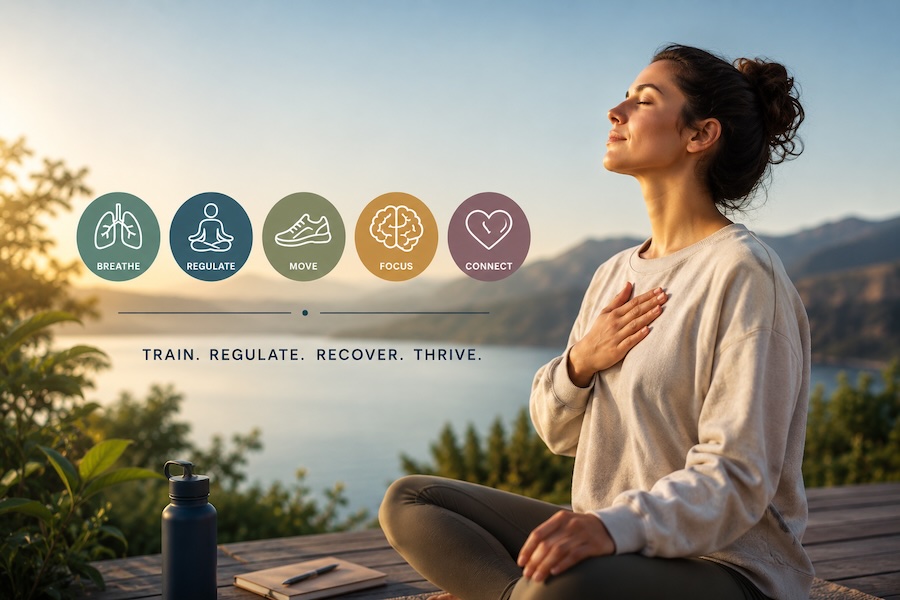
Stress management used to be framed as something we did after we were already overwhelmed: take a break, have a bath, go for a walk, calm down. These strategies can help, but they often arrive too late. By the time stress has built up, the body may already be in a high-alert state, with a racing mind, tense muscles, shallow breathing, disrupted digestion and poor sleep.
Nervous system fitness is a more proactive way to think about stress. Instead of only trying to “relax” after stress takes over, the goal is to train the body to move more smoothly between activation and recovery. It is about improving flexibility, not avoiding stress altogether.
What is nervous system fitness?
Nervous system fitness refers to the body’s ability to respond to pressure, then return to a steadier state once the challenge has passed. A well-regulated nervous system is not calm all the time. It can mobilise energy when needed, focus under pressure and then shift back into rest, digestion, connection and repair.
This matters because stress is not only a feeling. It is a whole-body response involving the brain, autonomic nervous system, hormones, breathing, heart rate, muscle tone, digestion and immune function. Short bursts of stress can be useful. They can help us react quickly, perform well and solve problems. The issue is not stress itself, but stress without enough recovery.
When the body repeatedly stays in high-alert mode, stress can become chronic. This may show up as poor sleep, fatigue, irritability, headaches, muscle tension, digestive symptoms, brain fog, low mood, anxiety or feeling constantly “wired but tired”.
Why the nervous system matters in stress
The autonomic nervous system helps control automatic body functions such as heart rate, breathing, blood pressure and digestion. It includes the sympathetic nervous system, which helps prepare the body for action, and the parasympathetic nervous system, which supports recovery.
When we feel threatened, overloaded or under pressure, the sympathetic system becomes more active. Heart rate can rise, breathing may become faster, muscles tighten and the body becomes more alert. This is useful in short bursts.
The parasympathetic system helps bring the body back down after stress. It supports slower breathing, steadier heart rate, digestion, repair and recovery. The vagus nerve is a major part of this calming and regulating system.
Nervous system fitness is essentially the ability to use both sides well: enough activation to deal with life, enough recovery to avoid staying stuck in survival mode.
The role of heart rate variability
Heart rate variability, often called HRV, is one way researchers measure autonomic nervous system regulation. HRV looks at the tiny variations in time between heartbeats. A healthy heart does not beat like a metronome. It adjusts constantly in response to breathing, movement, emotion, sleep, illness and stress.
Higher HRV is often associated with better physiological flexibility and recovery capacity, while lower HRV may occur with stress, poor sleep, illness, overtraining or burnout. However, HRV is highly individual. It is more useful to watch your own trends over time than to compare your number with someone else’s.
For everyday stress management, the lesson is simple: the body likes rhythm, recovery and adaptability. Breathwork, exercise, sleep, relaxation practices, social connection and time outdoors can all support that flexibility.
How to train your nervous system
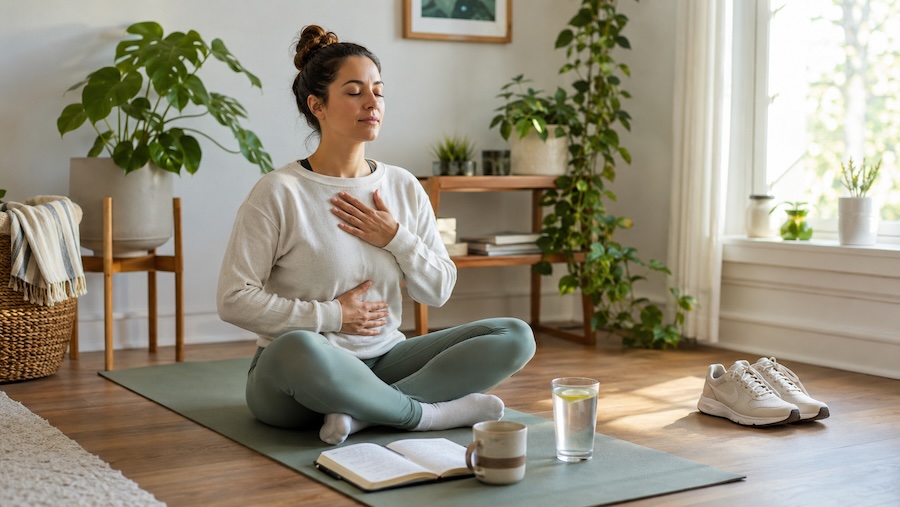
You do not need extreme routines to support nervous system fitness. Small, repeated practices are usually more useful than occasional dramatic resets.
1. Practise slower breathing
Slow breathing is one of the most accessible ways to influence the stress response. When breathing becomes slower and steadier, it can support parasympathetic activity and help the body shift out of high-alert mode.
A simple practice is to breathe in gently through the nose for 4 seconds, then breathe out slowly for 6 seconds. Repeat for 2 to 5 minutes. The longer exhale is often useful because it encourages the body to soften rather than brace.
This should feel comfortable. If breathwork makes you dizzy, anxious or short of breath, stop and return to normal breathing.
2. Build recovery into the day
Many people wait until the end of the day to recover, but the nervous system responds better to regular small pauses. Recovery can be as simple as stepping outside, loosening the jaw, unclenching the shoulders, taking 5 slow breaths or sitting quietly without a screen.
These micro-recoveries tell the body that the day is not one continuous emergency. They help create a pattern of activation followed by recovery, which is the core of nervous system fitness.
3. Move your body regularly
Exercise is not only for muscles, weight management or cardiovascular health. It also helps train the stress response. Regular physical activity can improve mood, sleep, autonomic regulation and stress resilience.
The key is matching movement to your current capacity. A brisk walk, cycling, swimming, strength training, yoga or gentle mobility work can all help. If you are exhausted or burnt out, very intense exercise may not be the best starting point. Begin with low to moderate movement and build gradually.
4. Use the body to signal safety
Stress often lives in the body as much as the mind. Tight shoulders, clenched hands, a locked jaw, shallow breathing and a rigid posture can reinforce the message that you are under threat.
Try relaxing the tongue from the roof of the mouth, dropping the shoulders, softening the belly and slowing the breath. Gentle stretching, warm showers, humming, singing, walking outdoors and progressive muscle relaxation may also help some people feel more settled.
These practices are not magic switches. They are body-based cues that can support regulation when used regularly.
5. Strengthen your sleep rhythm
Sleep is one of the most important foundations of nervous system fitness. Poor sleep can make the body more reactive to stress, while chronic stress can make sleep worse. This creates a cycle where the nervous system has fewer chances to recover.
Support sleep by keeping a consistent bedtime and wake time where possible, reducing bright screens before bed, limiting caffeine late in the day and creating a wind-down routine. The aim is not perfect sleep, but a predictable rhythm that helps the body know when it is safe to rest.
6. Train attention with mindfulness
Mindfulness can help people notice stress earlier, before it becomes overwhelming. This might mean observing breathing, noticing body sensations, naming emotions or pausing before reacting.
The goal is not to empty the mind. It is to create a little more space between a trigger and a response. Over time, this can help reduce automatic stress habits such as catastrophising, overworking, avoidance or emotional reactivity.
Why this is different from “just relax”
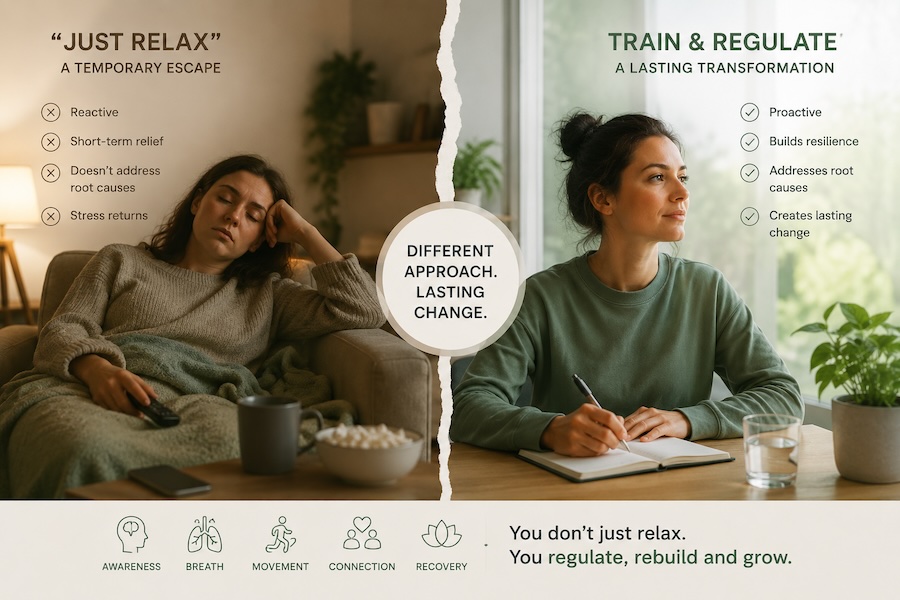
Telling someone to relax can feel dismissive, especially when their body is already in a stress state. Nervous system fitness is different because it recognises that regulation is a skill built through repetition.
It also shifts the focus from blame to training. If your stress response is strong, it does not mean you are weak. It may mean your body has learned to stay alert because of workload, trauma, illness, uncertainty, poor sleep, caregiving, financial pressure or repeated overload.
The way forward is not to shame the body for reacting. It is to teach it, slowly and consistently, that recovery is possible.
When stress needs more support
Self-care practices can support everyday stress, but they are not a replacement for medical or mental health care. Speak with a GP, psychologist or qualified health professional if stress feels unmanageable, continues for a long time, affects work or relationships, disrupts sleep or is linked with panic, depression, trauma symptoms or thoughts of self-harm.
Nervous system fitness works best as part of a broader approach that includes lifestyle support, healthy relationships, appropriate healthcare and realistic changes to the sources of stress where possible.
The bottom line
Nervous system fitness is the new stress management because it moves beyond quick fixes. It focuses on training the body to respond, recover and adapt.
Stress will always be part of life. The goal is not to become calm all the time. The goal is to build a nervous system that can meet pressure without staying trapped in it.
References
- Activating This Nerve Can Relieve Stress: The Science of Vagal Tone. (2026). The Washington Post Wellness Reports. The Washington Post.
- Brown, L, Rando, A A, Eichel, K, Van Dam, N T, Celano, C M, Huffman, J C, Morris, M E. (2021). The effects of mindfulness and meditation on vagally mediated heart rate variability: A meta-analysis. Psychosomatic Medicine, 83(6), 631-640. doi: 10.1097/PSY.0000000000000900.
- Chu, B, Marwaha, K, Sanvictores, T, Ayers, D. (2024). Physiology, stress reaction. StatPearls. NCBI Bookshelf.
- Fincham, G W, Strauss, C, Montero-Marin, J, Cavanagh, K. (2023). Effect of breathwork on stress and mental health: A meta-analysis of randomised-controlled trials. Scientific Reports, 13, 432. doi: 10.1038/s41598-022-27247-y.
- Goessl, V C, Curtiss, J E, Hofmann, S G. (2017). The effect of heart rate variability biofeedback training on stress and anxiety: A meta-analysis. Psychological Medicine, 47(15), 2578-2586. doi: 10.1017/S0033291717001003.
- How Somatic Movement Restores the Autonomic Nervous System. (2026). WelleCo Science & Intuitive Health Insights. WelleCo Journal.
- Lehrer, P M, Gevirtz, R. (2014). Heart rate variability biofeedback: How and why does it work? Frontiers in Psychology, 5, 756. doi: 10.3389/fpsyg.2014.00756.
- Nervous System Regulation: A Definitive Guide to Autonomic States. (2026). Mind Health Australia Clinical Guides. Mind Health Australia.
- Neuro-Informed Approaches and Vagus Nerve-Calming Interventions. (2026). Journal of Neurological and Psychological Wellness, 5-12. Sage Journals.
- What Somatic Exercises Do to Your Nervous System: Clinical Evidence vs. Viral Trends. (2026). Superpower Health Intelligence Guides. Superpower Research.
- WHO defines stress as a natural human response to difficult situations and notes that too much stress can affect both mental and physical health. Healthdirect Australia also describes stress as a normal physical response that becomes problematic when it is prolonged or overwhelming.
- Zaccaro, A, Piarulli, A, Laurino, M, Garbella, E, Menicucci, D, Neri, B, Gemignani, A. (2018). How breath-control can change your life: A systematic review on psycho-physiological correlates of slow breathing. Frontiers in Human Neuroscience, 12, 353. doi: 10.3389/fnhum.2018.00353.
- Zhang, W, Bi, S, Luo, L. (2025). The impact of long-term exercise intervention on heart rate variability indices: A systematic meta-analysis. Frontiers in Cardiovascular Medicine, 12, 1364905. doi: 10.3389/fcvm.2025.1364905.

