


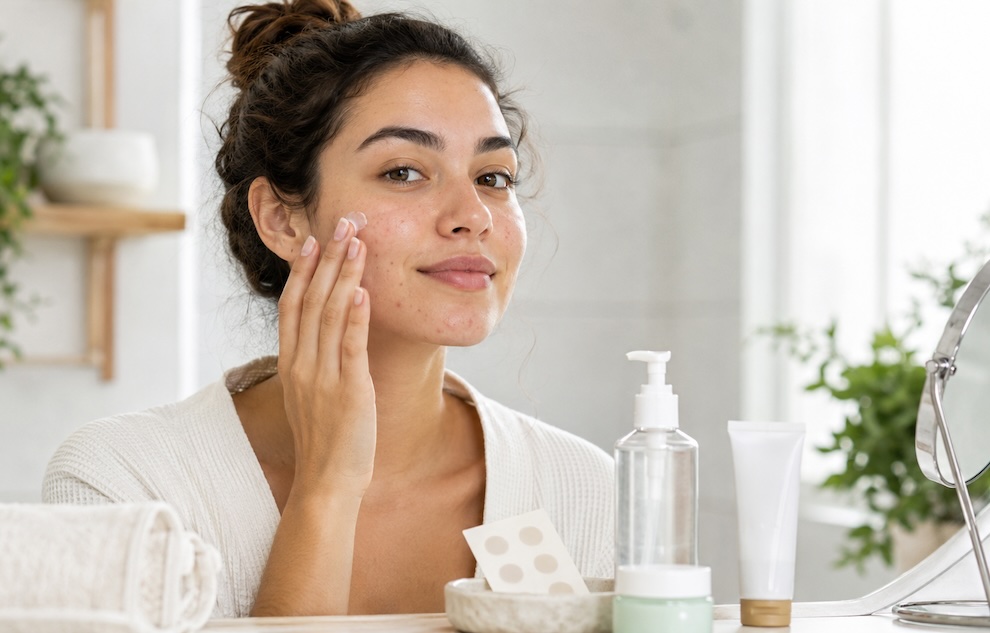
Acne is one of the most common skin conditions. It can cause blackheads, whiteheads, red pimples, painful lumps, oily skin, marks after pimples heal and sometimes permanent scarring. Acne can affect the face, chest, shoulders and back.
Acne happens when pores become blocked with oil and dead skin cells. Bacteria that naturally live on the skin can then multiply inside blocked pores, triggering inflammation, redness and swelling. Hormones, genetics, stress, some medicines, skin products, friction, sweating and diet can all play a role.
Self-care cannot prevent every breakout, especially if acne is driven by hormones or family history. However, the right routine can reduce blocked pores, calm irritation, support healing, prevent some flare-ups and lower the risk of scarring.
Cleanse gently twice a day
Gentle cleansing helps remove sweat, excess oil, sunscreen, makeup and pollution without stripping the skin barrier. This matters because irritated skin can become more inflamed, more sensitive and less able to tolerate acne treatments.
Use a gentle, soap-free, pH-balanced cleanser with lukewarm water. Wash your face twice a day, usually morning and night. If you sweat heavily after sport, work or hot weather, cleanse again as soon as practical.
Avoid scrubbing, rough exfoliating brushes, harsh face scrubs and strong astringent toners. These can irritate acne-prone skin and may make redness, stinging and breakouts worse.
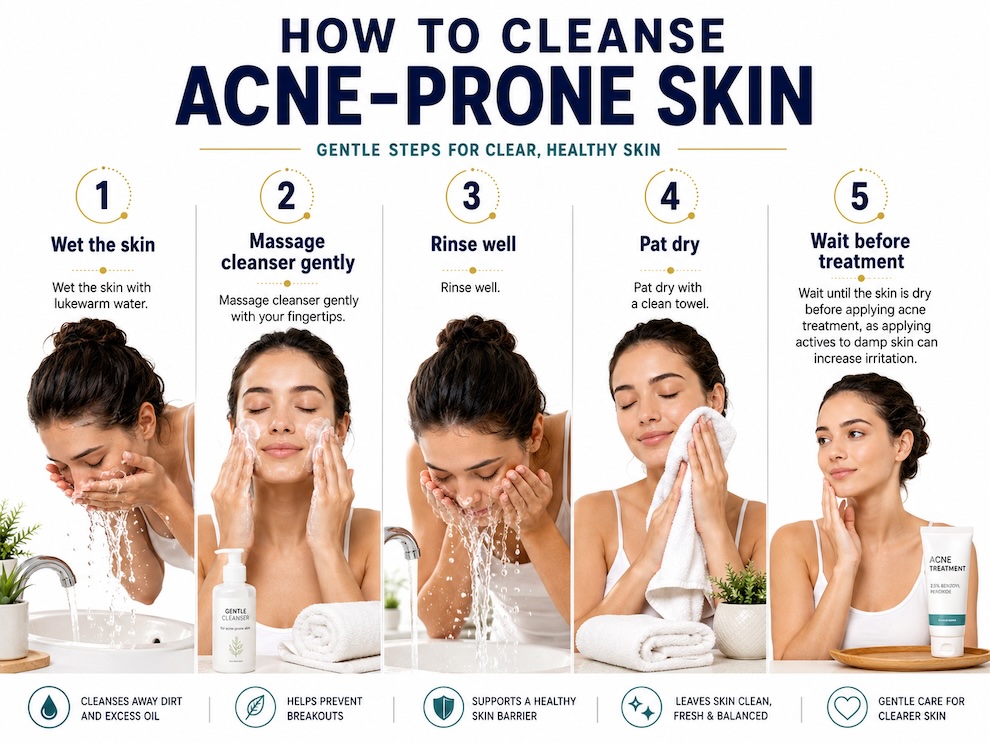
How to do it
- Wet the skin with lukewarm water.
- Massage cleanser gently with your fingertips.
- Rinse well.
- Pat dry with a clean towel.
- Wait until the skin is dry before applying acne treatment, as applying actives to damp skin can increase irritation.
Use non-comedogenic moisturiser and sunscreen
People with acne often avoid moisturiser because they worry it will make their skin oilier. In reality, acne-prone skin still needs barrier support, especially when using treatments such as benzoyl peroxide, salicylic acid, azelaic acid or retinoids.
Choose products labelled non-comedogenic, oil-free or suitable for acne-prone skin. These are less likely to block pores. Use a light moisturiser if your skin feels tight, dry, flaky or irritated.
Daily sunscreen is also important. Sun exposure can darken post-acne marks and some acne treatments can make skin more sun-sensitive. Use a broad-spectrum, non-comedogenic sunscreen of at least SPF30+. In Australia, SPF50+ is often a practical choice because UV levels can be high.
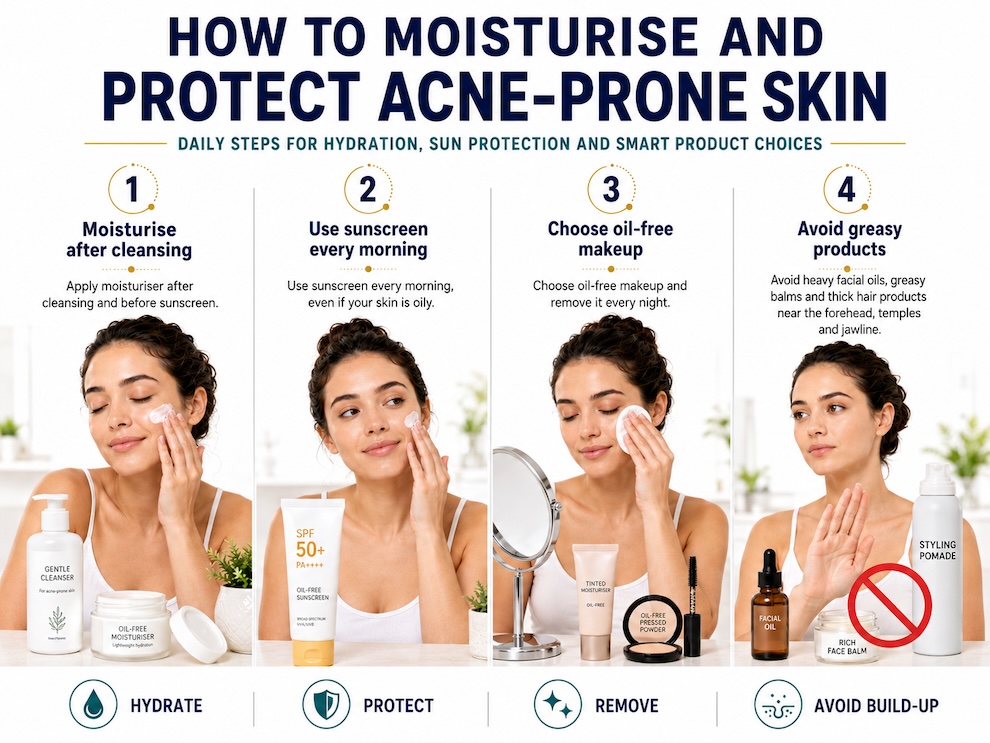
How to do it:
- Apply moisturiser after cleansing and before sunscreen.
- Use sunscreen every morning, even if your skin is oily.
- Choose oil-free makeup and remove it every night.
- Avoid heavy facial oils, greasy balms and thick hair products near the forehead, temples and jawline.
Add one evidence-based acne active at a time
A simple routine is usually better than using many strong products at once. Too many actives can damage the skin barrier, causing dryness, peeling, burning, redness and more irritation.
For mild acne, common non-prescription options include benzoyl peroxide, salicylic acid and azelaic acid. Ask a pharmacist which option suits your skin, age, pregnancy status, medicines and acne type.
Benzoyl peroxide can help inflammatory acne because it reduces acne-related bacteria, oil and blocked pores. Lower strengths, such as 2.5%, may work as well as stronger versions with less irritation. It can bleach towels, pillowcases and clothing.
Salicylic acid can help unclog pores and may be useful for blackheads, whiteheads and bumpy congestion.
Azelaic acid can help reduce blocked pores and may also support uneven tone or dark marks after acne.
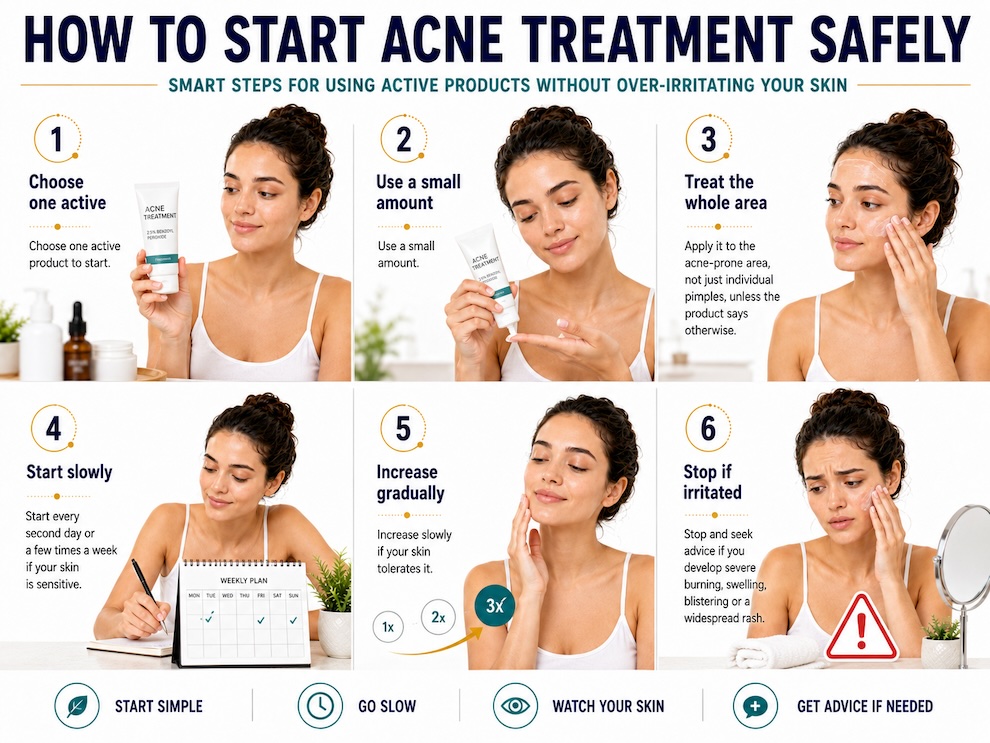
How to do it:
- Choose one active product to start.
- Use a small amount.
- Apply it to the acne-prone area, not just individual pimples, unless the product says otherwise.
- Start every second day or a few times a week if your skin is sensitive.
- Increase slowly if your skin tolerates it.
- Stop and seek advice if you develop severe burning, swelling, blistering or a widespread rash.
Do not pick, squeeze or scratch pimples
Picking may feel like a quick fix, but it can push inflammation deeper into the skin. This increases the chance of infection, longer healing, dark marks and scarring.
If a pimple is painful or inflamed, use acne treatment as directed and leave it alone. A hydrocolloid pimple patch may help protect the area from touching and picking. It may also absorb fluid from a surface-level whitehead, although it will not treat deep cystic acne.
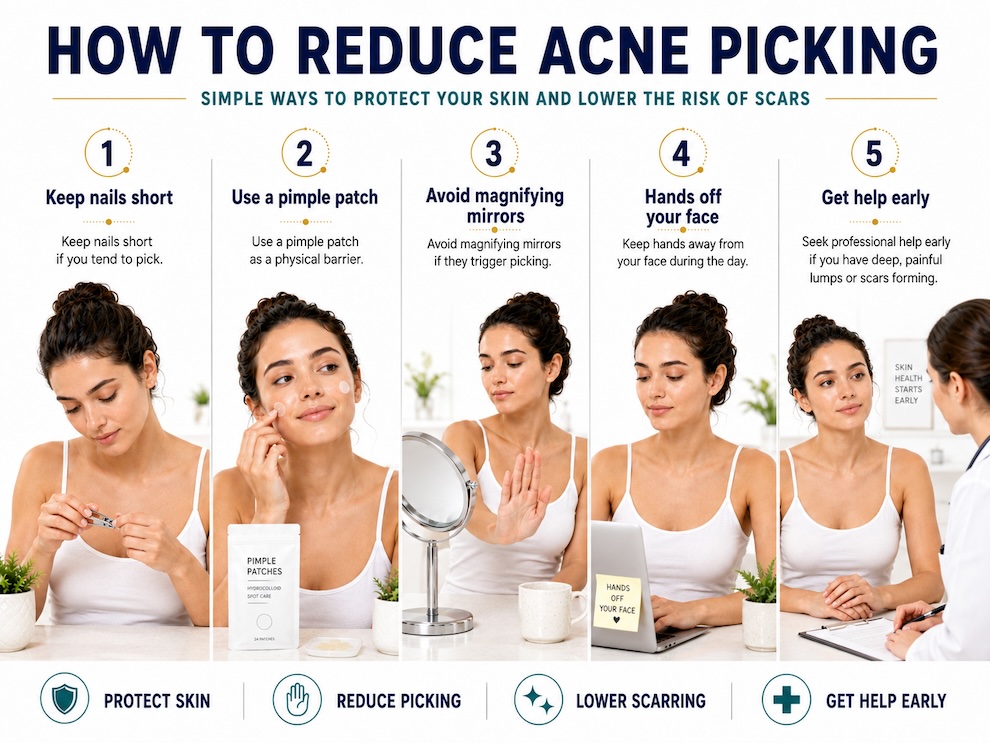
How to do it:
- Keep nails short if you tend to pick.
- Use a pimple patch as a physical barrier.
- Avoid magnifying mirrors if they trigger picking.
- Keep hands away from your face during the day.
- Seek professional help early if you have deep, painful lumps or scars forming.
Reduce friction, sweat and pore-clogging contact
Acne can flare where skin is exposed to pressure, rubbing, heat or sweat. This is sometimes seen around mask areas, helmet straps, collars, backpacks, sports gear and tight clothing. It can also happen around the hairline if oily hair products transfer onto the skin.
This does not mean you need to avoid exercise. Exercise supports general health and stress management. The key is to reduce prolonged sweat, oil and friction on acne-prone skin.
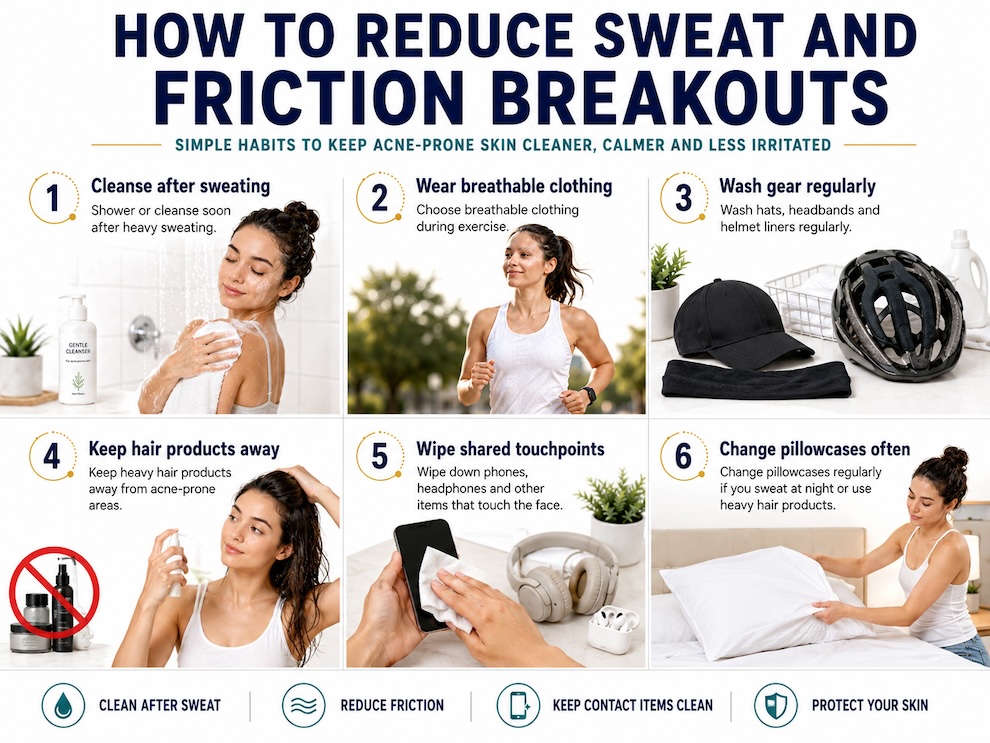
How to do it:
- Shower or cleanse soon after heavy sweating.
- Wear breathable clothing during exercise.
- Wash hats, headbands and helmet liners regularly.
- Keep hair products away from acne-prone areas.
- Wipe down phones, headphones and other items that touch the face.
- Change pillowcases regularly if you use heavy hair products or sweat at night.
Support your skin with a low-glycaemic, balanced diet
Diet does not cause acne in everyone, but evidence suggests that high-glycaemic diets may worsen acne in some people. High-glycaemic foods raise blood sugar quickly, which may increase insulin-related pathways, inflammation and oil production in the skin.
A lower-glycaemic eating pattern focuses on minimally processed foods that release energy more slowly. This can include vegetables, legumes, wholegrains, nuts, seeds, yoghurt, fruit and protein-rich foods.
Dairy may also worsen acne in some people, particularly cow’s milk or skim milk, although the evidence is less consistent than for high-glycaemic diets. You do not need to cut out whole food groups unless you notice a clear pattern or a health professional advises it.
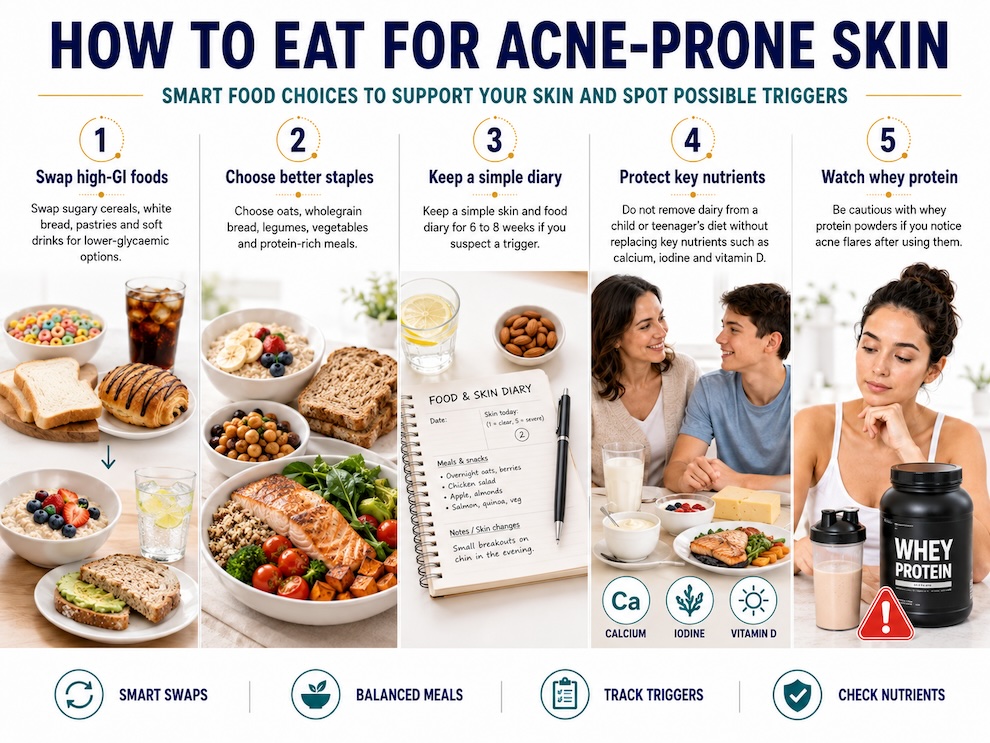
How to do it:
- Swap sugary cereals, white bread, pastries and soft drinks for lower-glycaemic options.
- Choose oats, wholegrain bread, legumes, vegetables and protein-rich meals.
- Keep a simple skin and food diary for 6 to 8 weeks if you suspect a trigger.
- Do not remove dairy from a child or teenager’s diet without replacing key nutrients such as calcium, iodine and vitamin D.
- Be cautious with whey protein powders if you notice acne flares after using them.
Be consistent and know when to get help
Acne treatment takes time. Many treatments need 6 to 12 weeks of regular use before clear improvement is seen. Stopping too early, switching products every few days or layering too many treatments can make it harder to know what is working.
Take photos in the same lighting every 2 to 4 weeks. This can help you see progress more clearly, as day-to-day changes can be frustrating and misleading.
See a doctor or dermatologist if acne is severe, painful, cystic, leaving scars or affecting your confidence, mood or daily life. Also seek medical advice if acne starts suddenly, worsens quickly, appears with irregular periods or excess facial hair, or does not improve after consistent self-care and pharmacy treatment.
Early treatment matters because untreated acne can lead to scarring and long-lasting skin colour changes.
A simple acne-prone skin routine
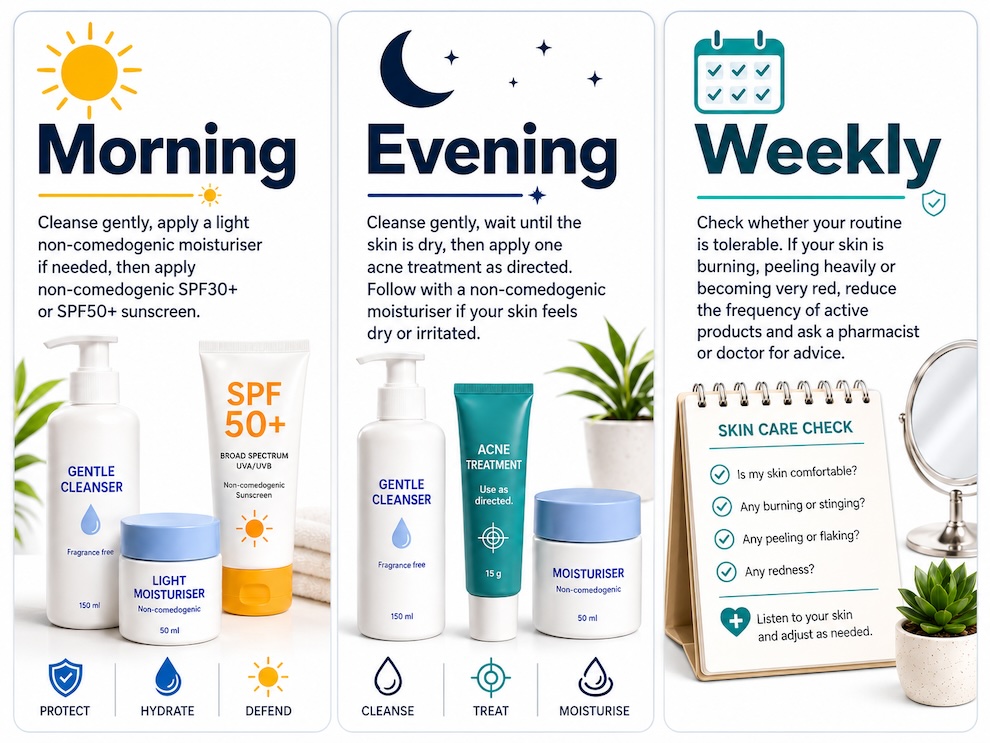
Morning
Cleanse gently, apply a light non-comedogenic moisturiser if needed, then apply non-comedogenic SPF30+ or SPF50+ sunscreen.
Evening
Cleanse gently, wait until the skin is dry, then apply one acne treatment as directed. Follow with a non-comedogenic moisturiser if your skin feels dry or irritated.
Weekly
Check whether your routine is tolerable. If your skin is burning, peeling heavily or becoming very red, reduce the frequency of active products and ask a pharmacist or doctor for advice.
When to contact a doctor
Contact your doctor if acne is severe, painful, deep, causing scars, causing distress or not improving after 2 to 3 months of consistent treatment. Also seek advice before using acne medicines if you are pregnant, trying to become pregnant, breastfeeding or treating acne in a child.
References
American Academy of Dermatology Association. Acne: diagnosis and treatment. American Academy of Dermatology Association. Accessed 18 June 2026.
American Academy of Dermatology Association. Can the right diet get rid of acne? American Academy of Dermatology Association. Accessed 18 June 2026.
Baldwin H, Tan J. Effects of diet on acne and its response to treatment. American Journal of Clinical Dermatology. 2021;22(1):55-65. doi:10.1007/s40257-020-00542-y
Healthdirect Australia. Acne. Healthdirect Australia. Accessed 18 June 2026.
Healthdirect Australia. Acne treatments. Healthdirect Australia. Accessed 18 June 2026.
Liu H, Yu H, Xia J, Liu L, Liu GJ, Sang H, Peinemann F. Topical azelaic acid, salicylic acid, nicotinamide, sulphur, zinc and fruit acid alpha-hydroxy acid for acne. Cochrane Database of Systematic Reviews. 2020;(5):CD011368. doi:10.1002/14651858.CD011368.pub2
Mayo Clinic. Nonprescription acne treatment: which products work best? Mayo Clinic. 2024. Accessed 18 June 2026.
National Institute for Health and Care Excellence. Acne vulgaris: management. NICE Guideline NG198. National Institute for Health and Care Excellence. 2023.
Reynolds RV, Yeung H, Cheng CE, Cook-Bolden F, Desai SR, Druby KM, Freeman EE, Keri JE, Stein Gold LF, Tan JKL, Tollefson MM, Weiss JS, Wu PA, Zaenglein AL, Han JM, Barbieri JS. Guidelines of care for the management of acne vulgaris. Journal of the American Academy of Dermatology. 2024;90(5):1006.e1-1006.e30. doi:10.1016/j.jaad.2023.12.017
Last reviewed and updated: 19 June 2026

