


Facts
What is osteoporosis
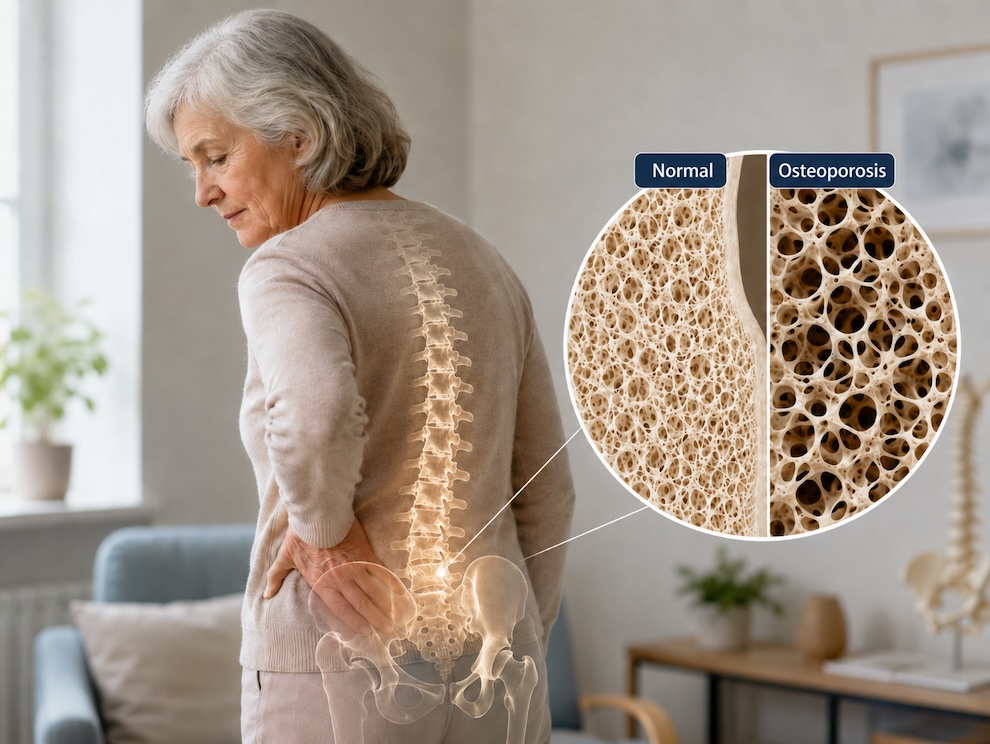
Osteoporosis occurs when the bones lose more of their minerals (such as calcium) and other substances that exist in the bone more quickly than they are replaced, so the bones lose some of their mass, become thinner, brittle and weak which can then break (fracture) or crack more easily.
Osteoporosis makes the bones weak, brittle and more likely to break.
Bone is living tissue. Bone is a connective tissue which has a matrix of substances in the interconnective layers which contains calcium salts. The body is constantly breaking down bone tissue and re-building it as necessary.
When there is not enough bone tissue being re-built than that which is being broken down, then the bone becomes less dense, has less bone mass, is more brittle and more prone to breaking. This is how osteoporosis develops.
The most common bones that are affected by osteoporosis are:
- Hip
- Pelvis
- Ribs
- Spine
- Upper arm
- Wrist
Scientists believe that women are more susceptible to developing osteoporosis because they have lowered levels of eostrogen after menopause. Eostrogen (in a complicated process with other hormones and substances in the body) helps the bones keep more of their calcium and stay strong and healthy.
Facts about osteoporosis
- Osteoporosis is more common in women, affecting as many as 25-33% of all women over 50 years
- Approximately 1 in every 40 men will develop osteoporosis
- Osteoporosis is the most common cause of bone fractures in women over 50 years
- Osteoporosis, a debilitating condition, which is generally mostly preventable through better dietary and lifestyle choices
- Osteoporosis, once it is diagnosed, is difficult to reverse but its progression can be slowed down with the appropriate treatment (conventional or alternative or a combination of both )
- Magnesium regulates bone metabolism and so is important in the treatment of osteoporosis
- Menopausal women are at a higher risk of developing osteoporosis due to their diminished eostrogen levels
- By the time osteoporosis has been diagnosed, the disease has already progressed to about 30% bones loss
- Women who are very thin have more risk of developing osteoporosis than other women
- Bone is living tissue that is continuously being broken down and rebuilt, by the body
- After the age of 25, there is a general loss of bone tissue as bone breaks down more quickly that it is rebuilt
- Various hormones play a role in the breakdown and rebuilding of bone tissue in both women and men
Symptoms
Symptoms of osteoporosis
Osteoporosis is known as a “silent” disease as it happens silent in the body (often even for decades) without any real symptoms until a bone cracks or breaks after it has been bumped, or a fall is sustained (in the case of a hip fracture).
There are some other symptoms which may appear to signify that there is bone loss associated with osteoporosis:
- Gradual loss of height
- Rounding of the back
Both of these symptoms are due to vertebral fractures in the spine.
Causes
Causes of osteoporosis
There is no single cause which underlies the development of osteoporosis, but there are a number of factors which can predispose a person (especially a woman) to developing osteoporosis.
The following are thought to be part of the general reasons that osteoporosis occurs:
Genetics and family history
Recent studies suggest that women who close family relatives with osteoporosis (mother, grandmother, aunt) have a much higher incidence of developing osteoporosis than women who do not have this family history with this condition. A few other studies have suggested that some women with osteoporosis may have a defective gene which disrupts their body’s use of vitamin D, which may cause an inability to absorb calcium and precipitate osteoporosis.
Menopause and lack of oestrogen
The menopause is one of the major factors in the development of osteoporosis in women. Prior to menopause, while a woman is still menstruating, the circulating eostrogen provides a protective effect on women’s bones by ensuring that the vitamin D from foods is activated to help absorb calcium from foods and ensuring less bone is broken down than is built-up. When women enter menopause, the bone-protective effects of eostrogen disappear as the levels of eostrogen drop dramatically and this is part of the reason so many older women have osteoporosis.
Prevention
Prevention of osteoporosis
Non-preventable risk factors
Osteoporosis may be unpreventable in certain circumstances:
- Age – all people over 65 are generally a little more likely to develop osteoporosis due to a number of factors, namely the lack of ability of the body to absorb calcium, increased breakdown of bone tissue and general wear and tear on the body
- Broken bones – people who have broken bones, especially as an adult, have a higher risk of developing osteoporosis than people who have never previously broken any bones in their body
- Being female – women are more predisposed to osteoporosis than men, especially menopausal women who have less of the protective eostrogen levels which help to ensure the body uses vitamin D to absorb calcium
- Being immobile – people that are unable to move around cannot exercise their body properly and cannot provide the resistance (weight bearing) exercises their bones need for good health
- Certain health conditions – people that have certain health conditions have a higher risk of developing osteoporosis. These conditions are ones which deplete the body of calcium (and maybe the other nutrients vital for bone health). The health conditions that may cause the most risk are: coeliac disease, hyperparathyroidism, hyperthyroidism, inflammatory bowel disease, liver conditions, kidney failure, rheumatoid arthritis
- Certain medications – certain medications deplete the amount of calcium in the body and this can further deteriorate the bones and cause bone loss. The medications causing the most risk are: Heparin (eg Warfarin), Phenytoin (eg Dilantin) and long term use of corticosteroids (eg Prednisone) which are used for inflammatory conditions such as asthma, eczema and rheumatoid arthritis
- Family history – people who have an close family member with osteoporosis (especially mother, grandmother and aunt) are much more predisposed to developing it osteoporosis
- Genetics – people of certain ethnic backgrounds seem to be more prone to developing osteoporosis as well as do people with a gene through to make the body unable to use vitamin D properly so that calcium is poorly absorbed
- Menopause – once women reach menopause, they have a much higher risk of developing osteoporosis, as they no longer have high levels of the bone-protecting effects of the hormone oestrogen in their body
- Thin or small boned – women especially (but also men) who are very thin (either naturally or though excessive dieting) and those who are naturally smaller-boned have a higher risk of developing osteoporosis than larger women and men
Preventable risk factors
There are ways to prevent osteoporosis from occurring:
- Adequate exercise – physical activity needs to be part of everyone’s life and it is highly recommended as a factor in preventing osteoporosis. The best exercises are weight bearing (or resistance) to help prevent osteoporosis or at least slow down the progression of this condition
- Good nutrition – a healthy diet should provide all the nutrients necessary to help prevent against osteoporosis developing. Adequate intake of calcium-rich foods, magnesium-rich foods and vitamin D-rich foods, as well as the other nutrients recommended for healthy bones. A healthy diet, full of natural, unprocessed foods, with little junk will provide much prevention against development of osteoporosis and can help reduce symptoms in those people with this condition by reducing progression and deterioration
- Limit alcohol intake – excessive amounts of alcohol can do damage to the bones, worsen symptoms in people with existing osteoporosis and cause osteoporosis to develop in some people. Always drink in moderation. Drinking alcohol is not recommended beyond 1-2 drinks per day on 3-5 days per week and always have one or two alcohol-free day each week
- Limit caffeine intake – people who have excessive amounts of caffeine are also at risk of developing osteoporosis because the caffeine blocks the body’s ability to absorb calcium and this could result in bone loss and ultimately osteoporosis
- Limit cola intake – recent studies show that women and young girls especially who drink too much cola or other soft drinks (around one can every day) could be doing damage to their bones and this could ultimately cause osteoporosis due to the high phosphate levels, which block calcium absorption from foods eaten. Women and young girls are advised to drink water instead of cola or other soft drinks, as they not only damages bones, but also damage teeth from all the sugar they contain
- Limit intake of acid-forming foods – foods such as meat, refined sugar and processed foods all cause the stomach to produce a great deal of digestive juices which are acidic, in order to break them down and digest and absorb them. This high acidic diet makes the body acidic and ultimately can cause a loss of calcium in the bones, which can then develop into osteoporosis
- Stop smoking – cigarette smoking is known to have adverse effects on the bones (as well as many other vital organs in the body), so stopping is the only way to reduce the risk and prevent the development of osteoporosis or worsening of symptoms in people with the condition already
Complications
Complications of osteoporosis
There are some major and very serious complications of osteoporosis:
- Broken (or fractured) bones – this is the most fundamental complication of osteoporosis. A simple fall can cause a severe breakage of bone tissue, which may not be able to be repaired properly due to the brittleness, softness and weakness of the bones. Almost all falls in older people which result in bone breakage is due to osteoporosis. As many as ten to twenty percent of all cases of hip fractures results in death of the patient
- Immobility – a fall that causes a serious fracture to the hip or pelvis can result in long term stays in hospital or at home with care and an inability to move. Many people with hip fractures cannot have hip replacement surgery, either due to the low bone mass and weakness of the bones, making it impossible to correct the bone breakage through surgical intervention or from other factors relating to the older age of the patient precluding them from surgery
Diagnosis
When to see a doctor about osteoporosis
Anyone who is concerned about their bones and falls into any one of the groups most at risk of osteoporosis, should visit their doctor to discuss their concerns and to get advice about their options in order to try to prevent osteoporosis, or at least reduce the progression of the condition (if they have it).
In Australia, certain people are eligible to have a Bone Density Test that is covered by Medicare, if they meet certain criteria (older age is one of the factors, but there are a number of other risk factors that are included).
People with existing osteoporosis should visit their doctor if any of the following occur:
- Experiencing a fall, no matter how minor it seems to be, as any fall can potentially cause bone breakage
- Experiencing any new symptoms not previously experienced
- Experiencing worsening of current symptoms
People with existing osteoporosis will need to have regular consultations with their doctor to monitor their condition.
Diagnosis of osteoporosis
Initial diagnosis of osteoporosis involves the following:
- Medical history of symptoms – the doctor will ask a series of questions about any family history of osteoporosis and also about the severity and duration of symptoms, including the onset, to determine if there is a risk factor of osteoporosis
Further diagnostic tests
If this warrants further investigation to confirm diagnosis, then the following tests will be requested:
- CT scan – a computerised tomography scan is a test which is usually requested for assessing bone loss in the lower spine area as it can measure mineral content of the trabecular bone. This is useful as the trabecular bone is most commonly affected in women during menopause
- DEXA – the dual energy x-ray absorptiometry test is a safe and accurate way to measure the total bone content in the hips, spine, forearm and even the whole body. This test is similar to an x-ray and lasts only a few minutes
- X-rays – an x-ray can detect the disease in affected bones, as then tend to appear smaller and thinner than healthy bones. An x-ray is most useful in cases where there are definite signs of osteoporosis development
Other tests
The other tests that will be performed to aid diagnosis are:
- Bone density test – this is a scan in which a small amount of radiation measures bone mineral density. The results of this test can be:
- Normal – there are no visible signs of bone mineral loss, nor of osteoporosis
- Asteopenic (low) – there are some signs of bone mineral loss, some softness and brittleness of the bones and some bone loss, which suggests that if it continues that osteoporosis will develop
- Osteoporotic (osteoporosis) – there are definite signs of bone mineral loss, the bones appear very brittle, soft, porous and weak which suggests that osteoporosis exists
The Bone Density Test is covered by Medicare (in Australia) for the following groups of people:
- Aged over 70 years (male and female)
- Being diagnosed with osteoporosis (any age)
- Having at least one fracture due to osteoporosis (any age)
- People taking corticosteroids long-term (any age)
- Women under 45 who have not had any periods for at least 6 months
In the USA, the Osteomark-NTX is the bone densitometry test which is used to determine bone density and diagnose osteoporosis.
Treatment
Conventional treatment of osteoporosis
Conventional treatment aims to treat current bone loss and prevent further damage to the bones to limit progression of the condition. In milder cases, lifestyle and dietary changes, as well as supplements are recommended, whereas in more serious cases of bones loss, a combination of medication, lifestyle changes and supplements are advised.
Lifestyle and dietary changes
These are recommended to reduce further bone loss:
- Eat foods high in calcium – the foods rich in calcium will help the bones retain more of their calcium and this in turn will help to strengthen the bones and prevent further bone mineral loss. Even people with lactose intolerance can get adequate calcium from food that is not dairy
- Eat foods high in vitamin D – the foods rich in vitamin D are essential to help the body absorb more of the calcium and this will help to strengthens the bones and prevent further bone mineral loss
- Exercise more – regular exercise, especially weight bearing exercise such as resistance exercises (light weights), should be undertaken to help strengthen the bones. Aim to have at least three to four days of this type of exercise each week, even just 20 minutes and incorporate some walking each day and this all will greatly reduce risk of developing osteoporosis and progression of the condition in people who are already diagnosed
- Limit alcohol intake – excessive alcohol intake is a definite risk factor for osteoporosis and alcohol intake should be very limited to 1-2 standard drinks 3-4 nights a week only at the very most
- Stop smoking – this is a definite risk factor for osteoporosis and people who smoke are recommended that they should stop, especially if there has already been some bones loss
Medications
Medications may be recommended to stop bone loss, to strengthen bones or to increase bone formation:
- Biphosphonates – the Biphosphonates are the most popular medication for preventing (or slowing) down bone tissue break-down and reducing the risk of osteoporosis. Even though this medication has some serious side effects, the benefits generally outweigh the risks in people who already have severe osteoporosis
- Calcitonin – the hormone calcitonin is secreted by the parathyroid glands that stimulates increased bone tissue formation and is used to stimulate the formation of bone tissue, so that there is less bone loss. Scientists have produced a synthetic version of calcitonin as a medication for osteoporosis
- Oestrogen-like drugs – these types of medications mimic the effects of oestrogen in the body, so may be useful in post-menopausal or menopausal women to help reduce bone loss through the bone-protective effects of the oestrogen. These drugs are less commonly used in Australia today due to the side effects they can cause far outweighing the benefits
- Foreto – this is the synthetic version of the natural hormone calcitonin that is produced by the parathyroid glands and which stimulates more bone tissue to be formed (and this reduces the amount of bone loss). This synthetic version of calcitonin produces the same beneficial effect on the bones
Supplements
Doctors may recommend a supplement that contains the following nutrients for people who have only just started to experience some bone loss instead of the medications, as that may be all that is required (together with the lifestyle and dietary modifications):
Other supplements and nutrients may also be recommended by your doctor.
Alternative
Alternative / complementary treatment of osteoporosis
There are a number of alternative / complementary treatment options which are recommended for mild to moderate osteoporosis. Always consult with your doctor before trying any of the treatments suggested, to prevent any complications with medications or other conditions.
Herbs
There are a no herbs which are suggested to be of use for people with osteoporosis.
Vitamins
There are a number of vitamins, which are also needed for increasing bone tissue, preventing bone tissue break-down and preventing bone loss:
- Folic acid – studies show that folic acid helps with bone tissue re-formation
- Vitamin B1 – the immune system enhancing vitamin B1 (thiamin) is required for women who take HRT, in order to reduce the side effects from the medication
- Vitamin B2 – the immune system enhancing vitamin B2 (riboflavin) is required for women who take HRT, in order to reduce the side effects from the medication
- Vitamin B6 – the immune system enhancing vitamin B6 (pyridoxine) is required for women who take HRT, in order to reduce the side effects from the medication
- Vitamin B12 – the important immune system enhancing vitamin B12 assists with increasing bone mineral density
- Vitamin C – the antioxidant vitamin C also assists with better calcium absorption, but not too much, as excessive levels of vitamin C may actually increase bone loss
- Vitamin D – the important vitamin D helps the body absorb more of the calcium from food and this helps to strengthen bones and prevent bone tissue loss. Vitamin D is one of the most important vitamins for bone health
- Vitamin K – vitamin K is required to enable calcium to function correctly in the bones so that it is retained in the bones which helps with reducing bone loss and this helps to decrease bone fractures. Vitamin K also helps with the formation of collagen, which is part of the matrix of healthy bone tissue
Minerals
There are a number of minerals which may help to reduce risk of osteoporosis or limit progression of the condition in people who have been diagnosed with osteoporosis:
- Boron – studies show that the mineral boron is necessary to ensure calcium and the other minerals work correctly together to prevent further bone tissue loss
- Calcium – one of the most important mineral in preventing further bone loss and to strengthen bone tissue is calcium. Bone tissue is mostly made up of calcium, which is why this mineral is so important to bone health. Dairy foods are not the only foods which contain calcium, there are plenty of foods that are non-dairy which are rich in calcium too
- Copper – the mineral copper, creates healthy bone tissues and prevents osteoporosis, but as only very little of it is needed, it may be better to get adequate intake from the diet
- Magnesium – some researchers believe that osteoporosis may actually be a condition caused by deficiency in magnesium. Calcium needs adequate intake of magnesium so that it can be better absorbed by the bones
- Manganese – the mineral manganese, helps the body absorb more of the calcium from foods eaten, but as only very little of it is needed, it may be better to get adequate intake from the diet
- Phosphorus – the mineral phosphorus is needed to keep the calcium in the bones and it is one of the most abundant minerals in the body, especially in the bones
- Silica – the mineral silica helps with osteoporosis and especially in healing after any fractures, but as only very little of it is needed, it may be better to get adequate intake from the diet
- Zinc – the mineral zinc helps the body absorb more of the calcium from foods eaten in the diet. In addition to this, zinc is required for women who take HRT, in order to reduce the side effects from the medication
Other nutrients
There are a number of other nutrients which may help to provide relief for symptoms:
- Chondroitin – the nutrient chondroitin exists naturally in the body and may also help the bones keep more of their mineral matrix intact and so prevent bone loss
- Coenzyme Q10 – the nutrient coenzyme Q10 is a natural substance which is produced by the body and due to its antioxidant effects may reduce bone loss due to the effect of free radicals
- Fish oil – some studies have suggested that a diet rich in omega-3 fatty acids or from fish oil supplements may provide a protective effect on the bones and reduce risk of osteoporosis. The studies suggested that people who took a fish oil supplement for 16 weeks had high levels of calcium, osteocalcin and collage as well as reduced levels of alkaline phosphotase, all of which indicated improved bone health. Studies show that even a diet high in foods rich in omega-3 fatty acids (such as mackerel, salmon, sardines, trout) can help to inhibit the production of eicosanoids, hormone-like substances which cause inflammation in the body and are associated with bone loss and this can reduce risk of osteoporosis
- Glucosamine – the nutrient glucosamine exists naturally in the body and may also help the bones keep more of their mineral matrix intact and so prevent bone loss
Dietary modifications
Certain dietary changes are advised in order to reduce bone loss and increase calcium re-absorption to strengthen bone tissue:
- Avoid cola and other soft drinks – studies show that women and young girls who drink one cola soft drink a day over a long period are increasing their risk of osteoporosis. This is due to the high phosphate content in the cola which reduces the levels of calcium in the body and this makes the bones weak and soft, causes loss of bone minerals and deteriorates bone health over time
- Eat foods high in calcium – the foods rich in calcium will help the bones retain more of their calcium and this in turn will help to strengthen the bones and prevent further bone mineral loss. Even people with lactose intolerance can get adequate calcium from food that is not dairy
- Eat foods high in vitamin D – the foods rich in vitamin D are essential to help the body absorb more of the calcium and this will help to strengthens the bones and prevent further bone mineral loss
- Eat more fruits and vegetables – these foods are high in nutrients which are necessary for good bone health. Studies show a vegetarian diet is associated with a lowered risk for osteoporosis and this is most likely related to the acid-forming effects of meat which can increase bone mineral loss through loss of calcium
- Moderate protein intake – studies show that high intakes of animal protein can stimulate increased excretion of calcium and may even promote break-down of bone tissue which can lead to osteoporosis. In addition to this, a high meat protein diet needs a high level of stomach acid to break down and digest the meat and excessive acid levels in the body can also lead to reduced calcium levels and ultimately bone loss
Lifestyle modifications
There are a number of lifestyle modifications which may help to provide relief for symptoms:
- Avoid aluminium – the mineral aluminium has an antagonistic effect on calcium; this means it lowers calcium levels in the body which is associated with osteoporosis. In order to avoid this effect, avoid all aluminium cookware and deodorants with aluminium, use stainless steel or cast iron cookware and use natural deodorants that do not contain aluminium
- Exercise more – regular exercise, especially weight bearing exercise such as resistance exercises (light weights), should be undertaken to help strengthen the bones. Aim to have at least three to four days of this type of exercise each week, even just 20 minutes and incorporate some walking each day and this all will greatly reduce risk of developing osteoporosis and progression of the condition in people who are already diagnosed
- Limit alcohol intake – excessive alcohol intake is detrimental for people with osteoporosis, as it reduces the liver’s ability to detoxify excess cortisol, a hormone which reduces bone density if it is in high levels in the body. In addition to this, alcohol is highly acidic and can decrease pH levels in the body which is not beneficial for bone health. Aim to have one to two glasses of alcohol only on three to five days a week at the very most
- Stop smoking – this is a definite risk factor for osteoporosis and people who smoke are recommended that they should stop, especially if there has already been some bones loss as the smoking will only cause further bone mineral loss
Alternative treatments
- Acupuncture – some alternative health practitioners recommend acupuncture as a suitable treatment for people who have pain associated with stress fractures they have sustained in the spine or other parts of the skeleton
Always ensure that you notify your medical practitioner of any supplements that you want to take – it may interfere with other medication or conditions you have. Confirm with your doctor it is safe to take before you try it.
Self care
Living with osteoporosis
Self care strategies
There are a number of strategies which are recommended to help people deal with osteoporosis existing osteoporosis to prevent it from worsening:
- Avoid cola and other fizzy soft drinks – studies show that women and young girls who drink one cola soft drink a day over a long period are increasing their risk of osteoporosis. This is due to the high phosphate content in the cola which reduces the levels of calcium in the body and this makes the bones weak and soft and deteriorates bone health over time
- Avoid aluminium – the mineral aluminium has an antagonistic effect on calcium in the body. High blood levels of aluminium lowers calcium levels and this can contribute to loss of bone mineral and this is associated with osteoporosis. In order to avoid this effect, avoid all aluminium cookware and deodorants with aluminium
- Don’t smoke – people who smoke are recommended that they should stop, especially if there has already been some bones loss as the smoking will only cause further bone mineral loss and deterioration of the bones. People who do not smoke should not be around second-hand smoke from other people either
- Eat calcium-rich foods – the foods rich in calcium will help the bones retain more of their calcium and this in turn will help to strengthen the bones and prevent further bone mineral loss. Even people with lactose intolerance can get adequate calcium from food that is not dairy
- Eat vitamin D-rich foods – the foods rich in vitamin D are essential to help the body absorb more of the calcium and this will help to strengthens the bones and prevent further bone mineral loss
- Exercise every day – regular exercise, especially weight bearing (resistance) exercise, should be undertaken to help strengthen the bones. Aim to have at least three to four days of this type of exercise each week, even just for 20 minutes and incorporate some walking each day as well. This combination will greatly reduce the risk of developing osteoporosis and progression of the condition in people who are already diagnosed
- Less meat intake – studies show that high intakes of animal protein can stimulate increased excretion of calcium and may even promote break-down of bone tissue which can lead to osteoporosis. In addition to this, a high meat protein diet needs a high level of stomach acid to break down and digest the meat and excessive acid levels in the body can also lead to reduced calcium levels and ultimately bone loss
- Limit all alcohol intake – excessive alcohol intake can cause a progression of symptoms in people with osteoporosis and cause further bone weakening and bone mineral loss. Alcohol intake should be very limited in people with existing osteoporosis. Aim to have one to two glasses of alcohol only on three to five days a week at the very most
- Limit intake of processed foods – studies show that a diet high in processed foods, simple sugars can create a body that has a very acidic pH. This can cause lowered levels of calcium and deterioration of bone minerals which can progress to osteoporosis. Try to limit your intake of processed foods and make the mainstay of your diet plentiful in natural foods
- More fruits and vegetables – the fruits and vegetables are high in nutrients which are necessary for good bone health, especially the dark green leafy vegetables which have very beneficial effects on bone health. Studies show a vegetarian diet is associated with a lowered risk for osteoporosis and this is most likely related to the acid-forming effects of meat which can increase bone mineral loss through loss of calcium
- Use recommended supplements – your doctor will advise you about the type and amount of vitamins, minerals and other nutrients that you need to help prevent further bone loss and weakening and the osteoporosis from worsening
Caring for someone with osteoporosis
Partner
There are a number of useful strategies that someone who has a partner with osteoporosis can use to assist them:
- Don’t smoke – it would be very beneficial for your partner’s condition if you do not smoke anywhere near them, so that they are not exposed to second-hand smoke. Cigarette smoke causes worsening of bone health
- Cooking and other household duties – if your partner is completely immobile (after hip replacement surgery) or their symptoms are very severe, they will not be able to perform any household duties, so it may be only up to you to cook and clean the household and provide your partner with their food. You may need to ask other family members or friends (if they are available to help you), otherwise you will need paid household help
- Mobility assistance – if your partner has had surgery or is has some mobility issues to due their osteoporosis, they may not be able to move around as much, so it would be beneficial if you could provide mobility assistance by assisting them with walking
- Support and encouragement – it would be useful for your partner to have your support and encouragement to help them deal with this condition
Friend
There are a number of useful strategies that someone who has a fiend with osteoporosis can use to assist them:
- Don’t smoke – it would be very beneficial for your friend’s condition if you do not smoke anywhere near them, so that they are not exposed to second-hand smoke. Cigarette smoke causes worsening of bone health
- Encourage exercising together – exercise is always more productive when people are exercising together, so try to make time to go for a regular walk with your friend, it will not only boost your health but provide a stronger bond between you both
- Support and encouragement – it would be useful for your friend with osteoporosis to have your support and encouragement to help them deal with this condition
Family Member
There are a number of useful strategies that someone who has a family member with osteoporosis can use to assist them:
- Don’t smoke – it would be very beneficial for your family member’s condition if you do not smoke anywhere near them, so that they are not exposed to second-hand smoke. Cigarette smoke causes worsening of bone health
- Support and encouragement – it would be useful for your family member with osteoporosis to have your support and encouragement to help them deal with this condition
References
References
- Cranenburg EC, Schurgers LJ, Vermeer C. Vitamin K: the coagulation vitamin that became omnipotent. Thromb Haemost. 2007 Jul;98(1):120-5
- Curtis JR, Saag KG. Prevention and treatment of glucocorticoid-induced osteoporosis. Curr Osteoporos Rep. 2007 Mar;5(1):14-21
- Davis JC, Guy P, Ashe MC, Liu-Ambrose T, Khan K. HipWatch: osteoporosis investigation and treatment after a hip fracture: a 6-month randomized controlled trial. J Gerontol A Biol Sci Med Sci. 2007 Aug;62(8):888-91
- Kitchin B, Morgan SL. Not just calcium and vitamin D: other nutritional considerations in osteoporosis. Curr Rheumatol Rep. 2007 Apr;9(1):85-92
- Osiecki H. The Physicans Handbook of Clininical Nutrition, 6th Edition. Bioconcepts Publishing QLD, 2001
- Sugiura M, Nakamura M, Ogawa K, Ikoma Y, Ando F, Yano M. Bone mineral density in post-menopausal female subjects is associated with serum antioxidant carotenoids. Osteoporos Int. 2007 Sep 11
- Schmiege SJ, Aiken LS, Sander JL, Gerend MA. Osteoporosis prevention among young women: Psychosocial models of calcium consumption and weight-bearing exercise. Health Psychol. 2007 Sep;26(5):577-87
- Tang BM, Eslick GD, Nowson C, Smith C, Bensoussan A. Use of calcium or calcium in combination with vitamin D supplementation to prevent fractures and bone loss in people aged 50 years and older: a meta-analysis. Lancet. 2007 Aug 25;370(9588):657-66
- Tratter R, Jones A. Better Health Through Natural Healing: How to Get Well Without Drugs or Surgery, 2nd Edition. McGraw Hill, 2001
- Varenna M, Binelli L, Casari S, Zucchi F, Sinigaglia L. Effects of dietary calcium intake on body weight and prevalence of osteoporosis in early postmenopausal women. Am J Clin Nutr. 2007 Sep;86(3):639-44
Last reviewed and updated: 14 May 2024

