


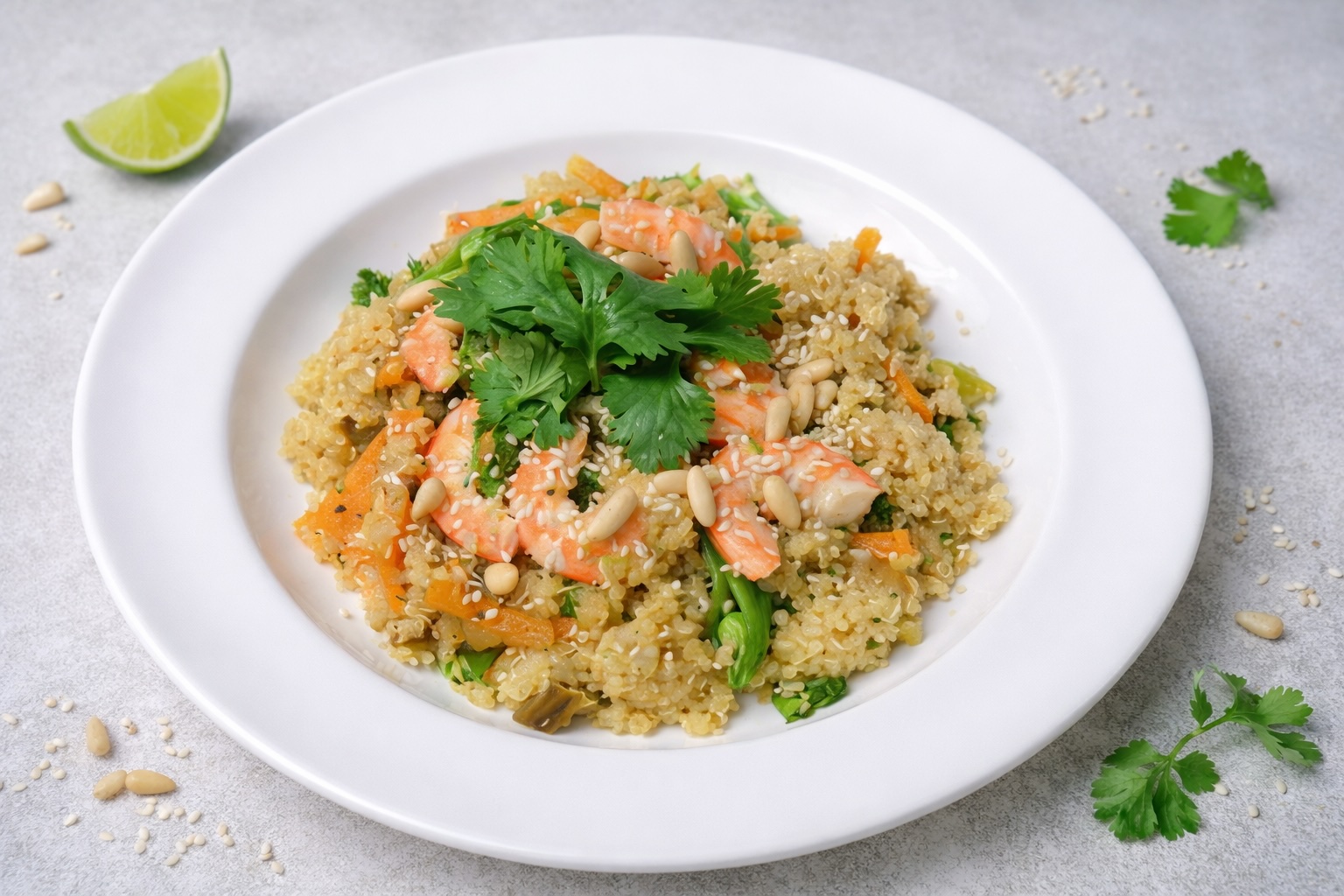


This is a Mediterranean-style, high-fibre, high-protein, anti-inflammatory meal with excellent micronutrient diversity. It delivers strong satiety, steady energy, and balanced macronutrients while remaining relatively light and clean
While this recipe is higher in cholesterol and fat due to the prawns, they are actually high in antioxidants which makes them healthy.
This is a very filling, but nutritious recipe healthy for all the family and very quick to prepare. This recipe is high in fibre, low in sodium and high in iron and other healthy nutrients. Try to use organic ingredients as this will be much more tastier and healthier.
Nutrition rundown
- Provides 431 kcal per serve, making it a balanced main meal without being overly energy dense
- Nearly 50% of daily protein needs per serve (24.6 g) and this is excellent for muscle repair, satiety and metabolic support
- Protein comes from a combination of prawns + whole grains + seeds, giving a broader amino acid profile
- Moderate total fat (15.0 g) with the majority coming from heart-healthy unsaturated fats
- Olive oil, sesame seeds and pine nuts provide monounsaturated and polyunsaturated fats, supporting cardiovascular health
- Saturated fat remains low at 2.3 g (11.5% daily value) and that is well within healthy range
- Prawns contribute dietary cholesterol (133.8 mg, 44.6% daily value), but current evidence shows dietary cholesterol has minimal impact on blood cholesterol for most people
- Although prawns are high in dietary cholesterol, they are actually beneficial because they are very low in saturated fat and high in heart-healthy omega-3 fatty acids, which boost “good” HDL cholesterol
- Rich in marine minerals from prawns, particularly iodine and selenium, supporting thyroid function and antioxidant defence
- Strong fibre content (9.2 g, 32.9% daily value) thanks to wholewheat cous cous, quinoa, vegetables and seeds
- Fibre supports gut health, blood sugar regulation and fullness
- Combination of soluble and insoluble fibre improves digestive balance
- Complex carbohydrates (51.6 g) provide steady energy release rather than rapid spikes
- Naturally low in refined sugar which come primarily from vegetables, which are whole foods and good for the gut
- Whole grains help stabilise blood glucose compared to white grain alternatives
- High in plant phytonutrients from eggplant, carrots, snow peas, garlic and onion
- Eggplant provides anthocyanins (powerful antioxidants)
- Carrots contribute beta-carotene (vitamin A precursor) for immune and eye health
- Sesame seeds and pine nuts add magnesium, zinc and vitamin E
- Quinoa adds additional iron and plant protein, improving overall nutrient density
- Fresh coriander contributes trace antioxidants and supports digestion
| Recipe information |
| Serves: 4 |
| Prep time: 20 mins |
| Cooking time: 15 mins |
| Recipe nutrition (per serving) |
| Calories: 431 |
| Carbs: 51.6 grams |
| Protein: 24.6 grams |
| Fat: 15.0 grams |
Ingredients
- 200g wholewheat cous cous (use 100g rice or lentils for a gluten-free variation)
- 100g wholegrain quinoa
- 300g prawns (you can use more if you like), peeled, leave tail on
- 3 carrots, cut into 2-3cm thin sticks
- 1 eggplant, cut into small cubes
- 1 red (Spanish) onion, chopped finely
- 3 cloves garlic, crushed and chopped finely
- 12-16 snow peas, cut julienne
- 4 tsp sesame seeds
- 4 tsp pine nuts
- 1 vegetable stock cube (use an organic one)
- Olive oil
- Fresh coriander leaves
Method
- Finely chop the garlic and onions and to a pan with some olive oil.
- Saute the garlic and onion at medium heat until they are translucent.
- In a pan, add 3 cups of water to the quinoa with a pinch of salt and a small amount of olive oil and boil until the quinoa opens a little (about 5-7 minutes) with the lid on, checking on the quinoa to see when it is finished.
- Meanwhile, add 200g cous cous with about 2-3 teaspoons of olive oil, the stock cube and 300ml of boiling water and let simmer uncovered for about 1 minute, after which you need to turn off the heat and place a lid on the pan. After about 4-5 minutes of this, fluff the cous cous with a fork and set aside.
- Add the carrots to the pan with the garlic and onion and saute for a few minutes.
- Add the eggplant to the pan and sauteed a little more. Add a little olive oil and/or water if there is not enough liquid to get the eggplant cooked properly.
- Drain the quinoa and add it to the pan with the cous cous.
- In a large serving bowl, add the quinoa/cous cous, then slowly add the vegetables and then the prawns and mix through thoroughly.
- Serve immediately, topped with the snow peas, some chopped coriander, a sprinkle of sesame seeds and pine seeds.
Nutrition information
| Nutrition Information | Amount | % Daily Value |
|---|---|---|
| Calories | 431 | 21.5% |
| Calories from fat | 135 | 26.3% |
| Total fat | 15.0 g | 19.2% |
| Saturated fat | 2.3 g | 11.5% |
| Cholesterol | 133.8 mg | 44.6% |
| Sodium | 410.8 mg | 17.9% |
| Carbohydrate | 51.6 g | 18.8% |
| Dietary fibre | 9.2 g | 32.9% |
| Sugars | 8.1 g | 9.0 |
| Protein | 24.6 g | 49.2% |
The % daily values are based on a diet of 2000 calories per day
These are approximate values.

