


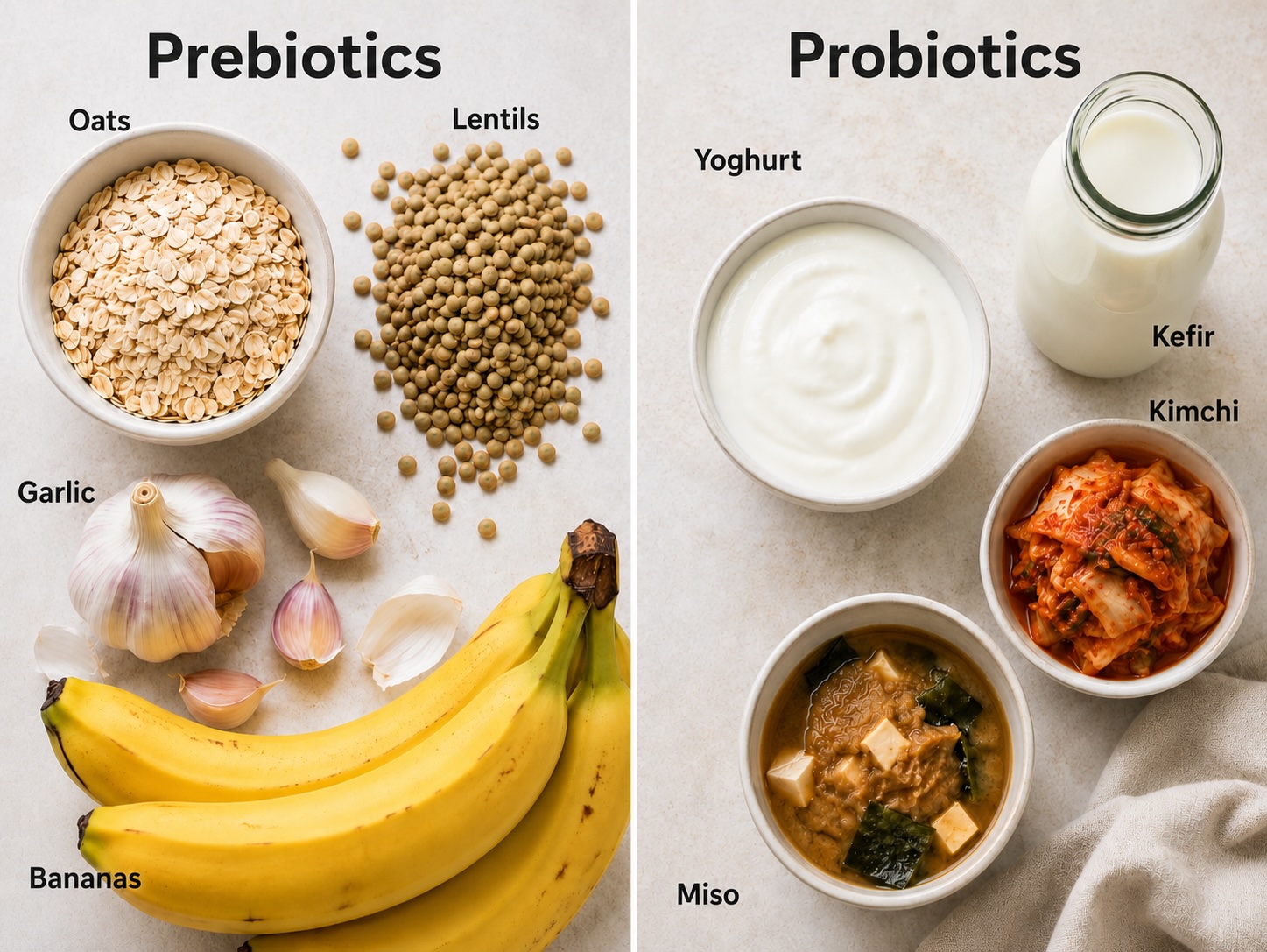
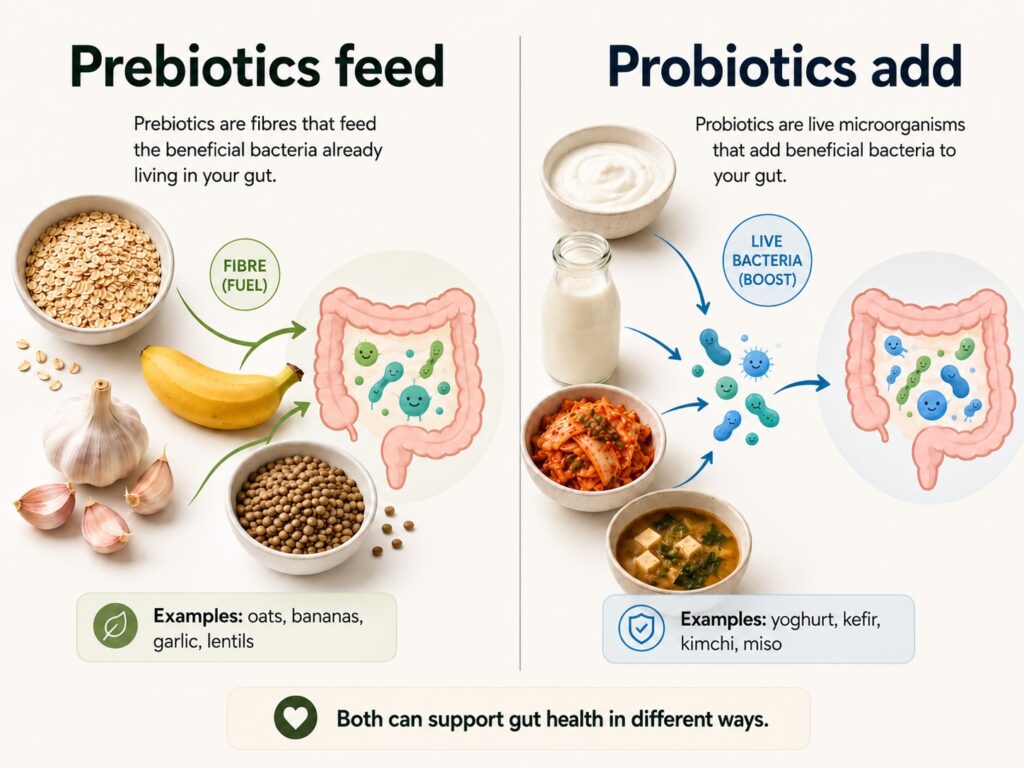
Prebiotics and probiotics are both linked to gut health, but they are not the same thing. The simplest way to understand the difference is this: probiotics are live beneficial microorganisms, while prebiotics are the food that helps beneficial gut microbes grow.
Both can be useful, but they work in different ways. For most people, the best place to start is not with a supplement. It is with a varied diet that includes fibre-rich plant foods and if tolerated, fermented foods.
What are probiotics?
Probiotics are live microorganisms that may provide a health benefit when taken in the right amount. They are usually bacteria, although some yeasts are also used as probiotics. The International Scientific Association for Probiotics and Prebiotics defines probiotics as “live microorganisms that, when administered in adequate amounts, confer a health benefit on the host”.
Probiotics are found in some fermented foods and are also sold as capsules, powders, liquids and other supplements. Common food sources include:
- kefir
- kimchi
- kombucha
- miso
- sauerkraut
- yoghurt with live cultures
Probiotics may help with some gut symptoms, including reducing antibiotic-associated diarrhoea and help some people with irritable bowel syndrome symptoms.
That does not mean every probiotic food or supplement has the same effect. Different probiotic strains can behave differently, and not every product labelled as a probiotic has proven health benefits. Not all foods and supplements labelled as probiotics have demonstrated health benefits.
What are prebiotics?
Prebiotics are substances that are used by beneficial microorganisms in the body and provide a health benefit. The current scientific definition describes a prebiotic as “a substrate that is selectively utilized by host microorganisms conferring a health benefit”.
In everyday food terms, prebiotics are often types of fibre or fibre-like carbohydrates that pass through the small intestine and are fermented by gut microbes in the large intestine. Healthdirect Australia describes prebiotics as “food” for probiotics and notes that they are found in high-fibre foods.
Common prebiotic-rich foods include:
- asparagus
- bananas, especially slightly green bananas
- beans
- chickpeas
- garlic
- lentils
- oats
- onions
- pistachios
- wholegrains
Prebiotics are not a single ingredient or magic gut-health shortcut. They are part of a broader dietary pattern that includes vegetables, fruit, legumes, nuts, seeds and wholegrains.
Prebiotics vs probiotics: the main difference
| Feature | Prebiotics | Probiotics |
|---|---|---|
| What they are | Fibres or substrates used by beneficial microbes | Live microorganisms |
| Main role | Feed and support beneficial gut microbes | Add specific live microbes |
| Common sources | Oats, legumes, onions, garlic, bananas, wholegrains, nuts and seeds | Yoghurt, kefir, kimchi, sauerkraut, miso, kombucha and supplements |
| Best starting point | Fibre-rich whole foods | Fermented foods, or supplements when appropriate |
| Main caution | Can worsen bloating or IBS symptoms in some people if increased too quickly | May not suit people who are severely unwell or immunocompromised |
Which one matters more?
For general gut health, prebiotics are often the better starting point because they come from fibre-rich foods that also provide vitamins, minerals and other beneficial plant compounds.
Australian dietary advice encourages eating a variety of vegetables, fruit, legumes, wholegrain or high-fibre cereals, nuts and seeds. These foods support overall health, not just gut health.
Fibre is also important for normal gut function. In Australia, the recommended fibre intake is about 25 grams per day for adult women and 30 grams per day for adult men, although many Australians eat less than this.
Probiotics may be useful in more specific situations, such as when someone is taking antibiotics or managing certain gut symptoms. However, the effect depends on the strain, dose, product quality and reason for taking it.
Do you need a probiotic supplement?
A probiotic supplement may be worth discussing with a health professional if you have a specific reason for using one. For example, some people use probiotics during or after antibiotics, or as part of a management plan for IBS.
For IBS, Monash FODMAP notes that some studies suggest probiotic supplements can be safe and effective, but there is not enough evidence to recommend specific strains and doses for everyone. They suggest trying one probiotic at a time, taking it regularly for at least four weeks and stopping if there is no improvement.
A probiotic supplement is not automatically better than food. It is also not a general cure for bloating, constipation, diarrhoea, poor immunity or fatigue. If symptoms are ongoing, severe or changing, it is better to speak with a doctor or dietitian.
Can prebiotics make symptoms worse?
Yes, they can for some people.
Prebiotic-rich foods are healthy for many people, but some are also high in FODMAPs. This means they can trigger bloating, wind, abdominal pain or diarrhoea in people with IBS or sensitive digestion.
Examples include onions, garlic, legumes and some wheat-based foods. This does not mean these foods are bad. It means some people may need a slower increase, smaller serves or personalised advice.
A good approach is to increase fibre gradually and drink enough fluid. Going from a low-fibre diet to a very high-fibre diet too quickly can cause discomfort, even when the foods are nutritious.
Can you take prebiotics and probiotics together?
Yes. A product or meal that combines both is sometimes called synbiotic. For example, yoghurt with oats and berries can provide probiotics from the yoghurt and prebiotic fibres from the oats and fruit.
However, more is not always better. Some synbiotic supplements contain prebiotic ingredients such as inulin or fructo-oligosaccharides, which may be poorly tolerated by some people with IBS. Monash FODMAP specifically notes that synbiotics may contain FODMAPs that can trigger symptoms in sensitive people.
Food-first ways to support gut health
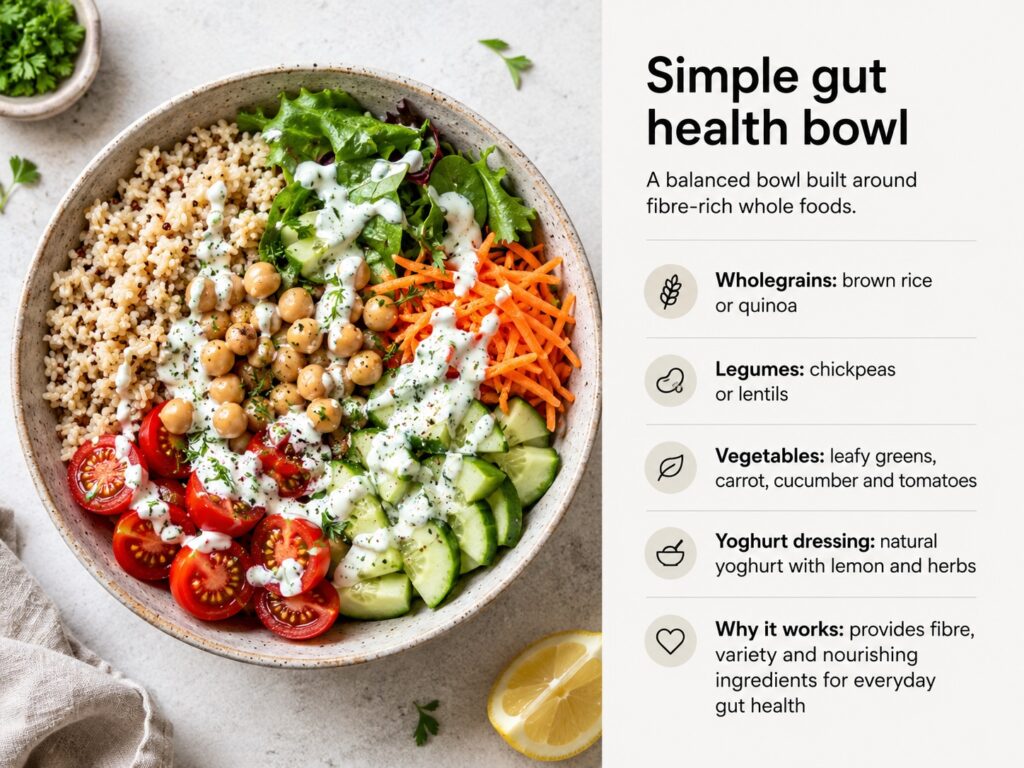
For most adults, a food-first approach is a practical place to begin.
Try adding one or two of these habits:
- add oats, chia seeds or psyllium to breakfast
- choose wholegrain bread, brown rice or barley more often
- eat legumes such as lentils, chickpeas or beans a few times a week
- include yoghurt with live cultures if you tolerate dairy
- add fermented foods such as kimchi, sauerkraut or miso if you enjoy them
- include a wider variety of vegetables across the week
- increase fibre slowly rather than making sudden large changes
When to be careful with probiotics
Probiotics are generally considered safe for many healthy adults, but they are not risk-free for everyone. The risk of harm is greater in people who are severely ill, immunocompromised or medically fragile. Possible risks include infection, harmful substances produced by microorganisms and product contamination.
Speak with a doctor before using probiotic supplements if you:
- are immunocompromised
- are undergoing cancer treatment
- have a central venous catheter
- have recently had major surgery
- are seriously unwell
- are buying probiotics for a premature baby, infant or medically vulnerable person
The bottom line
Prebiotics and probiotics both matter, but they are not interchangeable.
Prebiotics feed beneficial gut microbes. Probiotics add live microorganisms that may provide a benefit in the right situation.
For everyday gut health, the most useful first step is usually a varied, fibre-rich diet with vegetables, fruit, legumes, wholegrains, nuts and seeds. Fermented foods can also be included if you tolerate and enjoy them.
Supplements may help in some situations, but they should be chosen for a specific reason rather than taken as a cure-all.
References
- Australian Government Department of Health and Aged Care / Eat for Health. Australian dietary guidelines 1–5.
- Erhardt R, Meyer-Gerspach AC, Beglinger C. (2022). Prebiotics, gut microbiota and functional constipation: Current evidence and future directions. Nutrients, 14(23), 5067. https://doi.org/10.3390/nu14235067
- Gibson GR, Hutkins R, Sanders ME, et al. Expert consensus document: The International Scientific Association for Probiotics and Prebiotics consensus statement on the definition and scope of prebiotics.Nature Reviews Gastroenterology & Hepatology. 2017. https://doi.org/10.1038/nrgastro.2017.75
- Goodman C, Keating G, Georgousopoulou EN, Hespe C, Levett K. (2021). Probiotics for the prevention of antibiotic-associated diarrhoea: A systematic review and meta-analysis. BMJ Open, 11(8), e043054. https://doi.org/10.1136/bmjopen-2020-043054
- Goodoory VC, Sharma A, Chua A, Ford AC. (2023). Efficacy of probiotics in irritable bowel syndrome: Systematic review and meta-analysis. The American Journal of Gastroenterology, 118(10), 1776–1788. https://doi.org/10.14309/ajg.0000000000002361
- Hill C, Guarner F, Reid G, Gibson GR, Merenstein DJ, Pot B, Morelli L, Canani RB, Flint HJ, Salminen S, Calder PC, Sanders ME. (2014). The International Scientific Association for Probiotics and Prebiotics consensus statement on the scope and appropriate use of the term probiotic. Nature Reviews Gastroenterology & Hepatology, 11(8), 506–514. https://doi.org/10.1038/nrgastro.2014.66
- Holscher HD. (2017). Dietary fiber and prebiotics and the gastrointestinal microbiota. Gut Microbes, 8(2), 172–184. https://doi.org/10.1080/19490976.2017.1290756
- International Scientific Association for Probiotics and Prebiotics. ISAPP elaborates criteria for prebiotics.
- Makki K, Deehan EC, Walter J, Bäckhed F. (2018). The impact of dietary fiber on gut microbiota in host health and disease. Cell Host & Microbe, 23(6), 705–715. https://doi.org/10.1016/j.chom.2018.05.012
- Monash FODMAP. IBS treatments.
- Monash FODMAP. Probiotics for IBS.
- Vinelli V, Biscotti P, Martini D, Del Bo’ C, Marino M, Riso P. (2022). Effects of dietary fibers on short-chain fatty acids and gut microbiota composition in healthy adults: A systematic review. Nutrients, 14(13), 2559. https://doi.org/10.3390/nu14132559
- Yoo S, Kim K, Nam Y, Lee D. (2024). The role of prebiotics in modulating gut microbiota. Nutrients, 16(10), 1466. https://doi.org/10.3390/nu16101466

