


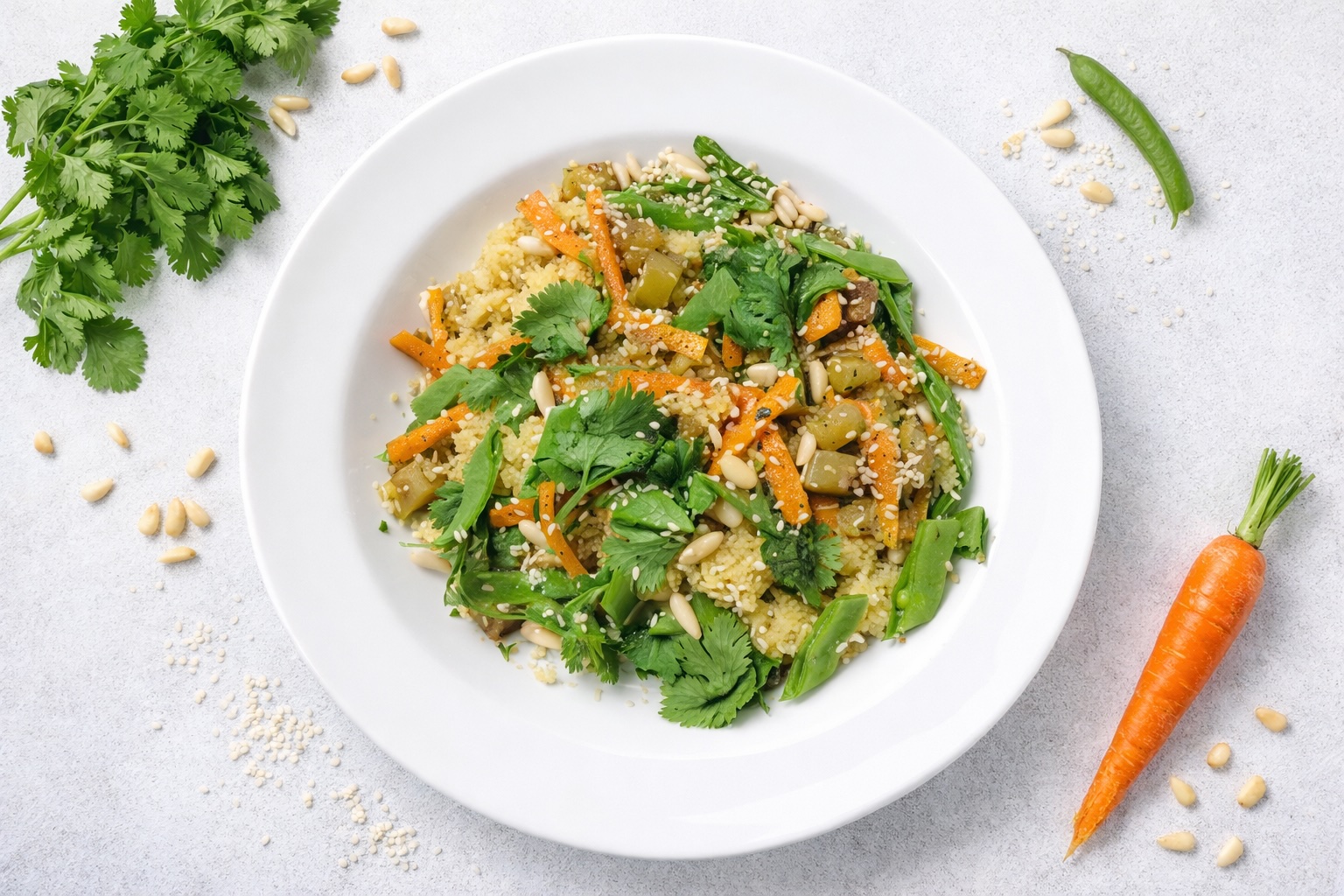


This is a very filling, but nutritious recipe healthy for all the family and very quick to prepare. This recipe is high in fibre, very low in sodium and high in iron and other health nutrients.
To make this a totally gluten-free, use either 100g rice or 100g red lentils instead of the cous cous.
Try to use fresh, organic ingredients as this will be much more tastier and healthier.
Nutrition rundown
- Solid plant-based protein hit thanks to the quinoa, cous cous, seeds and nuts — very respectable for a veg-forward dish.
- High fibre (over a third of daily needs per serve), which is excellent for gut health, blood-sugar control and satiety.
- Healthy fats dominate (olive oil, sesame seeds, pine nuts), with saturated fat staying low.
- Sodium is low moderate, by using low-sodium or homemade stock.
- Naturally cholesterol-free, making it heart-friendly.
- Carbs are nutrient-dense, not empty – wholegrains + vegetables doing the heavy lifting.
- Absolutely — here are some deeper nutrient-level highlights you can add to your recipe card or blog post:
- Rich in magnesium from quinoa, sesame seeds and wholewheat cous cous — supports muscle function, nervous system health and blood pressure regulation.
- Excellent source of plant-based iron, particularly from quinoa, sesame seeds and pine nuts — important for oxygen transport and energy production. Pairing with vegetables boosts absorption.
- High in vitamin A (beta-carotene) from carrots — essential for immune health, skin repair and eye function.
- Good source of vitamin C from snow peas and eggplant — supports collagen production and enhances plant-based iron absorption.
- Strong B-vitamin profile, especially B1, B6 and folate from wholegrains and vegetables — critical for energy metabolism and nervous system support.
- Provides potassium from vegetables and quinoa — important for fluid balance and healthy blood pressure.
- Contains zinc and copper from seeds and nuts — key minerals for immune resilience and antioxidant defence.
- Naturally rich in antioxidants, particularly from eggplant (anthocyanins in the skin), carrots (carotenoids) and fresh coriander — helping reduce oxidative stress.
- Low glycaemic impact compared to refined grains, thanks to fibre + protein + healthy fats slowing digestion and stabilising blood sugar.
- Contains small amounts of omega-6 fatty acids from sesame seeds and pine nuts — beneficial when balanced within a whole-food dietary pattern.
| Recipe information |
| Serves: 4 |
| Prep time: 20 mins |
| Cooking time: 15 mins |
| Recipe nutrition (per serving |
| Calories: 400 |
| Carbs: 62.9 grams |
| Protein: 13.6 grams |
| Fat: 11.3 grams |
Ingredients
- 200g wholewheat cous cous (use 100g rice or lentils for a gluten-free variation)
- 100g wholegrain quinoa
- 3 carrots, cut into 2-3cm thin sticks
- 1 eggplant, cut into small cubes
- 1 red (Spanish) onion, chopped finely
- 3 cloves garlic, crushed and chopped finely
- 12-16 snow peas, cut julienne
- 4 tsp sesame seeds
- 4 tsp pine nuts
- 1 vegetable stock cube (use an organic one)
- Olive oil
- Fresh coriander leaves
Method
- Finely chop the garlic and onions and to a pan with some olive oil.
- Saute the garlic and onion at medium heat until they are translucent.
- In a pan, add 3 cups of water to the quinoa with a pinch of salt and a small amount of olive oil and boil until the quinoa opens a little (about 5-7 minutes) with the lid on, checking on the quinoa to see when it is finished.
- Meanwhile, add 200g cous cous with about 2-3 teaspoons of olive oil, the stock cube and 300ml of boiling water and let simmer uncovered for about 1 minute, after which you need to turn off the heat and place a lid on the pan. After about 4-5 minutes of this, fluff the cous cous with a fork and set aside.
- Add the carrots to the pan with the garlic and onion and saute for a few minutes.
- Add the eggplant to the pan and sauteed a little more. Add a little olive oil and/or water if there is not enough liquid to get the eggplant cooked properly.
- Drain the quinoa and add it to the pan with the cous cous.
- In a large serving bowl, add the quinoa/cous cous, then slowly add the vegetables and mix through thoroughly.
- Serve immediately, topped with the snow peas, some chopped coriander, a sprinkle of sesame seeds and pine seeds.
Nutrition information
| Nutrition Information | Amount | % Daily Value |
|---|---|---|
| Calories | 399.6 | 20.0% |
| Calories from fat | 101.7 | 17.7% |
| Total fat | 11.3 g | 14.5% |
| Saturated fat | 1.6 g | 8.0% |
| Cholesterol | 0 mg | 0% |
| Sodium | 368.4 mg | 16.0% |
| Carbohydrate | 62.9 g | 22.9% |
| Dietary fibre | 9.8 g | 35.0% |
| Sugars | 6.7 g | n/a |
| Protein | 13.6 g | 27.7% |
The % daily values are based on a diet of 2000 calories per day
These are approximate values.

