


Facts
What is dandruff?
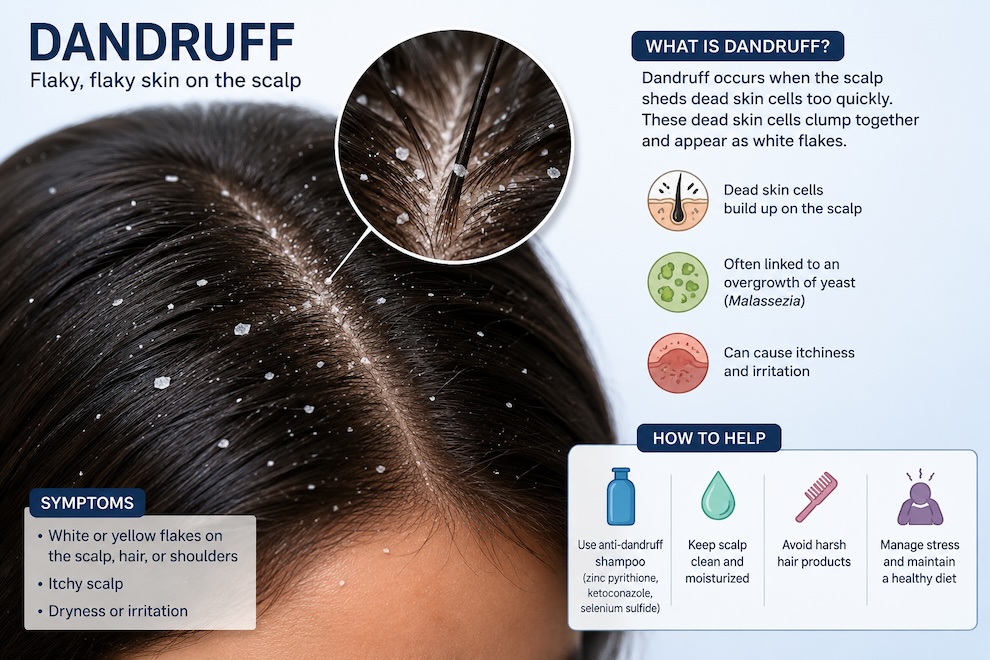
Dandruff is a condition which affects the scalp (of the head), which produces white flakes that are shed and fall from the scalp.
Dandruff causes the normal scalp cell renewal rate to be hastened, so more scalp cells are renewed than are produced, so more dead scalp cells are shed and fall from the scalp.
Dandruff not only causes scaling inflammation from the skin of the scalp on the head, but can also cause this on the eyebrows too.
Facts about dandruff
- Dandruff is the most common scalp condition in adults
- The medicated shampoo (either the conventional or alternative ones) usually clear up the dandruff after a few weeks of treatment
- Brushing the hair thoroughly every day prevents dandruff by allowing normal dead skin cells to be shed
- Wash hair a few times a week to prevent build-up of dead skin cells
- The use of medicated shampoo on a regular basis is recommended to prevent recurrence
- Treat nutritional deficiencies with more intake in the diet or through supplementation (this should be done in conjunction with a naturopath and your doctor)
Symptoms
Symptoms of dandruff
The main symptoms of dandruff are:
- Lots of small, white (or greyish) flakes on the shoulders, hair and back of tops/jackets/shirts
- Lots of flakes coming from the head when it is scratched
- Scalp itching or soreness
While dandruff is not a serious condition, people with any of these symptoms should consult with their doctor to treat this condition.
Causes
Causes of dandruff
The case of dandruff is not know, but medicine has a few theories on why some people develop dandruff:
Increased oil production and skin secretions
One theory proposed is that increased oil production on the scalp especially can trigger shedding of dead skin cells, which produces the white flakes known as dandruff. Oily skin which is a result of an overactive sebaceous gland may be another factor.
Increased numbers of normal skin yeasts
Some people have a genetic disposition to have increased levels of the pityrosporum ovale yeast on their scalp, which can cause dandruff symptoms.
Hormonal changes
Studies show that some women who are menopausal may have dandruff due to the changes in their hormones, that normally protect the scalp from this condition.
Lack of sunlight
Dandruff may get worse in winter than in summer because the ultraviolet light kills the pityrosporum ovale yeast that can cause dandruff.
Prevention
Prevention of dandruff
Non-preventable risk factors
Dandruff may be unpreventable in certain circumstances:
- Hormonal changes – some women who are menopausal may have dandruff due to the changes in their hormones which normally protect the scalp from this condition
- Increased sebaceous gland production – when the sebaceous gland is overactive, it can cause dandruff and it may be difficult to control
- Increased skin yeasts – some people have a genetic predisposition to have increased levels of the pityrosporum ovale yeast on their scalp, which can cause dandruff symptoms
Preventable risk factors
There are ways to prevent dandruff from occurring:
- Adequate sunlight – dandruff may get worse in winter than in summer because the ultraviolet light kills the pityrosporum ovale, so try to get adequate sunlight to prevent worsening of symptoms
- Brush the hair regularly – not brushing the hair can cause a build-up of dead skin cells on the scalp which need to be shed, so brush the hair every day at least once a day
- Hair treatments – certain hair treatments that use strong chemicals (for example, relaxing, or straightening the hair) can irritate the scalp and cause dandruff symptoms
- Low GI diet – people who have a diet that consists of food which is low to medium GI (mostly natural and unprocessed foods) tend to have less incidence of dandruff, as excessive sugar intake is associated with dandruff
- Proper nutrition – there is some evidence to suggest that nutritional deficiency may be a factor which causes the sebaceous glands to be overactive on the scalp. The most important nutrients seem to be the anti-inflammatory essential fatty acids (omega-3 especially, but also certain omega-6, such as GLA and flaxseeds), vitamin B6 and vitamin B12
- Reduce stress – excessive stress levels can adversely affect dandruff and make the condition worse
- Use gentle shampoos and conditioners – it is known that certain shampoos and conditioners, that are strongly acidic or alkaline (created with strong chemicals) can damage the scalp and cause dandruff symptoms
Complications
Complications of dandruff
In general, it is very unusual for dandruff to cause any complications at all. If there are any complications, the only possibilities are:
- Infection – it can be possible, albeit very rare, for an infection to occur if there is any broken skin on the scalp. If the skin on the scalp becomes excessively itchy, the constant scratching can break open the skin a little, which is how the bacteria can enter and cause an infection. While this is exceedingly rare, it can occur, so visit your doctor to prescribe appropriate treatment
- Reaction to medicated shampoo – the only other complication of dandruff, is not a result of the condition but due to an adverse reaction to the medicated shampoos or other medications that your doctor has prescribed for you. If you have sensitive skin and your scalp/face become irritate or inflamed by the medicated shampoo, you need to stop using it and consult your doctor to find a more appropriate treatment option
Diagnosis
When to see a doctor about dandruff
Anyone who notices they have the symptoms of dandruff and it becomes bothersome should seek the advice of a health care provider to treat the symptoms and seek a positive outcome.
People with existing dandruff should seek the advice of their medical practitioner if the treatment they are using does not work, or is not having a reasonably positive effect. Your doctor may need to change treatment to get the results expected.
Diagnosis of dandruff
Diagnosis of dandruff is completed through the following tests:
- Medical history – the doctor will ask a series of questions about the onset, the duration and severity of symptoms
- Physical examination – the doctor will examine the scalp to determine if there are any flakes
If the scalp flaking is not due to dandruff, the doctor may request other tests and also refer you to a dermatologist for further testing.
Treatment
Conventional treatment of dandruff
Conventional treatment of dandruff consists of the following:
Lotions
Sometimes lotions are prescribed in addition to any medications or medicated shampoos:
- Anti-fungal creams – are used in the case of the yeast causing the dandruff, especially if the infection is widespread and severe
- Cortisone lotion – are used in conjunction with the medicated shampoo to really get rid of the dandruff
Medicated Shampoos
Special, medicated shampoos are usually the first (and sometimes only) treatment recommended, especially if the symptoms are mild:
- Medicated shampoo – can usually be purchased without the need for a prescription and are normally recommended by the doctor
Medications
The medications prescribed depend on the the level of infection and severity of symptoms:
- Antibiotics – are used to treat the yeast infection of the scalp, especially if the condition is widespread
- Anti-fungal tablets – are used in the case of the yeast causing the dandruff, especially if the infection is widespread
If any of the treatments above causes an allergic reaction or worsening of symptoms, its use must be ceased and medical care sought. Your doctor will try a different treatment approach.
Alternative
Alternative / complementary treatment of dandruff
There are a number of alternative/complementary strategies that can be used to help reduce severity and duration of symptoms:
Herbs
There are no herbs recommended in the treatment of dandruff.
Vitamins
There are a number of vitamins which may be especially beneficial in helping reducing severity and duration of symptoms and even prevent recurrence:
- Betacarotene – the antioxidant betacarotene is very helpful as it is essential for proper hair and scalp growth and maintenance. Betacarotene is required to help speed up healing and return the scalp to normal function. Betacarotene is the precursor to vitamin A
- Biotin – the vitamin biotin is needed for healthy skin and hair and may help to reduce severity of symptoms
- B Vitamins – supplementation with all the B vitamins may be required to help clear up symptoms and prevent recurrence, especially vitamin B6 and vitamin B12
- Vitamin A – the antioxidant vitamin A is essential for any condition of the skin, as it helps to speed up healing by ensuring the scalp becomes healthier and functions properly
- Vitamin B6 – this vitamin is required for maintaining health skin and hair. Vitamin B6 also works on ensuring the nervous system functions properly and effectively
- Vitamin B12 – this vitamin is required for maintaining health skin and hair. Vitamin B12 also works on ensuring the nervous system functions properly and effectively
Minerals
There are a number of minerals which may be especially beneficial in helping reducing severity and duration of symptoms and even prevent recurrence:
- Selenium – supplementation with the mineral selenium is recommended as it helps the body combat the symptoms of dandruff and prevents it from developing in the first place (it is also an ingredient in conventional medicated anti-dandruff shampoos because it is so useful)
- Zinc – supplementation with the mineral zinc may help a lowered immune system to work better and reduce scalp sensitivity and flakiness
Other nutrients
There are a number of other nutrients which may be especially beneficial in helping reducing severity and duration of symptoms and even prevent recurrence:
- Cod liver oil – cod liver oil contains naturally high levels of vitamin A, which is essential for ensuring the hair and scalp are healthy and shiny. Cod liver oil also ensures the sebaceous glands are not overactive and function normally
- Essential fatty acids – the essential fatty acids (especially the omega 3 fatty acids) reduce inflammation and keep the scalp healthy
- Evening Primrose oil – the anti-inflammatory properties of evening primrose oil and specifically the GLA, which is an omega-6 essential fatty acid help to protect the hair and scalp from dandruff by reducing inflammation
- Flaxseed oil – the anti-inflammatory properties of flaxseed oil are due to the omega-6 essential fatty acids, which help to protect the hair and scalp from dandruff by reducing inflammation
- Lecithin – the B-vitamin cofactor choline is an excellent source of lecithin, which is needed for healthy hair and scalp
Dietary modifications
There are a number of dietary modification strategies that may help to reduce symptoms:
- Avoid excessive sugar intake – high intake of sugar is thought to contribute to the development dandruff so these must be eliminated from the diet (or at least greatly reduced)
- Avoid processed foods – high intake of processed foods are thought to contribute to the development dandruff so these must be eliminated from the diet (or at least greatly reduced)
- Green tea – a recent study has shown that green tea may be a useful remedy for dandruff
Lifestyle modifications
There are some lifestyle modifications that may help reduce severity of symptoms”
- Adequate sleep – it is important to get enough sleep every day to help the body have enough time to be in deep sleep, where it engages in the healing process
- Gentle shampoo and conditions – try to use a gentle, organic, non-perfumed, no preservative, chemical free shampoo and conditioner
Alternative treatments
- Apple cider vinegar – using apple cider vinegar as a final rinse after shampooing the hair works very well for reducing dandruff symptoms, especially when it is used after using a tea tree oil shampoo. Apple cider vinegar reduces flakiness and scalp sensitivity and itchiness. Dilute the apple cider vinegar with an equal amount of water and use this to rinse the hair
- Scalp massage – using 60ml olive oil mixed with the juice of half a lemon, rub this in the scalp and massage a little to ensure it has been rubbed through the whole scalp. Leave it for about 10-20 minutes and then shampoo the hair with the tea tree oil shampoo. This should be used at least once a week, but can be used twice a week of more severe symptoms. It is very important to wash the hands properly after massaging the scalp in this manner
- Tea tree oil shampoos – medicated shampoos and soaps with tea tree oil are a recommended alternative treatment for dandruff (instead of the conventional treatments) as the tea tree oil has anti-fungal, anti-bacterial and anti-viral properties and usually helps to clear up dandruff very quickly and effectively
Always ensure that you notify your medical practitioner of any supplements that you want to take – it may interfere with other medication or conditions you have. Confirm with your doctor it is safe to take before you try it.
Self care
Living with dandruff
There are a number of useful strategies that can be used to reduce dandruff symptoms:
- Apple cider vinegar rinse – studies show that apple cider vinegar is beneficial in reducing symptoms of dandruff, especially when used as a final rinse after washing the hair with a tea tree oil shampoo. Dilute the vinegar with water (50%). Ensure the apple cider vinegar has been massaged slightly through the scalp and leave it for about 20-30 minutes before rinsing it out of the hair
- Healthy diet – since a diet deficient in the omega-3 and omega-6 essential fatty acids is implicated in dandruff, it is important to ensure your diet has adequate intake of foods which are high in these nutrients. Foods rich in omega-3: oily fish such as mackerel, salmon, sardines and trout. Foods rich in omega-6: walnuts, pecans, flaxseeds, sesame seeds, macadamias
- Medicated shampoo – irrespective of whether you choose a prescription or over-the-counter shampoo, it is necessary to use some type of shampoo specifically made for reducing dandruff symptoms. Medicated shampoo can be one which is prescribed by the doctor, or it can be a natural one, made with tea tree oil – both will have similar results
- Olive oil massage – add some slightly warmed olive oil to a bowl and use this oil to massage your scalp. Use enough oil to get it through the whole scalp. Once massaged through, shampoo the hair with regular shampoo. This should be done twice a week
Caring for someone with dandruff
Partner
There are no special recommendations for a partner of someone with dandruff.
Friends
There are no special recommendations for a partner of someone with dandruff.
Parents
Parents with children can help their child with a number of strategies:
- Encourage use of proper shampoos – your child will benefit if the proper (medicated or gentle, no-chemical) shampoo and conditioner used, to reduce incidence of dandruff
References
References
- Balch PA. Prescription for Nutritional Healing. Fourth Edition, Penguin Australia, 2006
- Osieki H. The Physicians Handbook of Clinical Nutrition. Sixth Edition, BioConcepts Publishing, 2001
- Piérard-Franchimont C, Goffin V, Decroix J, Piérard GE . A multicenter randomized trial of ketoconazole 2% and zinc pyrithione 1% shampoos in severe dandruff and seborrheic dermatitis. Skin Pharmacol. Appl. Skin Physiol. 2002; 15 (6): 434-41
- Rapaport M. “A randomized, controlled clinical trial of four anti-dandruff shampoos”. J. Int. Med. Res. 9 (2): 152-6, 1981
- Satchell AC, Saurajen A, Bell C, Barnetson RS. Treatment of dandruff with 5% tea tree oil shampoo. J Am Acad Dermatol. 2002 Dec;47(6):852-5
- Sawleshwarkar SN, Salgaonkar V, Oberai C. Multicenter, open-label, non-comparative study of a combination of polytar and zinc pyrithione shampoo in the management of dandruff. Indian J Dermatol Venereol Leprol. 2004 Jan-Feb;70(1):25-8
- Trattler R, Jones A. Better Health Through Natural Healing: How to Get Will Without Drugs or Surgery. Second Edition, Hinkler Books 2001
- Trueb RM. Shampoos: ingredients, efficacy and adverse effects. J Dtsch Dermatol Ges. 2007 May;5(5):356-65
- Waldroup W, Scheinfeld N. Medicated shampoos for the treatment of seborrheic dermatitis. J Drugs Dermatol. 2008 Jul;7(7):699-703
Last reviewed and updated: 14 May 2024

