


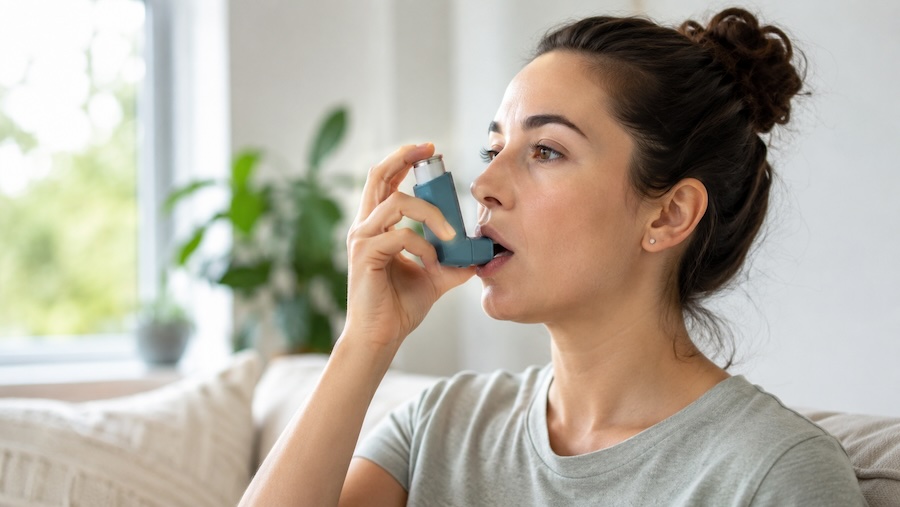
Asthma is a long-term inflammatory condition that affects the airways. When asthma is triggered, the airways can tighten, swell and produce extra mucus. This can make breathing feel harder and may cause coughing, wheezing, chest tightness or shortness of breath.
Current asthma guidance supports a safety-first approach that combines lifestyle changes, breathing techniques, gentle movement, trigger reduction and stress management with a written asthma action plan, correct inhaler technique and regular medical review.
Many people want to manage asthma more naturally. This is understandable, especially when symptoms are linked to dust, mould, smoke, stress, pollen, cold air, exercise, respiratory infections or indoor irritants. These strategies can help, but they should be used as complementary care, not as a replacement for prescribed asthma treatment. This is because asthma can become serious very quickly, so natural care should never mean stopping prescribed preventer or reliever medication without medical advice.
The safest approach is to combine medical asthma management with practical lifestyle, environmental, breathing and self-care strategies that reduce triggers and support better asthma control.
What asthma symptoms feel like
Asthma symptoms can vary from mild to severe and may come and go. Some people notice symptoms only during exercise, at night, during pollen season or when they have a cold. Others may have frequent symptoms that interfere with sleep, work, school or daily activities.
Common asthma symptoms include:
- Wheezing or a whistling sound when breathing
- Coughing, especially at night, early morning or after exercise
- Shortness of breath
- Chest tightness or heaviness
- Waking during the night because of breathing symptoms
- Needing reliever medication more often than usual
- Feeling unable to take a full breath
- Tiring more easily during normal activity
Asthma symptoms should not be ignored, even if they seem mild. Frequent symptoms, night waking or increasing reliever use can mean asthma is not well controlled.
What causes asthma symptoms to flare
Asthma symptoms happen when the airways become more sensitive and reactive. This can occur because of inflammation, airway tightening and mucus production.
Some people have allergic asthma, where symptoms are triggered by allergens such as pollen, dust mite, mould, animal dander or cockroach particles. Others are more affected by viruses, smoke, exercise, weather changes, stress, air pollution, workplace exposures or strong smells.
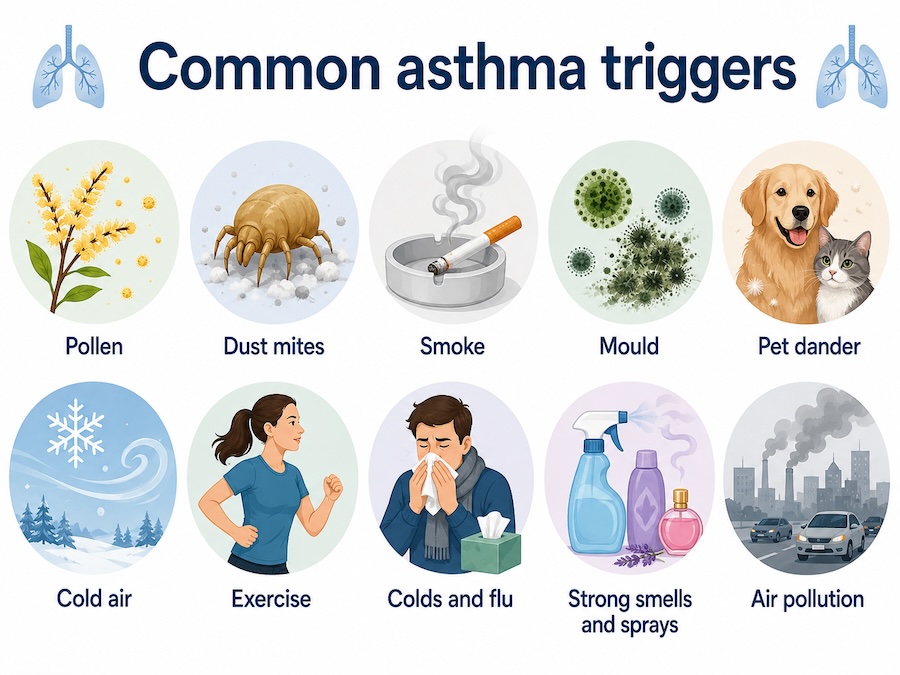
Common asthma triggers include:
- Colds, flu, RSV, covid19 and other respiratory infections
- Cigarette smoke, vaping, bushfire smoke, woodfire smoke and traffic pollution
- Pollen, especially grass pollen
- Thunderstorm asthma conditions
- Dust mites
- Mould and dampness
- Animal dander
- Cockroach allergens
- Exercise, especially in cold or dry air
- Strong fragrances, aerosols, cleaning sprays and essential oils
- Cold air or sudden temperature changes
- Stress, strong emotions or anxiety
- Some medicines, including aspirin or anti-inflammatory medicines in sensitive people
- Some workplace chemicals, dusts or fumes
- Reflux, poor sleep or untreated sleep apnoea, which can worsen breathing symptoms in some people
A useful first step is to identify your personal triggers rather than trying to avoid everything. Asthma triggers are individual, so what affects one person may not affect another.
Natural management does not mean “no medication”
Asthma is an inflammatory airway condition. For many people, medication is needed to reduce airway inflammation and prevent serious flare-ups. Natural strategies can help reduce the burden on the lungs, but they do not replace an asthma action plan, correct inhaler technique or prescribed treatment.
For adults and adolescents, current Australian asthma guidance has moved away from relying on short-acting reliever medication alone. Many people now need an anti-inflammatory reliever or a preventer-containing plan, depending on their age, symptoms, risk and medical history. This should be discussed with a doctor, asthma nurse or pharmacist.
Natural asthma management works best when it sits beside:
- A written asthma action plan
- Regular asthma reviews
- Correct inhaler technique
- Knowing which inhaler is your reliever
- Knowing which inhaler is your preventer
- Understanding what to do when symptoms worsen
- Seeking urgent help when asthma first aid is not working
Start with an asthma action plan
A written asthma action plan is one of the most important tools for managing asthma. It tells you what to do when asthma is stable, when symptoms are worsening and when asthma becomes an emergency.
A good asthma action plan usually includes:
- Your usual asthma medicines
- How to recognise worsening asthma
- What to do when symptoms increase
- When to increase treatment
- When to call your doctor
- When to call emergency services
- Emergency contact details
Keep a copy at home, at work, at school or childcare if relevant and with anyone who helps care for you or your child.
Check your inhaler technique
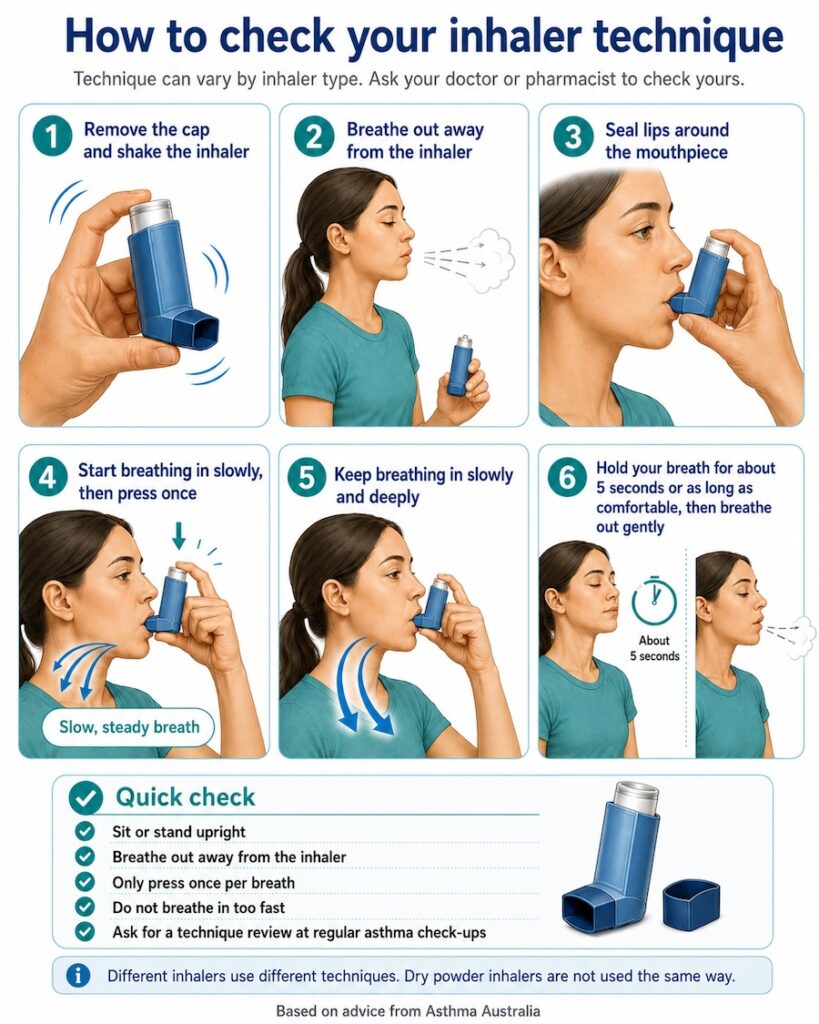
This is one of the most overlooked asthma management steps. If an inhaler is not used correctly, less medicine reaches the lungs. This can make asthma seem worse even when the medicine itself is appropriate.
Ask a pharmacist, doctor or asthma educator to check your technique regularly, especially if you:
- Have changed inhalers
- Use more than one inhaler type
- Have frequent symptoms
- Have had a recent flare-up
- Are using a spacer for the first time
- Are caring for a child with asthma
Using a spacer with a puffer can help more medicine reach the lungs. Spacers are especially important for children, but many adults benefit from them too.
Track your symptoms and triggers
A simple asthma diary can help you see patterns. Record symptoms, reliever use, sleep disruption, exercise tolerance and likely triggers.
You may notice patterns such as:
- Symptoms after cleaning products or perfume
- Wheezing after cold air exposure
- Coughing after lying down
- Worse asthma during pollen season
- Symptoms after visiting a home with pets
- Flare-ups after viral infections
- Increased symptoms during stress
- Needing reliever more often during smoke or bushfire conditions
Some people also use a peak flow meter. This measures how fast air can be pushed out of the lungs and may help detect worsening asthma before symptoms feel severe. Use it according to your doctor’s advice and your asthma action plan.
Reduce smoke and air pollution exposure
Smoke is a major asthma trigger. This includes cigarette smoke, vaping aerosol, bushfire smoke, woodfire smoke and smoke from indoor burning.
To reduce exposure:
- Keep your home and car smoke-free
- Avoid vaping indoors
- Avoid wood heaters where possible
- Check air quality during bushfire season
- Stay indoors with windows closed on smoky days
- Use recirculated air in the car during heavy smoke
- Consider a suitable air purifier with a HEPA filter in bedrooms or main living areas
- Avoid burning incense, scented candles or essential oils if they trigger symptoms
During bushfire smoke events, people with asthma should keep their reliever accessible and follow their asthma action plan. If smoke is severe and symptoms are worsening, seek medical advice early.
Manage pollen and thunderstorm asthma risk
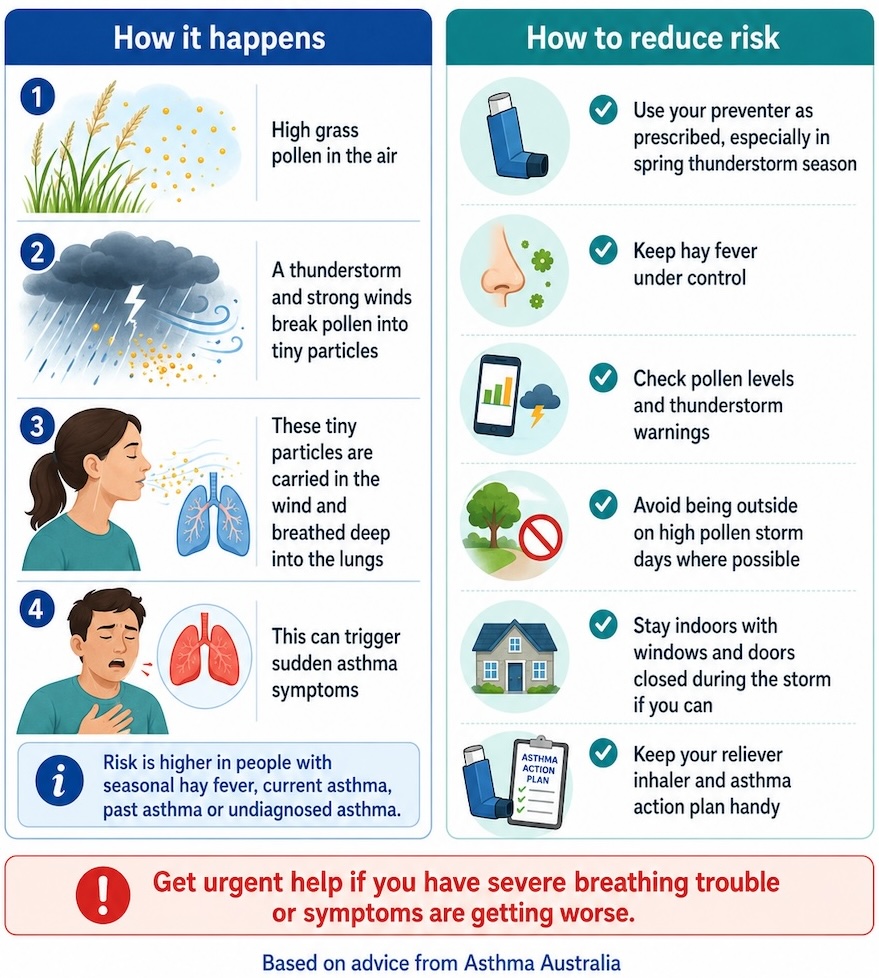
Pollen can be a significant asthma trigger, especially for people with hay fever.
Thunderstorm asthma can occur when storm conditions break pollen particles into tiny fragments that can be breathed deep into the lungs. This can cause sudden, severe breathing symptoms in susceptible people.
To reduce risk during high pollen or stormy weather:
- Monitor pollen forecasts if available in your area
- Stay indoors during high-risk thunderstorm conditions
- Keep windows and doors closed during high pollen periods
- Shower and change clothes after outdoor exposure
- Avoid drying bedding outdoors during high pollen days
- Treat hay fever properly
- Keep reliever medication with you
- Follow your asthma action plan
People with both asthma and hay fever should take hay fever symptoms seriously. Poorly controlled allergic rhinitis can make asthma harder to control.
Control mould and dampness
Mould grows in damp and poorly ventilated spaces. For people sensitive to mould, spores can irritate the airways and worsen asthma symptoms.
Practical steps include:
- Fix water leaks quickly
- Improve ventilation in bathrooms, laundries and kitchens
- Use exhaust fans where available
- Dry wet areas promptly
- Avoid storing damp items in cupboards
- Remove visible mould safely
- Replace heavily mould-damaged soft furnishings if needed
- Use a dehumidifier in persistently damp areas if appropriate
Avoid harsh cleaning sprays if they trigger asthma. Some people need someone else to clean mould or use protective equipment. Severe mould problems may need professional remediation.
Reduce dust mite exposure
Dust mites are common in bedding, carpets, soft furnishings and upholstered furniture. Not everyone with asthma is sensitive to dust mites, but for those who are, reducing exposure may help.
Options include:
- Washing sheets and pillowcases regularly in hot water where fabric allows
- Using dust mite-resistant mattress and pillow covers
- Reducing bedroom clutter that collects dust
- Vacuuming with a HEPA-filter vacuum if possible
- Damp dusting rather than dry dusting
- Keeping soft toys washable and washing them regularly
- Choosing hard flooring over carpet if renovating and dust mite allergy is a major issue
Dust mite control is most useful when dust mite allergy is confirmed or strongly suspected. It is usually not enough by itself to control asthma.
Make exercise safer, not avoided
Exercise can trigger asthma symptoms in some people, but avoiding exercise altogether can reduce fitness and may make breathlessness feel worse over time. With good asthma control, most people with asthma can be physically active.
Exercise may help improve fitness, quality of life and confidence with breathing. The key is to exercise safely.
Helpful strategies include:
- Warm up gradually
- Start with low to moderate intensity
- Breathe through the nose when possible in cold air
- Avoid exercising outdoors during heavy smoke, high pollen or thunderstorms
- Follow your asthma action plan for exercise-related symptoms
- Use medication before exercise if prescribed
- Cool down gradually
- Stop and follow your action plan if symptoms develop
Good options may include walking, swimming, cycling, yoga, Pilates, light resistance training or supervised exercise programs. People with unstable asthma should speak with a doctor before increasing activity.
Eat in a way that supports airway health
There is no single asthma diet, but a healthy dietary pattern may support better overall inflammation control, immune function and weight management.
A lung-supportive eating pattern includes:
- Vegetables every day
- Fruit, especially colourful varieties
- Legumes such as lentils, chickpeas and beans
- Wholegrains such as oats, brown rice and wholegrain bread
- Nuts and seeds if tolerated
- Extra virgin olive oil
- Fish and other omega-3-rich foods
- Adequate protein
- Plenty of water
A Mediterranean-style diet is often studied because it is rich in plant foods, fibre, antioxidants and healthy fats. Research suggests this pattern may be associated with better respiratory health, although diet should be seen as supportive rather than a stand-alone asthma treatment.
Some people have food allergies or sensitivities that can trigger breathing symptoms. True food-triggered asthma is less common than pollen, smoke or viral triggers, but it can occur. If wheezing, swelling, hives, vomiting or breathing difficulty occurs after eating, seek medical advice. Sudden breathing difficulty after food may be an emergency.
Maintain a healthy weight if relevant
Asthma can be harder to control when a person is carrying excess body weight. This may be due to mechanical pressure on breathing, inflammation, reflux, sleep problems or reduced exercise tolerance.
Weight loss is not a quick asthma cure, but gradual, supported weight management may improve symptoms, fitness and quality of life in some people.
Helpful approaches include:
- Eating regular meals based on whole foods
- Reducing ultra-processed foods
- Increasing fibre-rich foods
- Building daily movement gradually
- Strength training if suitable
- Prioritising sleep
- Managing reflux if present
- Seeking professional support if weight loss has been difficult
The goal is not extreme dieting. The goal is reducing strain on the body and supporting steadier breathing.
Look after sleep and reflux
Asthma symptoms often worsen at night. Night waking may mean asthma is not well controlled and should be reviewed.
Other conditions can also worsen night-time breathing, including reflux, post-nasal drip and sleep apnoea.
Natural sleep and reflux supports include:
- Avoiding large meals close to bedtime
- Limiting alcohol if it worsens reflux or sleep
- Elevating the head of the bed if reflux is a problem
- Treating hay fever or sinus symptoms
- Keeping the bedroom cool, clean and low in dust
- Maintaining a regular sleep routine
- Seeking assessment for snoring, choking, gasping or daytime sleepiness
Do not assume night-time coughing is harmless. Regular night symptoms need medical review.
Breathing exercises may help some people
Breathing exercises do not replace asthma medication, but they may help some people improve quality of life, reduce dysfunctional breathing patterns and feel more confident during mild breathlessness.
Useful breathing approaches may include:
- Diaphragmatic breathing
- Nasal breathing practice
- Slow breathing
- Breathing retraining with a physiotherapist
- Buteyko-style breathing under guidance
- Relaxed breathing during stress
A simple breathing practice:
- Sit upright with shoulders relaxed.
- Place one hand on the lower ribs or belly.
- Breathe in gently through the nose if comfortable.
- Let the lower ribs expand rather than lifting the shoulders.
- Breathe out slowly and softly.
- Continue for 2–5 minutes.
Do not use breathing exercises as the main treatment during an asthma attack. If symptoms are worsening, follow your asthma action plan.
Yoga for asthma support
Yoga may help some people with asthma by encouraging slower breathing, relaxation, body awareness and gentle movement. Evidence suggests yoga may provide small improvements in symptoms and quality of life for some people, but it should be used as a supportive practice rather than a treatment replacement.
Asthma-friendly yoga should be gentle, steady and non-straining. Avoid breath-holding, forceful breathing or intense practices that provoke symptoms.

Gentle options may include:
Supported child’s pose
Child’s pose can feel calming because it encourages rest, softens the back and may reduce stress-related tension. For people with asthma, it should be modified so the chest is not compressed.
Use a bolster, cushion or folded blanket under the torso. Keep the knees apart to allow the ribs and belly to move. Rest the forehead or cheek on support. Breathe gently. Come out of the pose if breathing feels restricted.
Seated mountain pose
Sit tall with feet on the floor. Relax the shoulders and lengthen through the spine. This posture can help create space through the chest without forcing the breath.
Cat-cow
Move slowly between rounding and arching the spine while breathing gently. This can help release tension through the back and rib cage.
Supported bridge pose
Lie on the back with knees bent and a cushion or yoga block under the pelvis. Keep the chest open but relaxed. Avoid this pose if it causes discomfort, reflux or breathlessness.
Legs up the wall
This restorative pose may help relaxation. Keep the chest and neck comfortable. Stop if lying flat worsens coughing or reflux.
Yoga should feel steady and easy. If a pose makes breathing harder, skip it.
Stress and emotional triggers
Stress does not “cause” asthma in a simple way, but it can worsen symptoms. Stress can change breathing patterns, increase muscle tension, disrupt sleep and make it harder to follow daily asthma care.
Helpful stress supports include:
- Gentle breathing practice
- Yoga or stretching
- Walking
- Journalling symptoms and triggers
- Counselling or psychological support
- Mindfulness or meditation
- Reducing over-scheduling
- Having a clear asthma action plan to reduce uncertainty
People with asthma can also experience anxiety about breathlessness. This is understandable. The aim is not to dismiss symptoms as anxiety, but to manage both breathing health and emotional wellbeing.
Be careful with “natural remedies”
Many natural remedies marketed for asthma are not well supported by evidence. Some may be harmless for general wellbeing, but others can trigger symptoms or interact with medicines.
Be cautious with:
- Essential oils
- Incense
- Herbal smoking products
- Steam inhalation
- Strong menthol products
- Unregulated supplements
- Detox programs
- Claims that asthma can be cured naturally
- Advice to stop preventer medication
Vitamin D is important for general health, especially if a person is deficient, but current evidence does not show that vitamin D supplements reliably improve asthma control or prevent severe asthma attacks for everyone. Testing and supplementation should be discussed with a health professional.
Magnesium, omega-3 supplements, probiotics, herbal remedies and other supplements should not be used as asthma treatments unless recommended by a qualified health professional. Food-based nutrition is usually the safer foundation.
Prevent respiratory infections where possible
Colds, flu and other respiratory infections are common asthma triggers. Reducing infection risk can reduce asthma flare-ups.
Helpful steps include:
- Staying up to date with recommended vaccinations
- Washing hands regularly
- Avoiding close contact with people who are unwell where practical
- Wearing a mask in high-risk settings if appropriate
- Managing sleep, nutrition and stress
- Following your asthma action plan at the first sign of worsening symptoms
Ask your doctor which vaccinations are recommended for your age, health history and risk level.
When to see a doctor
Book a doctor review if:
- You use your reliever more often than usual
- You wake at night with asthma symptoms
- You cough, wheeze or feel tight in the chest regularly
- Exercise is limited by breathing symptoms
- You have had a recent asthma flare-up
- Your inhaler does not seem to work as well
- You are unsure which inhaler is your reliever
- You do not have a written asthma action plan
- Your symptoms are triggered at work
- Hay fever, reflux or sinus symptoms are worsening asthma
- You are pregnant or planning pregnancy
- You want to reduce medication or try complementary therapies
Asthma treatment should be reviewed regularly, even when symptoms seem stable.
When asthma is an emergency
Call triple zero (000) in Australia for urgent help if asthma symptoms are severe or not improving with asthma first aid.
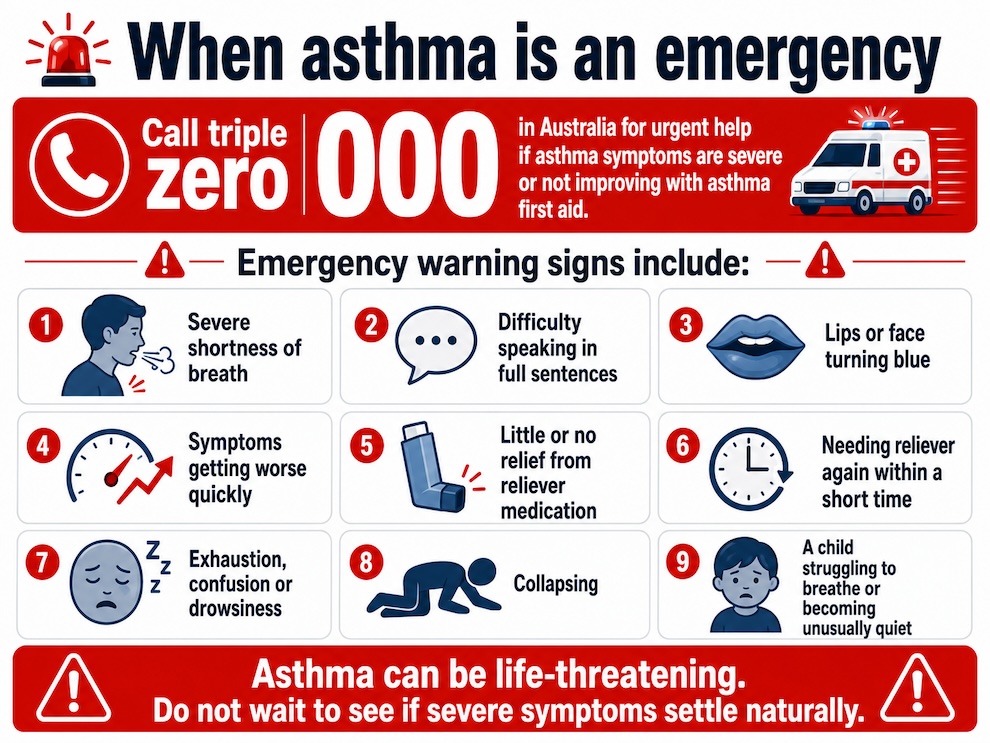
Emergency warning signs include:
- Severe shortness of breath
- Difficulty speaking in full sentences
- Lips or face turning blue
- Symptoms getting worse quickly
- Little or no relief from reliever medication
- Needing reliever again within a short time
- Exhaustion, confusion or drowsiness
- Collapsing
- A child struggling to breathe or becoming unusually quiet
Asthma can be life-threatening. Do not wait to see if severe symptoms settle naturally.
Asthma first aid basics
Follow your personal asthma action plan. If you do not have one, Australian asthma first aid commonly advises:
- Sit upright and stay as calm as possible.
- Take reliever medication as directed.
- Wait 4 minutes.
- If symptoms are not improving, call triple zero (000).
- Keep using reliever medication as directed while waiting for help.
Some people now use different reliever inhalers depending on their prescribed plan, so your doctor should confirm exactly what asthma first aid means for you.
A natural asthma support plan
A practical weekly asthma support plan may include:
- Check that reliever medication is available and in date
- Use preventer medication exactly as prescribed
- Keep the asthma action plan visible
- Track symptoms and triggers
- Check pollen, smoke or air quality alerts if relevant
- Keep the bedroom low in dust
- Wash bedding regularly
- Avoid smoke, vaping and indoor fragrance triggers
- Eat a mostly whole-food, plant-rich diet
- Move the body most days in a safe way
- Practise gentle breathing or yoga
- Treat hay fever early
- Book regular asthma reviews
- Ask for inhaler technique checks
Natural asthma management is not about doing everything perfectly. It is about reducing the number of things that irritate the lungs while building routines that make asthma easier to manage.
Key takeaways
Asthma can often be improved with a combined approach:
- the right medical plan
- reduced trigger exposure
- better inhaler technique
- healthy movement
- supportive nutrition
- good sleep
- stress management
- early action when symptoms worsen.
Natural strategies can be valuable, but they should be used safely.
The most important rule is simple: do not stop prescribed asthma medication without medical advice. Asthma is manageable, but it needs respect, preparation and a clear action plan.
References
- Asthma Australia. (2025). Asthma action plan. Asthma Australia.
- Carson, K V, Chandratilleke, M G, Picot, J, Brinn, M P, Esterman, A J and Smith, B J. (2013). Physical training for asthma. Cochrane Database of Systematic Reviews, 2013(9), CD001116. doi: 10.1002/14651858.CD001116.pub4
- Cramer, H, Posadzki, P, Dobos, G and Langhorst, J. (2014). Yoga for asthma: A systematic review and meta-analysis. Annals of Allergy, Asthma & Immunology, 112(6), 503-510. doi: 10.1016/j.anai.2014.02.014
- Global Initiative for Asthma. (2025). Global strategy for asthma management and prevention. Global Initiative for Asthma.
- Hansen, E S H, Pitzner-Fabricius, A, Toennesen, L L, Rasmusen, H K, Hostrup, M, Hellsten, Y, Backer, V and Henriksen, M. (2020). Effect of aerobic exercise training on asthma in adults: A systematic review and meta-analysis. European Respiratory Journal, 56(1), 2000146. doi: 10.1183/13993003.00146-2020
- Healthdirect Australia. (2025). Asthma attack management. Healthdirect Australia.
- Leas, B F, D’Anci, K E, Apter, A J, Bryant-Stephens, T, Lynch, M P, Kaczmarek, J L, Umscheid, C A and Chang, C. (2018). Effectiveness of indoor allergen reduction in asthma management: A systematic review. Journal of Allergy and Clinical Immunology, 141(5), 1854-1869. doi: 10.1016/j.jaci.2018.02.001
- National Asthma Council Australia. (2025). Australian Asthma Handbook. National Asthma Council Australia.
- National Asthma Council Australia. (2025). Asthma action plans. National Asthma Council Australia.
- Osadnik, C R, Gleeson, C, McDonald, V M and Holland, A E. (2022). Pulmonary rehabilitation versus usual care for adults with asthma. Cochrane Database of Systematic Reviews, 2022(8), CD013485. doi: 10.1002/14651858.CD013485.pub2
- Papamichael, M M, Itsiopoulos, C, Susanto, N H and Erbas, B. (2017). Does adherence to the Mediterranean dietary pattern reduce asthma symptoms in children? A systematic review of observational studies. Public Health Nutrition, 20(15), 2722-2734. doi: 10.1017/S1368980017001823
- Santino, T A, Chaves, G S S, Freitas, D A, Fregonezi, G A F and Mendonça, K M P P. (2020). Breathing exercises for adults with asthma. Cochrane Database of Systematic Reviews, 2020(3), CD001277. doi: 10.1002/14651858.CD001277.pub4
- Sexton, P, Black, P, Metcalf, P, Wall, C R, Ley, S, Wu, L, Sommerville, F, Brodie, S, Kolbe, J and Bowater, J. (2013). Influence of Mediterranean diet on asthma symptoms, lung function and systemic inflammation: A randomized controlled trial. Journal of Asthma, 50(1), 75-81. doi: 10.3109/02770903.2012.740120
- Williamson, A, Martineau, A R, Sheikh, A, Jolliffe, D and Griffiths, C J. (2023). Vitamin D for the management of asthma. Cochrane Database of Systematic Reviews, 2023(2), CD011511. doi: 10.1002/14651858.CD011511.pub3
- World Health Organization. (2026). Asthma. World Health Organization.
- Yang, Z Y, Zhong, H B, Mao, C, Yuan, J Q, Huang, Y F, Wu, X Y, Gao, Y M and Tang, J L. (2016). Yoga for asthma. Cochrane Database of Systematic Reviews, 2016(4), CD010346. doi: 10.1002/14651858.CD010346.pub2

