


Facts
Emphysema is a chronic lung disease which is a type of chronic obstructive pulmonary disease (COPD).
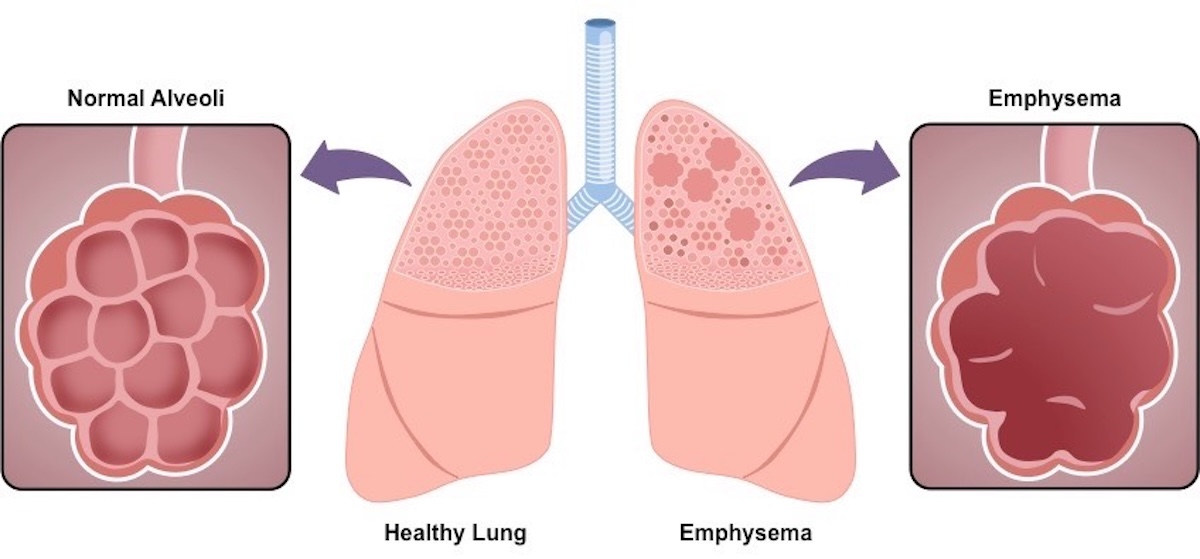
Emphysema involves progressive damage to the air sacs (alveoli). These sacs gradually lose their elasticity, causing air to become trapped and making it difficult to exhale fully. Over time, this limits oxygen exchange and makes breathing difficult.
A rare inherited condition called alpha-1 antitrypsin deficiency (AATD) can also cause emphysema, even in non-smokers. It occurs more in people with European ancestry. The prevalence is 1 in 2,500 to 1 in 5,000 people. Many people with AATD are misdiagnosed with chronic obstructive pulmonary disorder (COPD) or asthma. It’s estimated that 30,000 people in Australia and New Zealand have AATD but less than 10% are diagnosed.
People with two abnormal AATD genes have a 75% chance of developing lung issues, like emphysema.
AATD is uncommon in people with Asian ancestry.
Symptoms
Emphysema symptoms
Emphysema develops slowly and symptoms may appear gradually.
- Shortness of breath (initially during activity, later even at rest)
- Chronic cough
- Excessive mucous production
- Wheezing
- Chest tightness
- Fatigue, tiredness or low energy
- Getting frequent chest infections
- Taking longer to recover from chest infections
- Weight loss and muscle wasting (in advanced stages)
- “Barrel chest” appearance (due to lung over-inflation)
Causes
Causes of emphysema
The leading cause of emphysema is long-term exposure to airborne irritants, especially:
- Cigarette smoking (the primary cause) and second hand cigarette smoke
- Air pollution
- Chemical fumes and industrial dust
- Environmental chemicals (cleaning products, building products, skincare, haircare, body care products)
- Indoor pollution (gas cooking, heating fuels, chemicals fuels)
- Long-term exposure to second-hand smoke
Prevention
Prevention of emphysema
There are ways to mostly prevent emphysema:
- Don’t smoke or quit if you do and avoid exposure to second hand smoke
- Avoid exposure to dust, fumes, environmental chemicals and pollution
- Use protective masks at work if exposed to chemicals
- Regular medical check-ups if you have chronic bronchitis or a family history of lung disease
There is no way to prevent AATD as it is a genetic condition.
Complications
Emphysema complications
There are numerous complications of emphysema, most of them are very serious.
Respiratory and heart complications
Respiratory infections
Emphysema makes you more susceptible to infections like pneumonia, pleurisy and bronchitis
- The inflammation in the lungs due to emphysema weakens the lungs ability to clear mucous and foreign particles and this creates an environment for respiratory infections (viral or bacterial)
- Alveoli, the tiny sacs where the breathing gas exchange in the lungs occurs are damaged or destroyed, which impairs the lungs and makes them more vulnerable to infection
- The lungs chronic inflammation make it more likely for infections to develop
- Any respiratory infection can become life threatening in people with emphysema if not treated promptly
Collapsed lung
Emphysema can cause a collapsed lung (pneumothorax) because of the damage to the alveoli (tiny balloon shaped air sacs at the ends of the bronchioles, which are small branches of the bronchial tubes).
- Emphysema damages and destroys the alveoli walls, which can cause the alveoli to merge and make larger air sacs (bullae)
- Bullae are weak air sacs and can become really large and rupture
- Air escapes into the space between the lung and chest wall (pleural cavity)
- When the air pressure in the pleural cavity is higher than the air pressure in the lung, it causes the lung to collapse
Heart failure
The strain on the heart from the lungs not getting enough oxygen can lead to heart failure.
- Emphysema destroys lung tissue and blood vessels in the lungs which reduces blood flow to the whole body and low oxygen in the body
- This causes strain to the right side of the heart (right ventricle), the part of the heart that pumps blood to the lungs
- Over time, the pressure on the right ventricle makes it work harder and ultimately it can stop working, causing heart failure
Pulmonary hypertension
This is an increase in blood pressure in the arteries of the lungs.
- When there is low oxygen in the body due to emphysema, the arteries in the lungs constrict (get smaller)
- This causes blood pressure in the arteries going from the heart to the lungs to be higher than normal
Chronic respiratory failure
In advanced cases, the lungs may be unable to maintain normal oxygen and carbon dioxide levels.
- Anxiety and depression: The chronic nature of the disease and its impact on quality of life can lead to mental health issues.
- Osteoporosis: Long-term use of corticosteroid medications and inactivity can increase the risk of this bone-weakening condition.
- Muscle weakness: This can occur due to inactivity or other factors related to the disease.
- Hypoxaemia: A condition where there is not enough oxygen circulating in the bloodstream.
- Gastro-oesophageal reflux: There is an increased risk for this digestive condition.
- Type 2 diabetes: This is another associated comorbidity.
- Fatigue: Extreme tiredness is due to the lungs not getting adequate oxygen and can also be due to heart failure.
- Systemic inflammation: When there is consistent oxygen lack in the body it can increase inflammation throughout the whole body and lead to coronary artery disease and other heart problems.
Diagnosis
Diagnosis of emphysema
Doctors diagnose emphysema using the following diagnostic tests:
- Lung function tests (spirometry): measures airflow and lung capacity
- Chest X-ray or CT scan: shows overinflated lungs or damage to the lungs
- Arterial blood gas test: checks oxygen and carbon dioxide levels
- Physical exam: listening to the lungs and checking for chest shape changes
Diagnosis of AATD is done through a simple blood test, which measures the amount of alpha-1 antitrypsin in your blood. You should ask for this test if your parents or other close family members have AATD or you develop COPD if you are under 40.
Treatment
Conventional treatment of emphysema
There’s no cure for emphysema, but treatment can relieve symptoms and slow progression of this disease:
Quit smoking immediately
This is the most crucial step for people who smoke any type of tobacco products.
Bronchodilators (inhalers)
These inhaler medication help to open airways and help people with emphysema to breathe a bit better:
Short acting bronchodilators
These inhalers are often used before physical activities as they provide quick relief that usually lasts for 4-6 hours.
As with all medicines, they can cause side effects which will be on the packaging instructions.
- Ventolin (also known as Albuterol, Asmol, Airomir) – one of the most common fast acting beta2-agonist inhalers and are important inhalers for many lung conditions. They relax and open the air passages to the lungs, making it easier to breath fully
- Apo-Ipratrpium (Ipratropium, Atrovent) – an anticholinergic inhaler that opens the medium and large airways in the lungs Helps to prevent wheezing and shortness of breath. It is often used as a maintenance strategy in emphysema
- Bricanyl Turbohaler (Terbutaline) – a dry powder inhaler used to prevent bronchospasm (irritation and swelling in the lung’s airways) in people older than 12 years. They relax the muscles in the bronchial tubs (air passages) in the lungs. This is an older type of inhaler
You may be prescribed Ventolin and Apo-Ipratropium together.
Long acting bronchodilators
- Long-acting beta2-agonists (LABAs) – They relax lung airway muscles. Examples include Salmeterol (eg Serevent), Formoterol (eg Foradil or Performist(), Indacterol (eg Arcapta Neohaler), Olodaterol (eg Striverdi Respimat) and Vilanterol
- Long-acting muscarinic antagonists (LAMAs) – They relax lung airway muscles. Examples include Tiotropium (eg Spiriva), Glycopyrrolate (Seebri), Umeclidinium (eg Ellipta), Aclidinium (Bretaris Genuair)
- Combination bronchodilators – Many long-acting options are available in combination inhalers, such as a LABA and LAMA together. They provide more effective symptom relief. Vilanterol is often available with Ellipta, Anoro Ellipta and Trelegy Ellipta
Corticosteroids
These medications help to reduce overall inflammation in the body but are mostly used for major emphysema flare ups. They come with many side effects and can’t be taken for long.
Corticosteroids for symptom flare-ups
Short courses of oral corticosteroids (prednisone) are prescribed for severe flare-ups as they:
- reduce inflammation
- improve breathing
Typical treatment length is 5-14 days with doses from 10mg to 40mg per day.
Corticosteroids for long term management of symptoms
Inhaled corticosteroids are prescribed to help reduce inflammation in the airways for long term control of symptoms. They’re often prescribed in combination with long-acting bronchodilators (LAMA inhalers) for people with severe condition or frequent flare-ups.
Long term corticosteroids come with many very serious side effects and may not be suitable for everyone. While they can provide massive relief of symptoms, they are not a cure.
- Increased risk of bone loss, osteoporosis, bone fractures, bone death
- Increased risk of pneumonia
- Build up of fluid in the body
- Increased blood pressure
- Upset stomach
- Weight gain in the stomach, face and back of neck areas
- Psychological effects, such as mood swings, memory or behavioural issues, delirium, confusion
Oxygen therapy
this helps people with low oxygen levels
Pulmonary rehabilitation programs
helps for breathing exercises and education
Surgery
in severe cases can involve lung volume reduction surgery or lung transplant
AATD treatment
Augmentation therapy is a specific treatment for AATD. It is an intravenous (needle with a canula usually) treatment where a concentrate of alpha-1-antitrypsin (AAT) protein is delivered into the blood to help increase its levels in your body. The AAT is sources from healthy donors. This therapy is the only treatment for AATD and works to protect the lungs from further damage by restoring the balance of enzymes that break down lung tissue. It can slow the progression of emphysema but doesn’t reverse existing lung damage.
Augmentation therapy isn’t covered by Medicare in Australia or the UK. Some insurance companies cover it in the US but not all. For other countries, you’ll need to ask your doctor about the treatment cost.
Alternative
Alternative/complementary treatment of emphysema
These are well-rounded, evidence-based summary of alternative, complementary and supportive approaches for emphysema (COPD type), focused on strategies that have some scientific backing or clinical evidence for benefit.
These are adjuncts, not replacements, for medical care such as inhalers, oxygen therapy, or pulmonary rehabilitation.
Pulmonary rehabilitation (core complementary strategy)
A structured program combining supervised exercise, breathing retraining, education and psychological support.
Multiple meta-analyses show improved exercise tolerance, less breathlessness and better quality of life. The techniques used:
- Pursed-lip and diaphragmatic breathing
- Gradual aerobic and resistance training
- Energy-conservation strategies
✅ Strong evidence base
Nutritional & supplement support
Why it matters: People with emphysema often have higher energy demands and muscle wasting.
Antioxidant-rich diet
- Fruits, vegetables, omega-3-rich fish, nuts and seeds
- Diets high in vitamin A, vitamin C, vitamin E, selenium, zinc and carotenoids are associated with better lung function and slower lung decline
- Caution is advised to not take betacarotene supplements as it is not recommended for former or current smokers or drinkers. Get your betacarotene from your foods or take vitamin A
Omega-3 fatty acids
- Anti-inflammatory effects
- May reduce systemic inflammation and improve lean body mass.
N-acetylcysteine (NAC)
- A antioxidant supplement that replenishes glutathione
- Makes the mucous less thick and sticky
- Reduces mucous in the lungs
- Trials show modest reductions in frequency of coughing fits and reduces oxidative stress markers
Vitamin D
- Low levels are linked with worse lung function and more infections
- Supplementation helps reduce worsening lung function in those deficient
✅ Moderate-to-strong evidence depending on deficiency status
Mind–body & breathing therapies
Yoga and tai chi
Both yoga and tai chi improve respiratory muscle strength and flexibility. They both help to reduce anxiety and depression.
Buteyko breathing method
- Focuses on slow nasal breathing and CO₂ regulation
- May reduce breathing discomfort and shortness of breath
- Evidence mixed for this technique (which may be due to incorrect technique)
Inspiratory muscle training (IMT)
- Uses a handheld resistance device to strengthen breathing muscles
- Meta-analyses show improved endurance and breathlessness
✅ Moderate-strong evidence for IMT and Tai Chi/Yoga
Acupuncture and acupressure
- Some studies show improvement in dyspnoea and exercise capacity, possibly via endorphin release and reduced inflammation
- Evidence is promising but still low-to-moderate quality due to inconsistency of studies
✅ Some supportive evidence, low risk if performed by trained practitioner
Herbal and supplementary approaches
Ginseng (Panax ginseng)
Studies show ginseng improves lung function and overall quality of life when used in conjunction with emphysema medications.
- Mild bronchodilator and immune support
- Improves blood flow and protects against cardiovascular health issues
- Small studies show better lung function, breathing and exercise capacity
Curcumin (Turmeric)
Studies show it reduce symptoms in people with mild to moderate emphysema.
- Anti-inflammatory and antioxidant
- Helps to protect the lungs
- Reduces inflammatory markers
Green tea (EGCG)
Some studies have shown that green tea helps to heal emphysema lesions in the lungs.
- May reduce oxidative stress and inflammation
- Lung protective
✅ Low-moderate quality human evidence
Psychological and social support
Cognitive behavioural therapy (CBT) and mindfulness-based stress reduction help manage anxiety, depression and panic related to breathlessness.
✅ Strong supportive evidence for quality-of-life improvement
Environmental & lifestyle modifications
- Air purifiers to reduce chemical particles, dust and other environmental particles
- Avoid biomass smoke, indoor mould and cold/dry air
- Vaccinations: influenza, pneumococcal, COVID-19 boosters
✅ Well-established preventive evidence
Self care
Emphysema self care
There are many strategies you can use to help you your symptoms, in addition to the strategies mentioned in this article.
Lifestyle and environment
- Avoid tobacco – don’t smoke and avoid second hand smoke
- Avoid triggers – stay away from polluted air, smog (stay inside and use an air filter), fumes chemicals, paints, dust, cars, any strong odours from environmental chemicals. Check air quality and don’t go outside if pollen is high or air quality is low
- Get vaccinated – take the annual flu shot and get the pneumococcal vaccine. Follow recommendations for COVID-19 and respiratory syncytial virus (RSV) vaccines
- Avoid people with respiratory illness – don’t risk your lung health and if you have to be around people who are unwell, wear a P2 or N95 mask
- Ensure your home has clean air – keep your windows closed on high pollen days or when there’s a lot of pollution in the air. Get a humidifier to make the air more humid as this will make it easier to breath. An air purifier will remove any pollutants from the air and ensure it is clean and healthy to breathe
Physical activity and breathing
- Exercise – make sure to do gentle exercise regularly as it can help with your overall fitness.
- Pulmonary rehabilitation program – people with moderate to severe emphysema should discuss a pulmonary rehabilitation program with their doctor. This is a supervised medical program for people with moderate to severe lung disease to help them livand breathe better
- Breathing techniques – learn how to do diaphragmatic breathing to help you breathe better. You can consult a respiratory therapist to help you learn breathing techniques and body positions that make breathing easier
- Manage your expectations – pace yourself and sit down when you need to conserve your energy. Don’t rush anything and take it easy
Medical and emotional
- Medications – make sure you take your medications as prescribed. Listen to your doctor’s instructions. If you have any side effects, make sure you tell your doctor so they can try a different medicine (if available) or reduce your dose or try another strategy (if there is one)
- Management plan – your doctor will advise you of a suitable management plan to help reduce the risk of worsening of symptoms. This plan should be written down and you need to understand all the steps to keep you as safe as possible
- Mental health – prioritise your mental health by practising stress management and find emotional support to manage the challenging physical and mental strain emphysema causes
References
References
- Lung Foundation. Alpha-1 antitrypsin deficiency (AATD). Accessed 5 November 2025
- Abdulrhman Alsayari, Abdullatif Bin Muhsinah, Dalia Almaghaslah, Sivakumar Annadurai, Shadma Wahab. Pharmacological Efficacy of Ginseng against Respiratory Tract Infections. Molecules 2021, 26(13), 4095; https://doi.org/10.3390/molecules26134095
- Zheng J-P, Wen F-Q, Bai C-X, et al. Twice daily N-acetylcysteine 600 mg for exacerbations of chronic obstructive pulmonary disease (PANTHEON): a randomised, double-blind placebo-controlled trial. Lancet Respir Med. 2014;2(3):187–194.
- Martineau A R, James W Y, Hooper R L, et al. Vitamin D supplementation to prevent acute respiratory infections: systematic review and meta-analysis of individual participant data. Lancet Respir Med. 2017;5(11):881–890.
- Fekete K, Marosvölgyi T, Jakobik V, Decsi T. Methods of assessment of n-3 long-chain polyunsaturated fatty acid status in humans: a systematic review. Br J Nutr. 2010;103(5):701–712.
- Romieu I, Castro-Giner F, Kunzli N, Sunyer J. Dietary intake of antioxidants and risk of chronic obstructive pulmonary disease. Eur Respir J. 2009;33(3):559–568.
- Wu W, Liu X, Wang Y, et al. Effects of Tai Chi on exercise capacity, pulmonary function and quality of life in patients with chronic obstructive pulmonary disease: a systematic review and meta-analysis. Respir Med. 2018;145:24–31.
- Geddes E L, O’Brien K, Reid W D, Brooks D, Crowe J. Inspiratory muscle training in adults with chronic obstructive pulmonary disease: an update of a systematic review. Cochrane Database Syst Rev. 2008;(2):CD006580.
- Jobst K A, Chen J H, McPherson K, et al. Controlled trial of acupuncture for chronic obstructive pulmonary disease: effects on dyspnoea and exercise tolerance. Chest. 1998;114(5):1359–1366.
- Gross D, Shenkman Z, Bleiberg B, Dayan M, Gittelson M, Efrat R. The effect of ginseng on pulmonary function and exercise capacity in patients with chronic obstructive pulmonary disease. Chest. 2002;122(5):1480–1486.
- Liu W, Huang L, Zhong W, et al. Curcumin ameliorates cigarette smoke-induced lung inflammation through inhibition of the NF-κB pathway. Mol Med Rep. 2017;15(4):2260–2270.
- Chan E D, Chan M M, Chan M M-Y. Green tea catechins as a therapeutic intervention for COPD. Respir Res. 2019;20(1):55.
- Livermore N, Sharpe L, McKenzie D K. Prevention of panic attacks and panic disorder in chronic obstructive pulmonary disease: a pilot study of cognitive behaviour therapy. Thorax. 2010;65(5):393–398.
- McHugh P, Aitcheson F, Duncan B, Houghton F. Buteyko breathing technique for asthma: an effective intervention. N Z Med J. 2003;116(1187):U710. (Included for comparison; some crossover benefit in COPD reported.)
- Ries A L, Bauldoff G S, Carlin B W, et al. Pulmonary rehabilitation: joint ACCP/AACVPR evidence-based clinical practice guidelines. Chest. 2007;131(5 Suppl):4S–42S.
- Global Initiative for Chronic Obstructive Lung Disease (GOLD). Global Strategy for the Diagnosis, Management, and Prevention of COPD: 2024 Report. Available from: https://goldcopd.org
- Vogiatzis I, Rochester C L, Spruit M A, Troosters T, Clini E M. Increasing implementation and uptake of pulmonary rehabilitation worldwide. Lancet Respir Med. 2016;4(10):e12–e13.
- Tze Pin Ng, Qi Gao, Xiny Gwee, Denise Q L Chua, Wan C Tan. Tea Consumption and Risk of Chronic Obstructive Pulmonary Disease in Middle-Aged and Older Singaporean Adults. Int J Chron Obstruct Pulmon Dis. 2021 Jan 7;16:13–23. doi: 10.2147/COPD.S273406
Last reviewed and updated: 5 November 2025

