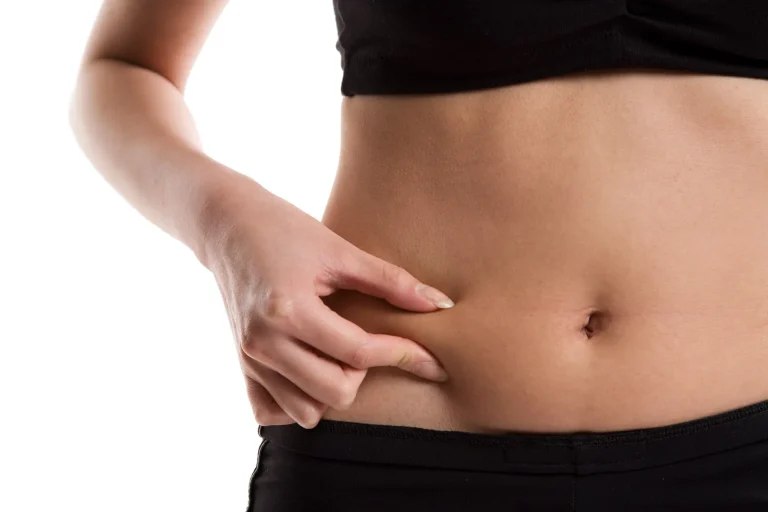
Skinny fat, want to tone up

0

Question

I am 52 years old, 4ft 11 inches tall and I weigh approximately 102 pounds. I recently had my body fat calculated at a health fair and learned I have 38% body fat. I have a lot of excess weight in my stomach and abdominal area. I do not exercise regularly.

I don’t eat a lot. Breakfast is usually breakfast bar, lunch is banana or apple with peanut butter and then I eat a regular dinner. I can’t understand why I would be gaining weight if I’m not eating.

Everyone keeps telling me to eat more frequently and eat smaller amounts, but I can’t imagine eating any less than I’m eating for lunch and breakfast. What should I do?

Answer

Oh that darn body fat!

First of all, congratulations on paying attention to the statistic of your BMI (body mass index), a measure of body fat based on height/weight. However, keep in mind the best (most accurate) measurement of body fat is performed with skin-fold calipers vs a BMI table estimate that I anticipate may have been performed at the health fair.

That being said, 38% body fat is cause for concern and requires an adjustment in your lifestyle. There are three things that stand out from your comments, however and that may be negatively contributing to the numbers: your age, your activity levels and your diet.

  • AGE: At 52 years of age, your body is physically undergoing changes due to the transition toward menopause. Your metabolism may have begun to slow down. Peri-menopausal (and menopausal) women tend toward carrying excess body fat in the areas you described. The hormonal changes in your body contribute toward this effect. Which brings me to the second issue, your activity level.
  • ACTIVITY: Your activity level is described as sedentary. You may want to consider making an immediate adjustment in this area first. Consider the fact that if your metabolism has slowed down and your activity level is minimal, your body is holding any excess calories you ingest as you are not moving the body to use those calories.Consider joining a fitness class or program; investing in a bicycle; regularly walking and/or jogging to increase your activity level and pursuing a strength training program (weights, pilates and/or yoga) to build muscle and bone strength and positively impact your metabolic rate.
  • DIET: All food gets converted into glucose to be used by the body. Any excess that is not used to fuel your system’s activity requirements is stored as excess fat. For a peri-menopausal female, that storage tends toward the middle, hips and thighs.

So, in a nutshell, you will have to “move it” to “lose it.”

Exercising but not losing weight any more

0

Question

I have been running 4-6 miles about 4-5 times a week on the stair-master or cross-trainer or treadmill and I also take a one hour exercise classes (eg weight training, cycling, kickbox, or just machines) about 4 times a week. I eat my normal diet, which hasn’t changed much recently. I am a vegetarian and it is a semi healthy diet, with a little oil, sufficient carbohydrates and lots of green vegetables.

I have been doing this exercise regime for the last 5 months and initially I lost some weight, but lately the scale says that I have actually gained weight. At first I assumed that could be muscle however, my inches are not longer going down, nor does it seem like anywhere in my body is losing anything anymore.

I just finished medical school (I know, I should be able to answer my own question then) so my life outside the gym consist of stress and sitting in front of the books for 14 hours hours a day, studying for the boards. So what am I doing wrong? Obviously I was initially doing something right so my diet can not be the sole reason? What do I need to do differently to what am I doing now to start losing weight again?

Answer

Well, you do have a sense of humor and that is a good thing. You might need to use it a bit more to let go of some of the stuff you are holding onto that seemingly is causing so much stress to your mind and body.

For example, 4-6 miles x 4-5 times a week PLUS 60 minutes classes 4X week is quite a bit of exercise. My first question is when do you rest? How and when do you relax? When do you allow your body to recover? Sounds like quite an excessive amount of stress on your muscles, joints and mind in the “doing” of being healthy.

Find a Balance

You shocked the system with the high intensity regimen 5 months ago and reached a plateau. Your body has adjusted to the demands you have placed on it and in order for your system to “survive the stress” you are placing it under (without rest, recovery and relaxation), it has gone into warrior “fight” mode and is seemingly holding onto the fat stored in the system as the body needs it, (or thinks it does) to survive the fight. Consider reading and understanding a little more about catecholamines; made by nerve tissue, the brain, and the adrenal glands. Catecholamines help the body respond to stress or fright and prepare the body for “fight-or-flight” reactions.

The adrenal glands make large amounts of catecholamines as a reaction to stress. Catecholamines increase heart rate, blood pressure, breathing rate, muscle strength, and mental alertness. They also lower the amount of blood going to the skin and increase blood going to the major organs, such as the brain, heart, and kidneys.

Simply

  • Relax more to bring down stress hormones and burn fat.
  • Try meditation, visualisation, deep breathing exercise programs.
  • Balance your high intensity exercise with complimentary practices such as pilates, yoga, tai chi, and/or meditation to manage stress.
  • Get a massage; use a sauna bath

Alternatively, you could try, the use of interval training to help boost adrenaline/noradrenaline response. Going too hard, too often, all the time, will result in the body becoming overstressed and not recovering, as your body is currently signaling you. It leads to more muscle loss and more stubborn fat gain. Use a short interval session (like 10-15 min ON) then, add a slower intensity exercise, e.g., stability ball stretch, to help burn the fat now released into the blood stream and not overstress your body’s ability to recover.

In short, one day ON, next day OFF. On the off day, keep laughing and have fun.

Calories for muscle building and fat reduction

0

Question

I am a 22 year old, 5’11, 240 lb male. I have worked out since I was in high school and have quite a bit of muscle bulk but also my share of body fat. I would like to start lifting heavy again but also get rid of some of the fat as well.

I am trying to figure out what the ideal amount of calorie intake I should strive for to provide adequate nutrition to build muscle but also limited enough to be able to drop body fat. Also any other advice would be appreciated. Thank you.

Answer

Based on the Dept of Health & Human services, National Institute of Health, your Body Mass Index (derived from your height and weight) is 33.5%

Normal BMI 18-24.9; Overweight 25-29.9; Obese 30+

A healthy diet of 2000-2200 calories supported by a program of regular exercise can re-shape and re-define your body in a matter of months. Since you are so young, your body will quickly and easily respond.

I would recommend you focus on tightening up your dietary habits as I suspect they are the culprit. Skip the pizza, chips and nachos; eat healthy protein (chicken, fish or beef) with complex carbohydrates and minimize/eliminate the potatoes, rice, pasta, soda and salt etc. If you try to lean out your body with this rigor….plus concentrated work in the gym incorporating cardio and strength training [no matter how heavy you chose/elect to press] for 2-3 weeks, you will see and experience a change in your body.

Eating 2000-2200 calories of lean, healthy food EVERY DAY will be much more satisfying and supportive of your desired goals for weight loss than a couple of slices of pizza, a soda and a bag of chips.

By the way, once you carve out the body you want; i.e., lose the weight and realign your BMI, you will need to adjust your caloric requirements as your body will have established a new baseline. Lastly, your workout regimen will/can move to a “maintenance level” of training to sustain it.

Once you start training your body, you never stop.

Are protein shakes important for weight loss

0

Question

My weight is 11stone (154lbs) and I want to lose 26 pounds. I exercise daily with cardio and eat healthy. I eat a healthy breakfast in the morning, for lunch I have water, fruit, 1 toast and tea and then I work out and drink the shake. I have my dinner at around 7pm. If am still hungry, I have some apples and oranges at 10pm. Do you think that I am eating enough to lose weight? I don’t know why but even though I am just eating fruit after dinner my stomach is bloated.

My fitness instructor recommend that I take promax protein diet shake after my workout and for breakfast. When I first started this shake I had a lot of diarrhoea, but now its gone. My protein shake is running out. Do you think that protein shakes are important for weight loss?

Answer

Protein shakes are used and recommended by many fitness professionals, usually as a snack rather than a meal (or meal replacement). Your dietary requirements are intricately linked with your activity level and strength/weight training goals.

Unfortunately, there is not enough data supplied in your question (no height or age information) to determine your caloric requirements and/or the amount of protein/carbohydrates/fats you are currently consuming to create a calorie deficit for your weight loss goals.

It is really best that you work with your fitness instructor to craft a nutritional program that is in concert with your weight training goals/activities.

Best of luck.