Relaxation techniques

Time out

Take some time out

Women sometimes find their stress levels go very high during various times in their life, because they are often trying to be (and do) too many things for too many people, multitasking their way to stress hell. Women often feel that they need to be the best wife, mother, lover, girlfriend, daughter, confidante and career woman in order not to feel inadequate about their role in this world.

Many women have high pressure careers and if they have a family too, then something will suffer if they do not take a break and relax once in a while. Stress can be a killer. If a person is constantly stressed, they are continually in the “fight or flight” stance and their body is releasing all the stress hormones (adrenaline, noradrenaline), which can be very detrimental on the body if they are constantly being release and can cause a whole range of adverse health effects.

To protect yourself, engage in at least one of these relaxation techniques at least once a week, if not more often.

Visualise

Visualise your way to relaxation

Using visualisation (imagination) is a really powerful technique for enabling you to relax your body and mind, unwind and de-stress your emotions.

You can use this visualisation technique to help you unwind after a particularly stressful day (or week) and you can also use it to help you get to sleep at night, if you are having trouble calming those incessant thoughts:

  • Find a safe, quiet spot – either somewhere in your house, outside on the grass, or even somewhere in nature, just ensure you are safe and will not be disturbed
  • Now get comfortable – find a comfortable chair, where you can sit upright, but relaxed (ensure your head is well supported) or you can also find a nice soft bed to lie down on, ensure your head is well supported
  • Your body posture – if you are lying down, put your arms by your side and relax; if you are sitting on a comfortable chair, put your hands on the arm rests of the chair (or on your lap, palms up) and keep your legs uncrossed
  • Relax your body – just lie there for a few minutes with your eyes closed to help you calm down and relax
  • Relax your body more – starting at your toes, tense the muscles in each section of your body for about 5 seconds and then release them; this will help to release any tension you have in any part of your body; finish with your face
  • Be aware of your breathing – breath in and out at a steady pace, for a count of about 5-7; if you can try to breath in and out through your nose, it will help a great deal in relaxing you even further
  • Let go of any incessant thoughts – if you feel any thoughts coming through, just acknowledge them and let them go, allowing yourself to relax even further
  • Now use your imagination – think about a place that you love to be at – the beach, a waterfall, the forest, a lake, a tropical island, the bush – whatever makes you feel happy and calm. Imagine yourself there right now. Imagine then sunshine on your face sending you healing and relaxing rays. Really take in all the colours around you of the plants, flowers and trees. Hear all the animals, the birds, the dolphins (if you are at the beach) and gentle breeze, everything is calm and relaxed and making you feel really really good. Go for a walk, with bare feet and feel the ground under your feet

If you want to use this visualisation to help you go to sleep, then stay in the beautiful imaginary place until you fall asleep.

If however, you want to use it to just relax and want to continue on your day, then you will need to come out of the relaxed state into a more conscious one by the following:

  • Back to reality – once you have been through the relaxation enough to feel really relaxed and mellow, you will need to come back to a more conscious state of mind
  • Coming back to reality – now imagine you are saying goodbye to your favourite place, to the plants and animals, but you will be back again whenever you need it; slowly start to feel each part of your body, beginning with your toes – you should just wriggle them a little, then stretch your legs and torso, move your fingers and then stretch your arms and finally open your eyes
  • Go slowly – once you have opened your eyes, you need to just sit there for a minute or two (as long as you need) until you feel that you are back to your alert self; you can then get up and do your usual activities, but go slowly for the first hour or so, until you are really alert

If you practice this technique for at least once a week, even more is preferable, you will really notice a marked reduction in your stress levels. If you are super stressed, it is recommended to do this at least once a day for around a month, until the stress abates and you are back to your normal relaxed self.

Reconnect

Reconnect with your friends and family

Too often women are working far too hard, then concentrating on their family too that they do not always have enough time for themselves. This can make you feel isolated and anxious if you are not connecting on a social level with your friends and family on a regular basis.

Humans are social creatures. We need to be around other people and connect to them on a social level, on a very regular basis to feel that we belong. If you are just working hard every day and giving a lot of your energy to your job and if you also have a partner and family and you give a lot of your energy to them too, this does not leave enough of your energy for you. You need to take some time out, at least once a week, for a good few hours, to reconnect with your friends and have a good laugh.

Reconnecting with friends and family is a good stress relief technique, as it allows you to have some time just engaging in normal conversation, having a good laugh and even confiding in them of the stresses of your life. It is a good way to let go of some of that tension. You do not need to be constantly offloading all your problems to your friends, you just need to talk to them to realise that everyone has the same problems and in fact, it may make your own seem more insignificant and so ease some of the stress they are causing you. When a problem seems small, it is easier to handle than one which seems overwhelming.

So talk to your friends, have a girls night out, go for a pampering day spa, go shopping, but most of all, have a good laugh and a good time! All your worries will be eased if you do.

Yoga

Try some yoga – alternate nostril breathing

Yoga itself, is a great stress-relieving activity, which should be used as a technique to help reduce stress and anxiety. However, there is a special yoga breathing technique, which really helps to dispel stress, boost immunity and calm the body and mind – alternate nostril breathing.

You can perform this stress-relieving technique anywhere, even if you are at your desk at work:

  • put the index finger of your left hand on your right nostril, to hold it closed
  • breathe in through your left nostril for a count of 5, hold for 1-2 seconds and then breath out for a count of 5
  • put the thumb of your left hand on your left nostril, to hold it closed
  • breathe in through your right nostril for a count of 5, hold for 1-2 seconds and then breath out for a count of 5
  • Repeat again to both nostrils as above
  • Continue like this until you feel calmer and relaxed

You can do this relaxation technique several times a day – as much as you need, to ensure you are calmer and stress-free. The more often you can practice this technique, the lower your stress levels will become.

Reiki

Use the healing energy of your hands with reiki

Reiki is a form of energy healing that originated in Japan in the early part of the 20th Century.

Reiki is basically about using the universal energy for any type of pain or disease, whether it is emotional, mental or physical.

This is a simple reiki exercise you can use to help relax the mind and calm the spirit and reduce the effects of stress:

  • Lie down in a safe ad comfortable place and close your eyes
  • Pay attention to your breathing, in particular your breath in and out
  • Put your hands on your stomach area, solar plexus, or wherever you are feeling pain or the stress
  • Direct your breathing (in your mind), to where your hands are located and imagine you are breathing into this area
  • Imagine your breath as positive universal life energy, which is flowing through you and collecting in your hands
  • Imagine the positive energy flowing through your hands and into the area of your body which your hands are placed and feel the positive life force
  • Keep your hands in this position for a few minutes
  • Now place your hands on another spot and repeat the process
  • If you notice a change in your breathing, just take note of it and let it go, continue to breath in the positive energy into your body
  • Once you are done, slowly open your eyes, but stay where you are until you feel ready
  • When you are ready, stand up and continue your day

Adapted from a reiki exercise in Nature and Health magazine.

Exercise

Engage in some physical activity

Nothing beats physical activity to release some “feel good” endorphins, which are powerful, pain-relieving, mood-elevating chemicals in the released by the brain to make you feel good and help lift your mood.

Another added benefit of physical activity, is the heart-strengthening and positive health effects

  • strengthening the heart muscle
  • lowering blood levels of cholesterol and triglycerides (fats)
  • increasing oxygen
  • elasticing and strengthening blood vessels.

All you need to do is about 30-60 minutes of a combined cardio and resistance training session most days of the week and you will notice a big difference in your stress levels.

Sunshine

Get some sunshine

Whenever you are feeling down, stressed, irritable or just plain cranky, go outside in the bright sunshine (make sure you are in a shaded area if you go outside in the hottest part of the day) and contemplate on all the good things in your life.

Being outside in the fresh air, feeling the sun shining brightly and contemplating on all the good in your life, will lift your mood immensely, especially if you can be outside for at least 30 minutes.

The sun also provides valuable vitamin D, a nutrient which is necessary for every single cell in the body. You need to get around 10-15 minutes of sunshine each day, to ensure you get enough vitamin D in your body.

Tai chi

Engage in some tai chi or yoga

Both tai chi and yoga are excellent stress relieving exercise techniques, which have both originated in the East.

Tai chi is a non-competitive, self-paced series of slow, flowing body movements that emphasise concentration, relaxation, and the conscious circulation of vital energy throughout the body.

Tai chi is a great way to calm the mind, condition the body and reduce stress. When practicing tai chi, you focus on your breathing, ensuring it is steady, regular and deep and keeping your attention in the present moment to calm your mind.

Tai chi is a safe, low-impact stress-reducing technique for people of all ages and levels of fitness, including older adults and those recovering from injuries. It is something that can be practiced anywhere, at any time, by yourself, or with other people (once you have perfected the movements).

Yoga is another great way to relax. There are styles, forms and intensities of yoga which can be all used to help you deal with stress, as they all focus on breathing, no matter how intensive or slow the movements are. Hatha yoga may be one of the better choices to manage stress, as it is particularly designed to improve flexibility, encourage a calm mind and help you breath better and more fully.

Yoga is performed to help you become more peaceful and calm, in body, mind and spirit. It is a great way to relax as it helps to manage stress and anxiety. Some forms of yoga have certain philosophies that may not be for everyone, but the practice of yoga itself is a very valuable stress reduction technique for everyone.

Massage

Have a pampering massage

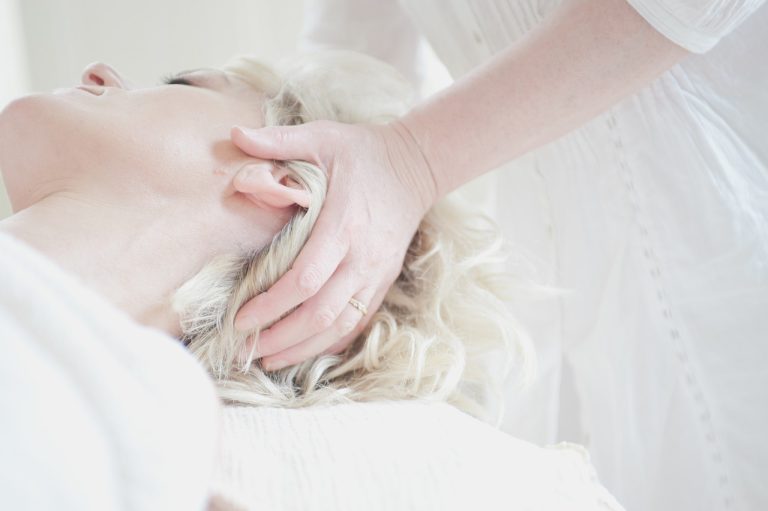
A massage is another way to make yourself feel better, calm your mind and relax your soul.

The tactile effect of massage is an excellent way to reconnect with yourself and others. It is a soothing way to make you feel calmer and relaxed and especially so if essential oils are used. Tell your massage therapist you need a relaxing massage and they will use relaxing essential oils such as lavendar or neroli, to ensure your senses are soothed and your mind is calmed. What a great way to unwind after a stressfull day or week.

References

References

  • Creative visualisation, Shakti Gawain
  • Nature and Health Magazine, Apr-May 2008, p54. Accessed 12 April 2008

Last reviewed and updated: 12 July 2024
Low stress lifestyles ascend the spirit

Stress & spirit

The relationship of stress to spiritual development

What is the relationship of stress to spiritual development?

When we are relaxed, our brains our able to achieve alpha states (associated with meditative states) and theta states (associated with  high levels of creativity and metaphysical abilities such as extra sensory perception and spiritual communication with God).

Thus, a relaxed state helps us to cultivate the brain wave frequencies associated with higher spiritual development.

When we are stressed, our brains usually exhibit frequencies of beta state (associated with higher levels of mental thinking, inherent with activities we encounter in wakeful states).  Thus, beta states are more about our intellectual processes and less about intuition and spiritual processing.

Alpha & theta

Integrate alpha and theta state activities into everyday life

Practices that integrate mindfulness into daily life help us to  train our brains to achieve the alpha and theta states naturally.

Take a moment and connect in with the feeling that you get when you are on vacation and relaxed.

Doesn’t the world seem somehow more vibrant and relaxed? Isn’t it often easier to be more  in the moment and positive when vacationing?

Yet, it’s important to develop that relaxed state in our everyday lives because if we limit ourselves into believing that we can only “let go” when we are on vacation, we tend to stay in a perpetual state of stress on some level.

Integration allows us to relax the brain and all parts of our being. In that state of integration, there are no disconnects between parts of  ourselves. There is not a “work” self and  ”play “self.  When one has achieved integration, one naturally integrates that play/vacation state into all activities including work.

So, how do we cultivate that integration in everyday life?

If we take five to ten minutes each hour to simply reset our brains by breathing deeply, meditating  on an image that brings peace, or performing subtle qi gong movements, we train our brains to go into alpha and theta states as we move through our days. It is the alpha and theta states that allow us to access different and seemingly contradictory aspects of ourselves to meet experience in an integrated rather than compartmentalized way.

Immediately, you might say, “But I don’t have five minutes each hour to meditate or breathe.”   Yet, you do. Each one of us has to go to the restroom regularly, drink some water, eat a snack, walk from one point to another.  Why not take advantage of those  natural breaks to incorporate breath work or meditative  states?

Remember that anyone can achieve alpha states when isolated from every day life during a retreat or vacation. But, the true art of living is integrating that ability to access alpha and theta states while moving through the activities of your everyday existence.

Reactions

Declutter your reactions to life

In Chinese medicine a predominant beta state can be linked to overactive thinking, most closely associated with imbalances of the liver, gallbladder, spleen and stomach.

We have all had the experience of responding to a situation with one thought, then embellishing that thought with all the “what ifs” and “woulda, coulda, shoulda” thoughts until we find ourselves experiencing a snowball of  tension and stress.

But if we simplify our thinking and stay in the moment (not focus on the future or past), then we can reduce the snowball effect and minimise stress.

Vacation

Create a vacation everyday

My clients often comment that my peaceful and relaxed vibe is similar to how they feel when they are on vacation. They wonder how I achieve that state while running a busy practice with many demands on my energy and time.

I simply make my work a vacation. The same peace I feel when gazing at the undulating waves off South Padre Island or Monterey Bay is a state I consciously evoke whenever I am performing bodywork or listening to a client share during life coaching sessions, or when I am teaching a qi gong class.

It wasn’t always that way. When I first began this career in Chinese medicine, I often was distracted with the many tasks I had to achieve in a day. But, at some point, I realised that the greatest gift I could give to myself and my clients was to be a walking model of integrating alpha and theta states into my everyday walk.

As I cultivated this meditative state more, I found also my brain states opening to new levels of consciousness and spiritual awakenings in every moment including challenging moments.

For example, to celebrate New Year’s day, I went on a nature hike and while attempting to get to a beautiful rocky area  not far from river shore, I fell into a very cold river as my feet slipped on algae covered rock while trying to step quickly.   My hiking bag with my iphone splashed into the frigid water.  Surprisingly, the phone managed to keep on functioning, albeit in a glitchy way (later the phone fully recovered).

Without a change of clothing, and far from any stores, I used fire cycle macrocosmic qi gong  to stay warm, and managed to hike about three quarters up a sizeable hill in the sunshine, allowing my clothes to dry somewhat to a comfortably squishy state.   I found it exhilarating, hilarious, and also spiritually cleansing because a couple of hours after the experience, a very deep meditative state descended.

Most of all, it was an event that inspired deep gratitude for the training with qi gong, such that I was able to keep  myself warm, continue the hike, and enjoy the experience of nature.  There were no thoughts of “Oh I wish I hadn’t mis-stepped,” or  ”I wish had done that differently.”

Another person might have perceived this event as disastrous, but I perceived the experience as a wonderfully fun adventure that affirmed spiritual and physical strengths–the idea that if one remains focused and breathes, one can transcend most challenges.

So even “accidents” can be a source of great joy if we integrate a meditative state that allows us to transcend the challenge and embrace the bliss of falling sometimes, of just letting go and accepting whatever God hands to us in a moment.

For additional strategies for reducing stress as a tool for ascending the spirit, call Kay Hutchinson on (USA) 512.468.6588 or email her at info@aikihealing.com

Author

Author bio

Kay Hutchinson is a Classical Chinese Medicine and Qi Gong practitioner, who consults with clients at her clinic in Texas, but she is also available for online consultations too.

Kay Hutchinson is an expert on the Vital Health Zone web site, so you can ask Kay a question about health from a Chinese medicine perspective for free.


Last reviewed and updated: 12 July 2024

Pilates to strengthen your back

0

Pilates basics

Pilates – the basics

A Pilates workout – either on the mat or on the studio equipment – is one of the best known healing disciplines for the back. Sure, a Pilates workout focuses intently on the use of the abdominal centre. The deep “scoop,” “lifting in and up” of the abdominals is crucial to moving the body effortlessly through all the exercises of Pilates.

However, the true student of Pilates and the healing effects it has on lifting, elongating and strengthening the body learns very quickly the importance of strengthening the other muscles of the body in opposition or stabilised resistance to the core abdominals.

That is the beauty of Pilates.

By first maintaining a resisted, stabilised core centre, one can learn to move through the spine, “vertebra by vertebra at a time” to open and free the spaces between the discs and relieve tightness, restriction and compression so often found in the lumbar, thorax and cervical spine.

Absolutely, this work will take time. It will take effort, dedication and quality, supportive training and instruction. Finding a qualified, experienced instructor to support your efforts is a prerequisite.

A good teacher will know and “see” the areas of weakness within your body and your movements. A trained eye will be able to help you work through the process of building abdominal strength from the front through to the back of the body. A qualified instructor will begin with a basic and or modified exercise routine(s) to support learning, feeling and internalisation of the exercises.

As your body begins to consistently respond to the work, you will be progressed through another layer of exercises and challenges that ultimately lead to a full functioning torso, inclusive of the abdominals, spine, arms and legs.

The back

All about the back

The tail end of the spine is the sacrum, a triangular bone that generally doesn’t move and lies in the centre of the pelvis. The scoop of the abdominals, as one lies down on the mat, begins by tucking the pelvis under the body to lay the sacrum down on the mat. One area of restriction, compression and thus pain for many people, lies just north of the sacrum – the lower back – or lumbar spine. The lumbar spine is made up of the lower five vertebrae and often referred to as L1 to L5.

Travelling further north is the thoracic spine, referred to as T1 to T12, as there are twelve vertebrae, basically providing the spinal structure for the rib cage. Further north of this area is the cervical spine, consisting of seven vertebra, C1 to C7. Suffice to say, without any more lessons in anatomy, moving the body through each of the 24 vertebrae within the spinal column with daily ease is the ultimate goal of a Pilates workout.

In addition to primary abdominal strengthening, control and awareness, the Pilates Mat exercises for the back will ultimately involve basic mat exercises, such as a) stability exercises and drills (planks and push-ups; inclusive of single leg stability) and b) extension exercises (swan prep, single leg kicks, double leg kicks, side lying exercises). Pilates apparatus exercises, on the Reformer specifically, make use of loaded spring resistance to train and support all exercises that strengthen the spine and core. A few of the back extension exercises one may expect to use in progressive training for the lumbar and thoracic spine are a) pulling straps and rowing on the reformer, b) swan on the ladder barrel.

The hundred

Back to the core centre

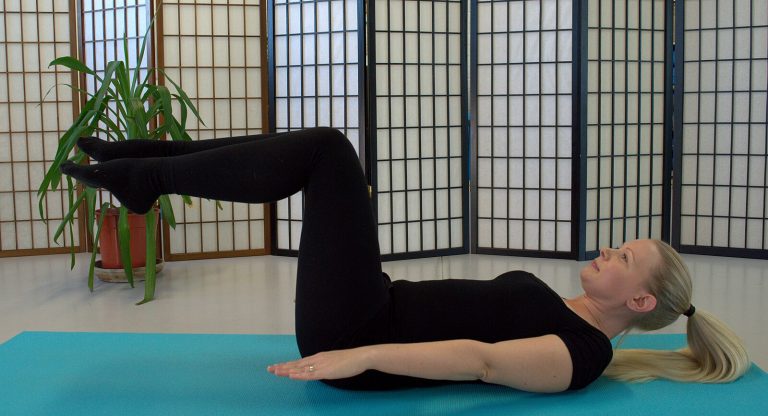
First and foremost, awareness, control and precise use and movement of the abdominals are key to the health and strength of the spine. Every movement comes back to resistance from the stabilised core centre and a beginner would always start with The Hundred:

  • Lying flat on your back, bend your knees into your chest and then extend the legs to the ceiling at a 90-degree angle (keeping the lower back flat and connected to the mat) and bring the head up (chin into chest).
  • With arms beside the body, reaching long at hip level, vigorously pump the arms (not the hands) up and down, taking a deep breath (inhale 5 pumps, exhale 5 pumps).
  • Continue for 9 more to complete the set at 10 full breaths of controlled engagement of the abdominal and stability of the spine.

Author

Author

This article was written by Gina Jackson, MBA, CPT, who holds an Advanced PFT recognition as a member of the International Association of Fitness Professionals (IDEA); maintains affiliate membership in the National Federation of Professional Trainers (NFPT) and is certified as a Power Pilates Teacher and a proud Business Member of the Pilates Method Alliance.

Gina Jackson is an expert on the Vital Health Zone web site, so you can ask Gina a question about fitness for free.


Last reviewed and updated: 11 July 2024

Exercising hard and seeing no results

2 steps forward

2 steps forward 3 steps back

Do you feel like its 2 steps forward but 3 steps back? Is your fitness program caught in the land of “in-between?” Do you feel like you are doing all you can to squeeze the best results out of your body, but not seeing the results you want and expect?

It’s probably not your trainer or training. You are probably among the lion share of Americans that get caught on that never-ending cycle of not fully controlling what, when and how they eat to support their fitness program.

Breakfast requirements

Breakfast and dinner requirements

I can’t tell you how many times I ask clients “what did you have for breakfast this morning” only to find a surprise in the answer many give me. Bagels, Cheerios, Fruit or nothing.

If I dig a little deeper – either after, during or prior to a grueling abdominal workout – about the dinner the night before, I will find a few more surprises about what they drank with it, the side order of fries chosen (but only “six of them eaten” on the whole plate!) or the dessert selected after the “healthy meal.”

No commitment

What is the answer?

Nine times out of ten, the lack of clarity, control and commitment to sound dietary principles leaves most of our fitness regiments in the no results space of “never, ever land” with 2 steps forward for doing the hard cardio and strength training work and 3 steps back for failing to support it with proper nutrition.

Clarity

Clarity

Consistent consumption of 5-6 small meals daily vs. 1-2 large, calorie-rich meals are necessary to prevent the highs and lows the body will experience by starving it of needed energy. A healthy lean protein – with every meal is essential to support muscle development and strength. That means breakfast, lunch, dinner and the two in-between snacks. Complex carbs (vegetables, low-glycemic index fruits) and fiber, grains are essential to maintaining energy for living life, moving the body and building strength. Good fats, (polyunsaturated vs. saturated) like olive oil, canola oil, nut butters, etc., are necessary to the system and cannot/should not be avoided.

For a simple example of the recommended meals, see the article, entitled, “Healthy Eating to Support Strength Training.”

Control cravings

Control

Control over cravings and daily caloric intake is no easy task.

Discipline of mind and body may require additional help and support in the form of education, support groups, coaches, trainers and sometimes, medical interventions, either medications or surgery. I generally recommend that people recognize their own personal state of mental, emotional, physical strengths as well as weaknesses and then support their goals by embracing the needed tools – and teams – to master the task at hand.

It is better to know where, what and how you need to support your weaknesses – because they exist for all of us – then to ignore them and assume you will not be tempted. Exercise control with the support of whatever team of experts will keep you focused, on point and moving directionally forward.

Use your support groups to hold you accountable for actions and behavior. Knowing that you will face both the music – and the choir – every week can make the difference in the daily the decisions you will be forced to make regularly. Over time a new behavior will be learned and your responses will become more internally driven, the steps forward will be consistent and reinforcing of the action.

Commit to diet

Commitment

Make the commitment to yourself and to the process. I encourage clients to maintain a holistic view and commitment to the process. In short, given the fact that you have already made the commitment of time, energy and money to changing your life and body with hours of hard work pointed at reducing calories by running, riding and jumping (cardiovascular work) to burn them up; also committed an equal amount of time, energy and money in the training, building and strengthening the muscle (resistance/strength work), don’t waste the time, energy and hard spent dollars to sabotage your efforts by eating the wrong things before, during and after the work above. Commit to the systematic process of eating to support the healthy fitness lifestyle you seek to enjoy.

Anything short of full clarity, control and total commitment takes you a few steps backwards and in the long run will make you feel like you haven’t moved at all.

Author

Author

This article was written by Gina Jackson, MBA, CPT, who holds an Advanced PFT recognition as a member of the International Association of Fitness Professionals (IDEA); maintains affiliate membership in the National Federation of Professional Trainers (NFPT) and is certified as a Power Pilates Teacher and a proud Business Member of the Pilates Method Alliance.

Gina Jackson is an expert on the Vital Health Zone web site, so you can ask Gina a question about fitness for free.


Last reviewed and updated: 11 July 2024

Kawasaki disease

Facts

Kawasaki disease is a condition that causes an inflammatory effect on the blood vessels throughout the body. It can result in complications if the heart vessels are involved.

It is still not known what causes Kawasaki disease, but it is thought that a virus or bacteria may be the culprit.

Kawasaki disease was only first reported in 1967 by Dr Kawasaki and occurs more frequently in the following:

  • Age – children younger than 5
  • Sex – boys are slightly more likely than girls to develop Kawasaki disease.
  • Ethnicity – children of Asian, Pacific and Afro-Caribbean descent, but can affect children of all nationalities

Undiagnosed and untreated Kawasaki disease can cause heart attack, heart failure and coronary artery thrombosis.

Treatment normally provides quick improvement and greatly lowers the risk of heart disease or other complications.

Kawasaki disease does have a small chance (1-2%) of recurrence even if it is treated.

Incubation period

Incubation period

The incubation period is the length of time it takes from being infected by someone else with Kawasaki disease, to showing symptoms.

Kawasaki disease has an incubation period of: Not known

Catching Kawasaki disease

How do you get Kawasaki disease?

Kawasaki disease is thought to be related to an infection as it causes a high fever and swelling of the lymph nodes. The disease is not contagious.

It may occur in children who have a genetic predisposition to the disease.

Symptoms

Symptoms of Kawasaki disease

  • Fever – a fever which can last more than 5 days
  • Rash – may be especially bad in the groin area
  • Red tongue and lips – swollen, red and cracked lips and “strawberry” tongue, which appears with shiny bright red spots after the top coating peels off
  • Swollen hands and feet – together with redness
  • Swollen lymph nodes – especially in the neck

The symptoms of Kawasaki disease often go away on their own within days or weeks and the child recovers.

Treatment

Treatment of Kawasaki disease

  • See a doctor – any child with suspected Kawasaki disease needs to see a doctor who can perform an examination to diagnose this condition. This will also help to prevent any serious complications involving the heart
  • Hospitalisation – any child with this condition will need to be admitted to hospital to be treated and monitored carefully
  • Intravenous immunoglobulin – high doses will be given intravenously (through a drip into a vein in hospital) to lower the risk of heart disease complications and improves coronary artery outcomes
  • Aspirin – high dose of aspirin may be given to reduce risk of thrombosis

Complications

Complications

With prompt treatment, most children with Kawasaki disease make a full recovery. But sometimes complications can develop.

The complications of Kawasaki disease are related to the heart and blood vessels:

  • Aneurysms – weak, bulging spots in blood vessels that can burst and cause heart attack, stroke or even death
  • Arrhythmia – abnormal heart rhythm
  • Blood clots – which can lead to heart attack, stroke, or even death
  • Coronary arteritis – an inflammation of the coronary arteries
  • Heart valve problems
  • Myocarditis – an inflammation of heart muscle

Heart related complications may require the following medications or surgeries:

  • anticoagulant or anti-platelet medicines – these medicines are blood thinners which stop blood from clotting. They may prevent a heart attack in very inflamed arteries
  • coronary artery bypass graft – surgery that bypasses narrow or clogged arteries with a graft to improve blood flow and oxygen supply to the heart
  • coronary angioplasty – this widens blocked or narrowed coronary arteries to improve the blood flow to the heart. In some cases, a stent (short, hollow metal tube) is inserted into the blocked artery to keep it open

Vaccination

Vaccination

There’s currently no vaccine for Kawasaki disease.

Risk

Reducing risk of infection

There is no way to reduce the risk of Kawasaki disease infection.

Children can make a full recovery within 6 to 8 weeks if it’s diagnosed and treated promptly, but complications can develop.

See your doctor and get treatment for your child straight away, as that greatly reduces the risk of complications.

If your child gets Kawasaki disease, keep them away from school and other children

References

References

  • About Kawasaki disease. CDC USA. Accessed 10 July 2024
  • Kawasaki disease. National Library of Medicine USA. Accessed 10 July 2024
  • Kawasaki disease The importance of prompt recognition and early referral. Australian Family Physician. Accessed 10 July 2024

Last reviewed and updated: 10 July 2024

Impetigo

Facts

Impetigo is a very common and highly contagious bacterial infection that affects the skin.

It is caused by either:

  • staphylococcus aureus (“golden staph”)
  • streptococcus
  • a mixture of both these bacteria

The bacteria can infect the skin in 2 main ways:

  • through a cut, insect bite or other injury – primary impetigo
  • through skin damaged by head lice, scabies or eczema – secondary impetigo

Incubation period

Incubation period

The incubation period is the length of time it takes from being infected by someone else with impetigo, to showing symptoms. It will take 4-10 days before you show any symptoms.

Impetigo has an incubation period of: 4-10 days

Catching impetigo

How do you get impetigo?

Impetigo is very easily spread by:

  • direct contact
  • sharing towels, face cloths or other personal items from an infected child (or adult)

You can’t catch impetigo from a person whose rash blisters are scabbed up and dry.

Symptoms

Symptoms of impetigo

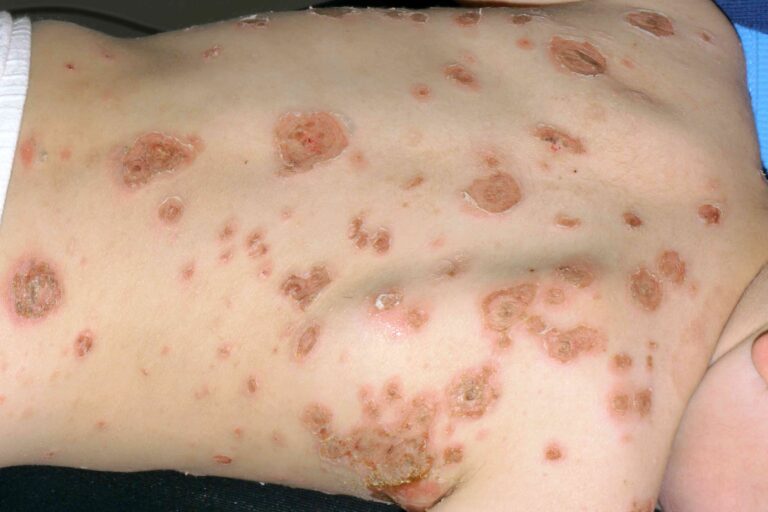
  • Tender red spots – this is the most common symptom of impetigo and they can especially occur all of the face (mostly around the mouth or nose), but also to other areas, such as the chest and hands
  • Blisters – the red spots can develop into blisters, which are filled with a thick yellow pus that exudes when the blisters burst
  • Golden-coloured scabs – this happens when the blisters start to heal

Treatment

Treatment of impetigo

  • See a doctor – any child with suspected impetigo needs to see a doctor who can perform an examination to diagnose this condition
  • Topical antibiotic – if the impetigo is mild, the doctor will prescribe a topical antibiotic to apply on the rash
  • Saline solution – the doctor may recommend soaking the impetigo scabs in a saline solution, to soften them, before applying the topical antibiotic (in milder cases of impetigo)
  • Oral (or intravenous) antibiotic – stronger antibiotics may be required if the impetigo is severe, given either orally (a tablet) or intravenously (by a needle into the vein)
  • Separate personal care – the child’s brush, comb and towel should be kept separate to everyone else’s in the family, to prevent the infection from spreading
  • Wash everything separately – wash all the child’s towels, bedclothes and other items of clothing that may be in contact with the impetigo rash at high temperature (to kill the bacteria) and ensure to wash separately from the rest of the family laundry

Complications

Complications

Impetigo doesn’t normally cause any complications.

These complications generally occur only in children (and adults) who may have a very impaired immune system:

  • cellulitis – an infection of the deeper layers of the skin and underlying tissue
  • scarlet fever – a rare bacterial infection that causes a fine, pink rash across the body
  • guttate psoriasis – a non-infectious skin condition that can develop in children and teenagers after a bacterial infection
  • septicaemia (a type of sepsis) – a bacterial infection of the blood
  • Staphylococcal scalded skin syndrome (SSSS) – a serious skin condition that looks like the skin has been scalded with boiling water
  • post-streptococcal glomerulonephritis – an infection of the small blood vessels in the kidneys

In very rare cases, impetigo may lead to some scarring, particularly if you scratch at the blisters, crusts or sores

Vaccination

Vaccination

There’s currently no vaccine for impetigo.

If your child has impetigo, keep them away from childcare, kindergarten or school for at least 24 hours after starting antibiotics treatment.

Adults with the illness should also stay off work for at least 24 hours after starting antibiotics treatment.

Risk

Reducing risk of infection

Strategies to reduce infection:

  • if your child gets impetigo, keep them away from school and other children
  • discuss the impetigo infection with your doctor
  • ensure you and your child/children wash hands with a sanitising hand soap
  • wash toys and clothes in detergent that has a sanitising effect
  • wipe down surfaces with a 70% alcohol solution
  • don’t share eating utensils, linens, towels or other personal items with anyone else

References

References

  • About impetigo. CDC USA. Accessed 10 July 2024
  • Impetigo. National Library of Medicine USA. Accessed 10 July 2024

Last reviewed and updated: 10 July 2024


Dermatitis and eczema on babies

Dermatitis is is a reaction by the skin to either an allergen (a substance which causes an allergic reaction) or an irritant (a substance which irritates the body or skin in some way), depending on whether the substance exposed to the skin or body causes an allergic reaction or is an irritant (without an allergy).

Eczema is a very common skin condition that can affect up to 10% of all young babies and toddlers, which normally starts in the first year of the babies’ life. There are a few types of eczema

Eczema is mostly caused by an allergen.

Eczema is also known as atopic dermatitis.

Symptoms of dermatitis and eczema

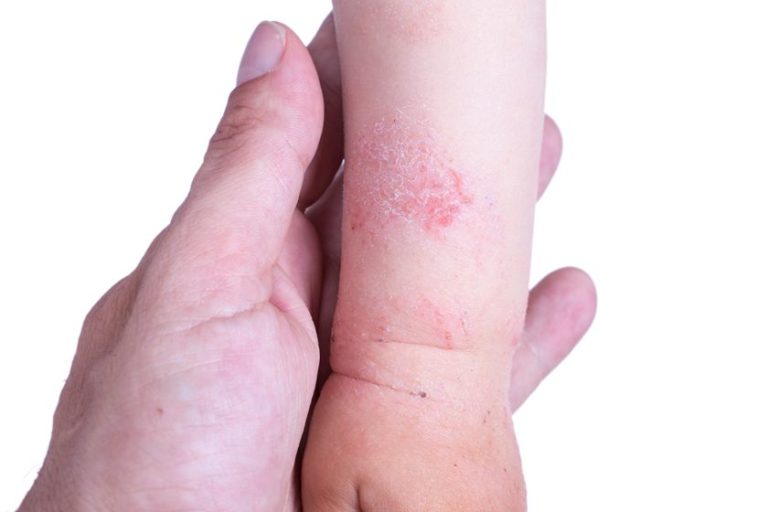
Both forms of dermatitis (and eczema) cause the following symptoms of the skin:

  • Blisters
  • Inflammation
  • Itchiness
  • Rash, which can cover small parts of the body, to the whole body
  • Redness
  • Scaling (in eczema only)
  • Weeping of the skin (in eczema only)

Common triggers of dermatitis and eczema (allergens and irritants)

There are a number of allergens which can cause dermatitis (or eczema):

  • Dust mites – these pests in dust can cause dermatitis
  • Medications – especially those which are rubbed into the skin
  • Nickel – a metal, which is found in fashion jewellery
  • Pets – hair and dander from pets can cause dermatitis
  • Plants – certain plants
  • Rubber – any type of rubber items (including elastic bands and watch straps)

There are a number of irritants which can cause dermatitis (and eczema):

  • Chemicals – many type of chemical substances can irritate the skin
  • Laundry powder (or liquid) – many laundry powders (or liquids) can irritate the skin as they can contain harsh chemicals which can irritate the baby’s skin when they wear the clothes that have been washed in them
  • Lotions and creams – many lotions and creams (even those aimed at baby skin) contain strong chemicals which can irritate their gentle skin
  • Softeners – many softeners use harsh chemicals, which can irritate the baby’s skin when they wear the clothes washed with softeners

Treatment of dermatitis and eczema

Dermatitis and eczema are normally treated by:

  • Antihistamines – these are used in more severe cases to reduce itching and inflammation and help the baby (or toddler) sleep better
  • Avoiding the allergen or irritant – the baby or toddler should not be exposed to the substance which is causing the dermatitis (or eczema)
  • Avoid using harsh soap, laundry powder (or liquid) – if dermatitis (or eczema) is present, any regular soap or laundry powder (and liquid) will just dry out and irritate the baby or toddler’s skin even further, so use certified organic soap and laundry powder (or liquid) made especially for babies
  • Emollients (eczema only) – emollients are generally baby lotions and oils, which are used to keep the baby’s skin more moist and prevent the dryness of the skin which is a problem in eczema
  • Non-allergenic bedding – use non-allergenic bedding in the baby’s bed to help reduce allergic reactions and wash all the bedding at 60°C (140°F) to remove any dust mites
  • Sunshine – expose all bedding to direct sunshine (on a clothes line) for most of the day, once a week, after washing
  • Wash toys – any fluffy toys need to be washed before they are given to the baby (or toddler) and washed on a regular basis after that
  • Wood floors – it may help the baby (or toddler) to live in an environment which is dust (and allergen) free, so removing carpet throughout the whole house is recommended and either have wood floors or some other hard flooring to help reduce exposure to dust

If the dermatitis (or eczema) is severe or does not resolve very quickly, an appointment with a medical doctor may be required.

Last reviewed and updated: 10 July 2024

Scarlet fever

Facts

Scarlet fever is a throat and skin infection, which is caused by the Group A streptococci bacteria.

The streptococci bacteria produce a toxin which can produce a rash in sensitive babies and toddlers.

Scarlet fever was once a very serious disease, but now with antibiotics, it is no longer the threat to babies and children it used to be.

Scarlet fever is also known as “strep throat” and can either be very mild or very serious.

Incubation period

Incubation period

The incubation period is the length of time it takes from being infected by someone else with Scarlet fever, to showing symptoms. It will take 2-7 days before you show any symptoms.

Scarlet fever has an incubation period of: 2-7 days

Catching Scarlet fever

How do you get Scarlet fever?

You can catch Scarlet fever by:

  • breathing in tiny infected droplets from infected people, when they cough or sneeze

Symptoms

Symptoms of Scarlet fever

  • Sore throat – red, sore throat, sore tonsils, high fever
  • White tongue – with red spots/bumps (“white strawberry tongue”) and after 4-5 days, the white coating on the tongue peels off, which leaves the tongue looking bright red (“red strawberry tongue”)
  • Rash – usually starts on the face and neck, but can occur on the rest of the body too. When pressed, rash turns white
  • Peeling skin – as the rash fades, this can cause the skin to get dry and peel

Treatment

Treatment of Scarlet fever

  • See a doctor – any child with suspected Scarlet fever needs to see a doctor who can perform an examination to diagnose this condition
  • Antibiotics – the doctor will prescribe antibiotics for this bacterial condition and to prevent further complications
  • Rest – the child should rest to help the body heal itself
  • Fluids – plenty of fluids (water, natural juice)
  • Soft foods – if eating is painful, provide soups and shakes or yogurt/ice cream (foods that are easy on the throat)
  • Lotion – the doctor will prescribe a lotion for relieving any itching of the rash spots (calamine lotion, paste of bicarbonate of soda mixed with water, watered down lavender oil)
  • Cool bath – a cool bath with oatmeal and bicarbonate of soda added may help to reduce itchiness
  • Medication – the doctor may advise giving the baby paracetamol or ibuprofen to reduce the fever

Complications

Complications

There are a number of complications possible with Scarlet fever. These can occur while the child has Scarlet fever or in the weeks after the infection has started:
  • ear infection.
  • throat abscess.
  • sinusitis.
  • pneumonia.
  • meningitis.
  • rheumatic fever

There are some major long term effects possible after a Scarlet fever infection:

  • swollen lymph nodes in the neck
  • sinus, skin and ear infections
  • pockets of pus, or abscesses, around the tonsils
  • rheumatic fever, which affects the heart
  • pneumonia, a lung infection
  • arthritis or joint inflammation
  • post-streptococcal glomerulonephritis, a kidney disease

Scarlet fever doesn’t normally cause any complications.

These complications generally occur only in children (and adults) who may have a very impaired immune system.

Vaccination

Vaccination

There’s currently no vaccine for scarlet fever.

If your child has scarlet fever, keep them away from childcare, kindergarten or school for at least 24 hours after starting antibiotics treatment.

Adults with the illness should also stay off work for at least 24 hours after starting antibiotics treatment.

Risk

Reducing risk of infection

Strategies to reduce infection:

  • if your child gets Scarlet fever, keep them away from school and other children
  • discuss the Scarlet fever infection with your doctor
  • ensure you and your child/children wash hands with a sanitising hand soap
  • wash toys and clothes in detergent that has a sanitising effect
  • wipe down surfaces with a 70% alcohol solution
  • don’t share eating utensils, linens, towels or other personal items with anyone else

References

References

  • Scarlet fever. CDC USA. Accessed 9 July 2024

Last reviewed and updated: 9 July 2024

Measles (rubeola)

Facts

Measles is a very contagious disease, which used to be very rare because the MMR immunisation program is in place in most countries.

Measles is caused by the rubeola virus.

Measles can infect up to 90% of anyone who isn’t immune and who comes close to an infected person.

In 2019, Australia had 284 registered measles cases, which was concerning. But in 2021, there were 0 cases. In 2022, there were 7 cases. In 2023, there were 26 cases. These are the cases that are reported to medical authorities. There still could be more which are not reported.

Incubation period

Incubation period

The incubation period is the length of time it takes from being infected by someone else with measles, to showing symptoms. It will take 1-2 weeks before you show any symptoms.

Measles has an incubation period of: 7-14 days

If you catch measles, you are infectious 4 days before the rash starts, to 4 days after.

Catching measles

How do you get measles?

You can catch measles in a few ways:

  • breathing in tiny infected droplets from infected people, when they cough or sneeze
  • going into a room where a person with measles just left

The risk of catching measles is higher if your immune system is somewhat impaired (people with serious underlying conditions, older people) or not evolved (babies and children).

Symptoms

Symptoms of measles

  • Fever – a high fever which may go up over 40°C (104°F)
  • Cold-like symptoms – chills, sore throat, runny nose, red watery eyes (conjunctivitis) generally feeling unwell
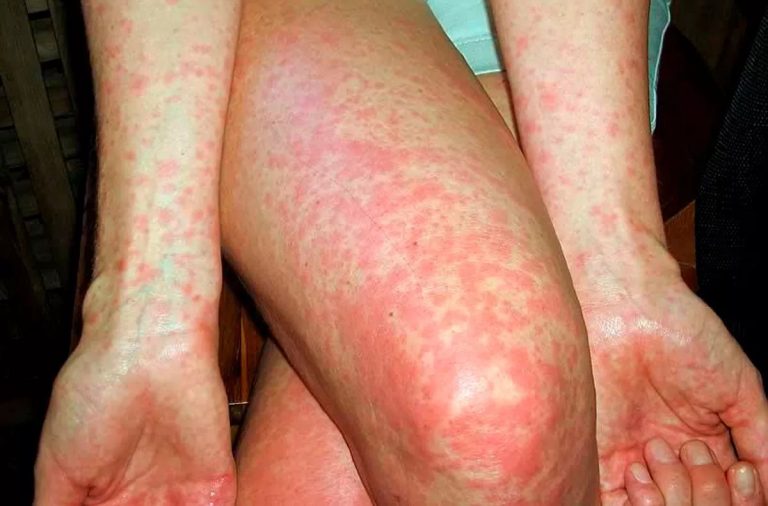
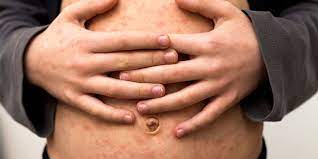
  • Rash – brownish-pink spots start 3-4 days after the first cold-like symptoms. They spread from behind the ears, down the face, neck, trunk and limbs over 3 days
  • Small white spots inside the mouth – these can occur about 1-2 days before the skin rash starts
  • Swollen glands – the lymph glands may be visibly swollen
  • Sensitivity to light – this is an uncommon symptom, but can occur in some babies and toddlers

Treatment

Treatment of measles

  • See a doctor – any child with suspected measles needs to see a doctor who can perform an examination to diagnose this condition
  • Rest – the child should rest to help the body heal itself
  • Fluids – plenty of fluids (water, natural juice)
  • Lotion – the doctor will prescribe a lotion for relieving any itching of the rash spots (calamine lotion, paste of bicarbonate of soda mixed with water, watered down lavender oil)
  • Cool bath – a cool bath with oatmeal and bicarbonate of soda added may help to reduce itchiness
  • Bath with lavender or chamomile – a few drops of either lavender or chamomile oil to the bath water may help the baby or toddler sleep better, as both of these oils have calming properties
  • Medication – the doctor may advise giving the baby paracetamol or ibuprofen to reduce the fever

Complications

Complications

Complications can occur with measles and usually occurs in 1 in 15 children

The people most at risk of measles complications are:

  • children with chronic illness
  • children under 5 years
  • pregnant women
  • people with impaired immune systems

The most common complications of measles are middle ear infection, diarrhoea, pneumonia, bronchitis or convulsions.

  • Ear infections occur in about 1 in every 10 cases of measles
  • Diarrhoea occurs in less 1 in every 10 cases of measles

Pneumonia is a serious complication. Pneumonia is an infection that affects one or both lungs. It causes the air sacs in the lungs to fill up with fluid or pus. Pneumonia can be deadly.

Encephalitis, is another serious complication. Encephalitis is a serious inflammation of the brain cells. It occurs in 1 in every 1,000 cases of measles. Encephalitis can be deadly.

Around 1-3 in every 1,000 children will die from complications related to the respiratory or neurological systems.

Vaccination

Vaccination

All children under 14 should receive of the varicella vaccine.

The national immunisation schedule advises children to be immunised with the:

  • MMRV vaccine for measles, mumps, rubella and varicella at 18 months. This is free
  • second dose of the MMRV vaccine at least 4 weeks after the first dose. This is not free

Risk

Reducing risk of infection

The best and easiest way to prevent infection is to get vaccinated. Children should receive two doses of the MMRV vaccine to ensure they and their community are safe from measles infection.

Other strategies to reduce infection:

  • if your child gets measles, keep them away from school and other children
  • discuss the measles infection with your doctor
  • ensure you and your child/children wash hands with a sanitising hand soap
  • wash toys and clothes in detergent that has a sanitising effect
  • wipe down surfaces with a 70% alcohol solution
  • pregnant women should stay away from anyone who has measles

References

References

  • Measles. Department of Health and Aged Care. Accessed 9 July 2024
  • Measles. World Health Organisation. Accessed 9 July 2024
  • Measles (rubeola). CDC USA. Accessed 9 July 2024
  • Measles vaccine. National immunisation schedule. Accessed 9 July 2024

Last reviewed and updated: 9 July 2024


Chickenpox

Facts

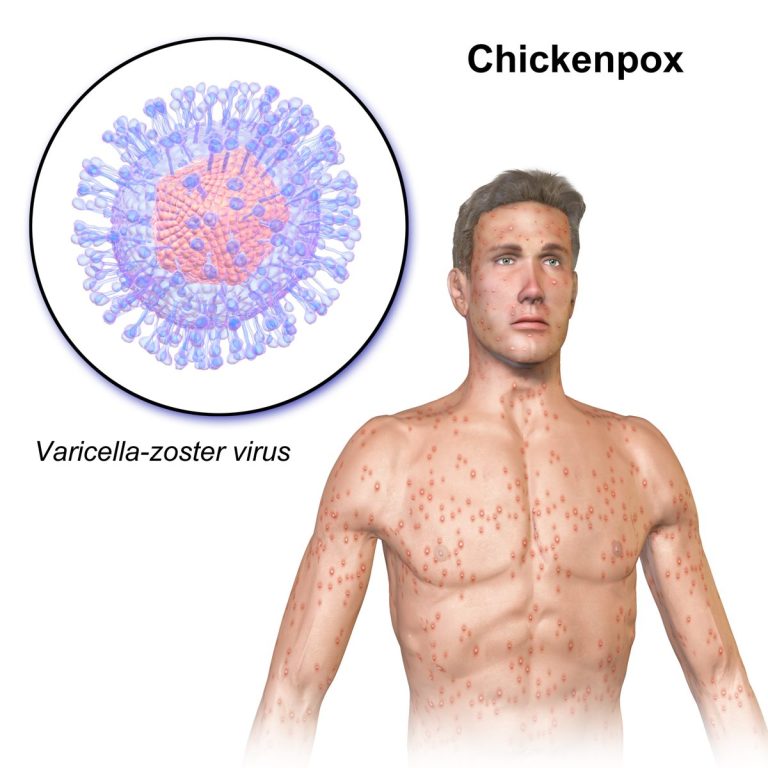
Chickenpox is a very contagious disease which is caused by the varicella-zoster virus, which is spread by droplets from the nose or by touching fluid from skin blisters of an infected child. Chickenpox causes a rash which blisters and is very itchy, but it rarely causes any other complications in children.

Chickenpox is also known as varicella after the virus which causes it.

Incubation period

Incubation period

The incubation period is the length of time it takes from being infected by someone else with chickenpox, to showing symptoms. For example, you come in contact with someone infected with chickenpox. It will take 2-3 weeks before you show any symptoms.

You will be infectious for at least 2-3 days before the rash starts until the last blister dries up.

Chickenpox has an incubation period of: 10-21 days

Catching chickenpox

How do you get chickenpox?

You can catch chickenpox in a few ways:

  • breathing in tiny infected droplets from infected people, when they cough or sneeze
  • touching infected blisters that have pus, on a person infected with chickenpox

You can’t catch chickenpox from a person whose blisters are scabbed up and dry.

Symptoms

Symptoms of chickenpox

  • Fever – slightly raised temperature (mild fever)
  • Rash – small, dark red spots that are very itchy. These appear in groups around the stomach/chest/back and face and then spread to the rest of the body
  • Blisters – tiny blisters may develop in the mouth
  • Fluid filled blisters – the rash develops into blisters that open up and crust over

Treatment

Treatment of chickenpox

  • See a doctor – any child with suspected chickenpox needs to see a doctor who can perform an examination to diagnose this condition
  • Rest – the child should rest to help the body heal itself
  • Fluids – plenty of fluids (water, natural juice)
  • Lotion – the doctor will prescribe a lotion for relieving any itching of the rash spots (calamine lotion, paste of bicarbonate of soda mixed with water, watered down lavender oil)
  • Cool bath – a cool bath with oatmeal and bicarbonate of soda added may help to reduce itchiness
  • Medication – the doctor may advise giving the baby paracetemol or ibuprofen to reduce the fever

Complications

Complications

Newborn babies, pregnant women and anyone with a weakened immune system or serious other underlying conditions can face serious illness.

  • Keep children with chickenpox away from pregnant women, as the virus can not only infect her, but the unborn baby as well and this can cause birth defects.
  • Chickenpox can re-emerge later in life as shingles, which can have serious complications.

Vaccination

Vaccination

All children under 14 should receive of the varicella vaccine.

The national immunisation schedule advises children to be immunised with the:

  • MMRV vaccine for measles, mumps, rubella and varicella at 18 months. This is free
  • second dose of the MMRV vaccine at least 4 weeks after the first dose. This is not free

Risk

Reducing risk of infection

If someone who isn’t immune is exposed to chickenpox, they may be treated with:

  • a varicella vaccination within 5 days of exposure
  • an injection of varicella-zoster immunoglobulin. This contains high levels of varicella-zoster virus antibodies. It helps the body recognise the virus and overcome it, preventing infection. This is only given to people who may have an increased risk of serious illness. It is usually given within 4 days (96 hours) of exposure but can be given as late as 10 days after exposure

References

References

Last reviewed and updated: 9 July 2024