Chicken stock

0
Diabetes friendly recipe
Low GI recipe
Low fat recipe
Low carb recipe
Dairy free recipe
Gluten free recipe
Heart healthy recipe
Vegetarian recipe
Vegan recipe


This chicken stock is a much healthier alternative to store bought ones – it’s healthier and better for you.

The chicken stock will keep in the refrigerator, covered, for up to 5 days. It can also be stored in 1/2 litre containers in the freezer and frozen for about one month.

Nutrition rundown

  • Low calorie at just 68 kcal per cup, making it ideal for weight management and therapeutic diets
  • Very low fat and only 1.0 g total fat after skimming
  • Low saturated fat, just 0.3 g, supporting heart health
  • Moderate protein content around 12.0 g per cup, largely from collagen and gelatin
  • Good source of collagen-derived amino acids including glycine and proline, which support joint repair, skin elasticity and gut lining integrity
  • Naturally low sodium at 110 mg per cup (4.8% DV) compared to commercial stocks
  • Rich in natural gelatin (if reduced well), supports gut lining integrity and digestive health
  • Cholesterol remains low at 3.8 mg per tablespoon, despite being bone-based stock
  • Naturally contains small amounts of iron, B vitamins (especially B6 and B12), glycine and proline (amino acids beneficial for sleep and tissue repair)
  • Source of trace minerals from bones including:
    • Calcium (bone health support)
    • Phosphorus
    • Magnesium
    • Potassium (fluid balance & blood pressure regulation)
    • Zinc (immune support)
  • Contains antioxidants from vegetables and herbs:
    • Carrots provide beta-carotene (Vitamin A precursor)
    • Red capsicum contributes Vitamin C
    • Garlic provides allicin (immune-supportive compound)
    • Thyme, rosemary and oregano provide polyphenols and anti-inflammatory compounds
  • It can be eaten on its own as a soothing and healing drink and is suitable for:
    • Low-fat diets
    • Post-illness recovery
    • Gut healing protocols
    • Intermittent fasting support
Recipe information
Serves: 2 litres (8 cups)
Prep time: 20 mins
Cooking time: 2.5 hours
Recipe nutrition (per serving)
Calories: 68
Carbs: 3.5 grams
Protein: 12.0 grams
Fat: 1.0 grams

Ingredients

  • 1 kg organic chicken bone pieces (wings, breast, neck)
  • 2 organic carrots, roughly chopped
  • 1 organic red capsicum
  • 1 organic red (Spanish) onion, halved
  • 3 organic cloves garlic
  • 6 organic sprigs fresh thyme
  • 3 organic sprigs fresh rosemary
  • 3 organic sprigs fresh oregano
  • 3 organic fresh (or dried) bay leaves
  • 3 organic black peppercorns
  • 3 organic Tbsp extra virgin, cold pressed olive oil

Method

  1. Add 3 litres (12 cups) of water into a large pot and add the chicken bones.
  2. Bring the water slowly to the boil on medium heat, regularly skimming the scum that forms at the surface from the chicken.
  3. Once water reaches the boil, reduce the heat and allow the stock to gently simmer, uncovered for about 2 hours, adding more water if necessary (if the water reduces too much).
  4. After the 2 hours, let the stock cool down.
  5. Put a muslin cloth over a large strainer which is over a large pot and strain the stock, discarding the solids (they can be eaten if desired).
  6. Cool the stock further and refridgerate until it is cold.
  7. When the stock is cold, skim most of the fat from the surface.

Nutrition information

  Nutrition InformationAmount% Daily
Value
Calories68.03.4%
Calories from fat9.011.7%
Total fat1.0 g1.3%
Saturated fat0.3 g1.5%
Cholesterol55.0 mg18.3%
Sodium110.0mg4.8%
Carbohydrate3.5 g1.3%
Dietary fibre0.5 g1.8%
Sugars3.5 g1.9%
Protein12.0 g24.0%

The % daily values are based on a diet of 2000 calories per day
These are approximate values.
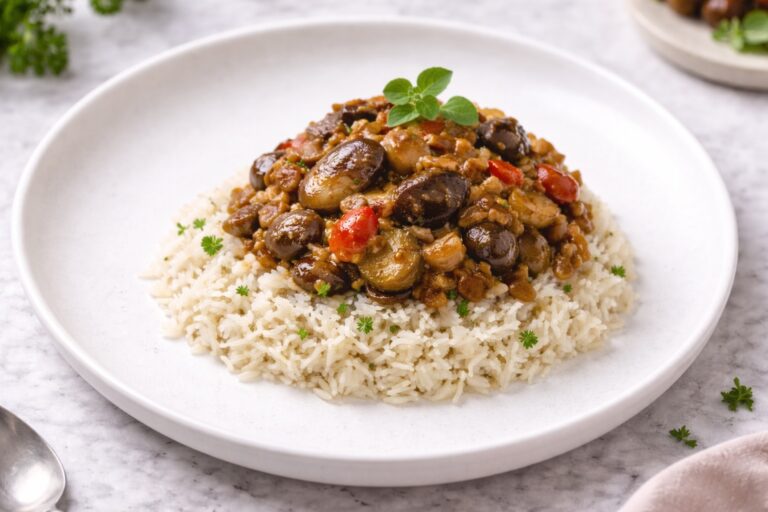
Pumpkin soup with spicy tofu

0
Diabetes friendly recipe
Low GI recipe
Low fat recipe
Low carb recipe
Dairy free recipe
Gluten free recipe
Heart healthy recipe
Vegetarian recipe
Vegan recipe


The soup should keep for about 4-5 days if stored in a covered glass or ceramic container in the refridgerator.

Use only organic non-GMO tofu to make this soup as there are health concerns about genetically modified soy (which tofu is made from).

Nutrition rundown

  • Excellent source of vitamin A (beta-carotene) from pumpkin supports immune health, skin and eye function.
  • High in dietary fibre (nearly 30% DV per serve) which supports gut health, blood sugar balance and satiety.
  • Moderate calorie density, making it a filling but weight-friendly meal.
  • Provides plant-based protein from tofu plus additional protein from bread.
  • Contains heart-healthy monounsaturated fats from extra virgin olive oil.
  • Garlic and onion provide natural prebiotic compounds to support beneficial gut bacteria.
  • Coriander contributes antioxidants and small amounts of vitamin K.
  • Sodium is low by using home-made stock.
  • Naturally low in cholesterol and low in saturated fat.
  • Balanced macronutrient profile: complex carbohydrates, fibre, healthy fats and moderate protein.
Recipe information
Serves: 4
Prep time: 30 mins
Cooking time: 50 mins
Recipe nutrition (per serving)
Calories: 296.4
Carbs: 41.5 grams
Protein: 9.2 grams
Fat: 10.8 grams

Ingredients

  • 4 slices gluten free, rye or spelt wholegrain bread, crusts removed
  • 2L chicken stock or vegetable stock (to make this recipes vegan)
  • 1kg pumpkin, cut into small cubes
  • 80g firm organic tofu, shaved or coarsely grated
  • 1 onion, chopped
  • 6 cloves garlic, chopped
  • 2 Tbsp fresh coriander leaves
  • Extra virgin, cold pressed olive oil

Method

  1. Cut the bread into 1cm cubes.
  2. Place the bread pieces in an oven tray and bake at 200°C (400°F) for about 10 minutes or until the bread is crisp.
  3. Remove the bread and cool, covered.
  4. Heat the olive oil in a large saucepan and cook the onion over low heat until it is soft and transparent. Add some of the stock if the onion starts to stick to the pan.
  5. Add the rest of the stock, garlic and pumpkin pieces, then simmer, uncovered, for about 40 minutes, or until the pumpkin is very soft.
  6. Remove from the heat and cool a little.
  7. Puree the pumpkin mixture in a food processor until it is smooth (alternatively, a hand blender can be used instead).
  8. Return to the heat and season to taste with salt and pepper.
  9. Add equal portions to 4 bowls and top with the toasted bread croutons, the tofu and coriander leaves.
  10. Drizzle with a little more of the olive oil and serve.

Nutrition information

  Nutrition InformationAmount% Daily
Value
Calories296.417.6%
Calories from fat97.224.5%
Total fat10.8 g16.6%
Saturated fat1.6 g8.0%
Cholesterol2.5 mg0.8%
Sodium318 mg13.8%
Carbohydrate41.5 g15.1%
Dietary fibre7.8 g27.9%
Sugars9.9 g11.0
Protein9.2 g18.4%

The % daily values are based on a diet of 2000 calories per day
These are approximate values.

Chicken with red split lentils

0
Diabetes friendly recipe
Low GI recipe
Low fat recipe
Low carb recipe
Dairy free recipe
Gluten free recipe
Heart healthy recipe


This is a great recipe for the family in winter, as it is really warming. It is also very high in dietary fibre and provides antioxidants and numerous vitamins and minerals.

While this recipe has a lot of ingredients, it’s really easy to prepare and cook. Once the lentils are in, you just need to stir occasionally until it is cooked and ready to be eaten.

It’s very high in protein per serve (great satiety + muscle support). Has a lot of soluble and insoluble fibre, which are great for gut health and reducing cholesterol.

Nutrition rundown

  • Very high protein per serve, which is nearly a whole day’s protein in one serve (great satiety + muscle support)
  • Excellent fibre from lentils and vegetables (gut + cholesterol benefits)
  • Moderate fat, mostly unsaturated (olive oil + chicken)
  • Relatively low sodium for a lentil-based stew
  • Naturally iron-rich and anti-inflammatory thanks to lentils, turmeric and cumin
  • More than half your daily fibre needs, supporting digestion and blood sugar control
  • Low glycaemic impact due to lentils’ slow-digesting carbohydrates
  • Rich in plant-based iron and folate from red lentils
  • Contains zinc and B vitamins from chicken thighs
  • Turmeric and cumin provide anti-inflammatory compounds
  • Peas and red peppers contribute vitamin C, aiding iron absorption
  • Olive oil adds heart-healthy monounsaturated fats
  • Naturally gluten-free
  • High satiety index — keeps you full for hours
Recipe information
Serves: 4
Prep time: 35 mins
Cooking time: 45 mins
Recipe nutrition (per serving)
Calories: 536
Carbs: 50.8 grams
Protein: 47.3 grams
Fat: 14.7 grams

Ingredients

  • 500g skinless organic chicken thigh fillets
  • 250g red split lentils
  • 2 red peppers, sliced 5cm strips
  • 250g peas (fresh or frozen)
  • 100g red (Spanish) onions, coarsely chopped
  • 3 large garlic cloves, crushed
  • 1 Tspn fresh ginger, grated finely
  • 1 L chicken stock (or water)
  • 2 Tspn ground cumin
  • 1 Tspn ground turmeric
  • 1 Tbspn extra virgin, cold pressed olive oil
  • 1 Tspn cumin seeds
  • 1 Tbsp lemon juice
  • 1/4 Tspn garam masala
  • 2-4 Tbspn fresh coriander, chopped

Method

  1. Add the chicken stock (or water) to a heavy pot.
  2. Add the onions, lentils, ground turmeric and ground cumin to the water.
  3. Cook on a low heat for 30 minutes.
  4. Add the chicken and bring the water to the boil.
  5. Reduce the heat and simmer for a further 30 minutes.
  6. Heat the olive oil in a small frying pan and add the cumin seeds.
  7. When the cumin seeds start to sizzle, add the garlic and ginger.
  8. When the garlic has become soft and slightly golden in colour remove them from the heat and add to the pot with the chicken and lentils.
  9. Add the peas, lemon juice and garam masala to the pot and cook for a further 5 minutes, stirring all the ingredients through to ensure they are all combined properly.
  10. Serve sprinkled with fresh coriander.

Nutrition information

  Nutrition InformationAmount% Daily
Value
Calories53626.8%
Calories from fat132.526.7%
Total fat14.7 g18.8%
Saturated fat3.2 g16.0%
Cholesterol126.5 mg42.2.9%
Sodium412.6 mg18.0%
Carbohydrate50.8 g18.5%
Dietary fibre15.1 g53.9%
Sugars6.9 g7.7
Protein47.3 g94.6%

The % daily values are based on a diet of 2000 calories per day
These are approximate values.

Feta and pesto pasta bake

0
Diabetes friendly recipe
Dairy free recipe
Gluten free recipe
Heart healthy recipe
Vegetarian recipe


This recipe is high in vitamin Acalciumseleniumiron and fibre. It’s really delicious, simple to make, relatively low in calories, medium level of carbohydrates and very good for you. It’s high in healthy fats from the olive oil and pesto.

The pesto used in this recipe is vegan – it contains no cheese, just pine nuts, basil and olive oil. This also reduces the fat and cholesterol intake. It’s high in healthy fats from the olive oil and pesto.

This recipe is cow milk dairy free. It uses goat’s or sheep’s feta which is fine for most people that have lactose intolerance, as sheep’s or goat’s milk feta does not have as much lactose as cow’s milk and can be tolerated.

Nutrition rundown

  • Protein-rich thanks to eggs and sheep’s milk feta
  • High in healthy fats, mainly from olive oil and pesto
  • Cholesterol is high, driven almost entirely by the eggs (expected for an egg bake)
  • Moderate carbs, suitable for a balanced main rather than a heavy pasta dish
  • Sodium is reasonable for a feta-based meal, especially if pesto is used sparingly
  • Good calcium hit from sheep’s milk feta, supporting bone health and muscle function
  • Rich in B vitamins (especially B12, riboflavin and folate) from eggs and dairy, which support energy metabolism and red blood cell production
  • Choline is high (eggs), which is important for brain function, memory and liver health
  • Contains fat-soluble vitamins like vitamin A and vitamin D (mostly from eggs and feta), supporting immunity, skin and hormone function
  • Olive oil adds monounsaturated fats, which are more heart-friendly than butter/cream-based bakes
  • Pesto + basil contribute antioxidants (polyphenols) that support anti-inflammatory eating patterns, even in small amounts
  • Spelt pasta adds some extra micronutrients compared with refined pasta, including magnesium, phosphorus and some iron
  • Fibre is modest but helpful for digestion and steadier blood sugar (and you can boost it easily by adding veg)
  • Low added sugar overall — the small sugar amount is naturally occurring, not “sweetened”
  • Satisfying meal for appetite control: higher fat + solid protein tends to keep you fuller for longer
  • Easy to make it more nutrient-dense by baking through spinach, zucchini, peas, mushrooms or tomatoes without changing the base recipe much
  • Electrolyte balance: sodium is moderate, but the meal also provides potassium and magnesium (especially if you add greens), which helps counterbalance salty ingredients like feta and pesto
Recipe information
Serves: 4
Prep time: 15 mins
Cooking time: 20 mins
Recipe nutrition (per serving)
Calories: 402
Carbs: 24.7 grams
Protein: 19.7 grams
Fat: 26.0 grams

Ingredients

  • 250g organic wholewheat spelt pasta, cooked
  • 100g sheep’s milk feta
  • 6 large organic eggs
  • 1 tablespoon vegan pesto
  • 2 tablespoons organic, cold pressed olive oil
  • Basil – dry or fresh

Method

  1. Add 2 litres of water, some olive oil and a pinch of salt into a stainless steel pan and bring to the boil.
  2. Add the pasta to the boiling water and cook until just before al dente.
  3. When the pasta is almost cooked, drain and add to a ceramic oven dish.
  4. Whisk the eggs and crumble most of the feta cheese onto the pasta. Mix until the pasta has been coated with the eggs and pasta.
  5. Bake covered for about 10-15 minutes (until the egg is cooked).
  6. Serve with a little of the pesto sauce mixed through.

You can also cook the pasta with the eggs on the stovetop if you want a quicker meal, as it cooks more quickly on the stovetop.

Nutrition information

  Nutrition InformationAmount% Daily
Value
Calories40219.3%
Calories from fat12327.2%
Total fat26.0 g37.1%
Saturated fat8.4 g35.0%
Cholesterol174 mg58.0%
Sodium468.7 mg20.4%
Carbohydrate24.8 g8.0%
Dietary fibre3.6 g12.0%
Sugars1.6 g1.8
Protein19.7 g39.4%

The % daily values are based on a diet of 2000 calories per day
These are approximate values.

Eggplant with sweet potato and salsa verde

0
Diabetes friendly recipe
Low GI recipe
Low fat recipe
Low carb recipe
Dairy free recipe
Gluten free recipe
Heart healthy recipe
Vegetarian recipe
Vegan recipe


This is a great vegetarian / vegan dish which is packed with dietary fibre and provides antioxidants and numerous vitamins and minerals.

This meal is full of healthy fats, is very low in saturated fat and has no cholesterol making it heart healthy. The carbohydrates come from fresh vegetables so they’re healthy too. Protein is okay but still solid for a plant-based meal. It’s also low in sodium, which is heart healthy.

The added nuts and seeds make this a complete protein recipe, so it is suitable for vegans.

Nutrition rundown

  • High fibre with over one-third of daily fibre needs per serve, driven by eggplant, sweet potato, capsicum and herbs. This supports digestive health, cholesterol balance and satiety.
  • Healthy fats primarily from extra virgin olive oil, nuts and seeds -predominantly heart-healthy monounsaturated fat.
  • Low saturated fat & zero cholesterol, making it heart-friendly.
  • Moderate carbs, but largely from whole vegetables rather than refined sources.
  • Plant-based protein: Not high, but solid for a vegetable-focused dish, though best paired with legumes, fish or lean poultry for a higher-protein meal.
  • Sodium stays reasonable , mainly from capers, remaining heart-conscious unless extra salt is added after serving.
  • Moderate energy at ~290 calories per serve, making it suitable as a light main or substantial side dish.
  • Carbohydrates come entirely from whole vegetables, with no refined grains or added sugars.
  • Naturally rich in antioxidants from eggplant skin, capsicum and fresh herbs.
  • Sweet potato provides beta-carotene for immune and skin support.
  • Wide variety of vegetables and herbs supports gut microbiome diversity and anti-inflammatory benefits.
Recipe information
Serves: 4
Prep time: 35 mins
Cooking time: 45 mins
Recipe nutrition (per serving)
Calories: 290
Carbs: 38.4 grams
Protein: 5.9 grams
Fat: 15.1 grams

Ingredients – eggplant

  • 500g eggplants, sliced crosswise into 1cm thick slices (about 8 slices)
  • 2 large zucchini (yellow and green), sliced 1cm thick on diagonal
  • 4 capsicums, sliced in half
  • 100g snowpea sprouts
  • 500g orange sweet potatoes, peeled and chopped
  • 1 clove garlic, chopped
  • 1 Tbsp fresh lemon juice
  • 1 Tspn ground coriander
  • 1 Tspn ground cumin
  • Extra virgin, cold pressed olive oil
  • Sprinkle of sesame seeds
  • Sprinkle of pecan nuts

Ingredients – salsa verde

  • 1/3 cup fresh basil
  • 1/3 cup fresh coriander
  • 1/4 cup fresh mint
  • 1/4 cup fresh dill
  • 1 clove garlic, finely chopped
  • 1 Tspn capers, drained and finely chopped
  • 1 Tbsp fresh lemon juice
  • 1 Tbsp extra virgin, cold pressed olive oil
  • Salt and pepper to taste

Method – eggplant

  1. Cook sweet potato in a saucepan with salted water, uncovered, over medium heat for about 10 minutes, or until tender.
  2. Drain the sweet potato and set aside.
  3. Add the sweet potato into a food processor and also add the garlic, ground spices, lemon juice and 1-2 tablespoons of the olive oil and process until the mixture is smooth. Season with salt and pepper to taste.
  4. Place eggplant, zucchini and capsicum pieces on an oven tray, brush with a little olive oil on both sides.
  5. Roast the eggplant, zucchini and capsicum in a medium-hot oven at 200C for about 30 minutes, turning each piece over at about 15 minutes (or when browned on one side). Cook until both sides are browned and tender.
  6. Spoon sweet potato mash onto plates and top with the layered vegetables in equal portions.
  7. Add equal parts of the salsa verde on top of each stack.
  8. Serve garnished with the snow pea sprouts.

Method – salsa verde

  1. Combine all ingredients in a food processor and process until they are smooth.
  2. Season with salt and pepper to taste.

Nutrition information

  Nutrition InformationAmount% Daily
Value
Calories28913.5%
Calories from fat13648.6%
Total fat15.1 g19.4%
Saturated fat2.1 g10.5%
Cholesterol0 mg0%
Sodium212.4 mg9.2%
Carbohydrate38.4 g14.0%
Dietary fibre9.7 g34.6%
Sugars12.6 g25.2
Protein5.9 g11.8%

The % daily values are based on a diet of 2000 calories per day
These are approximate values.
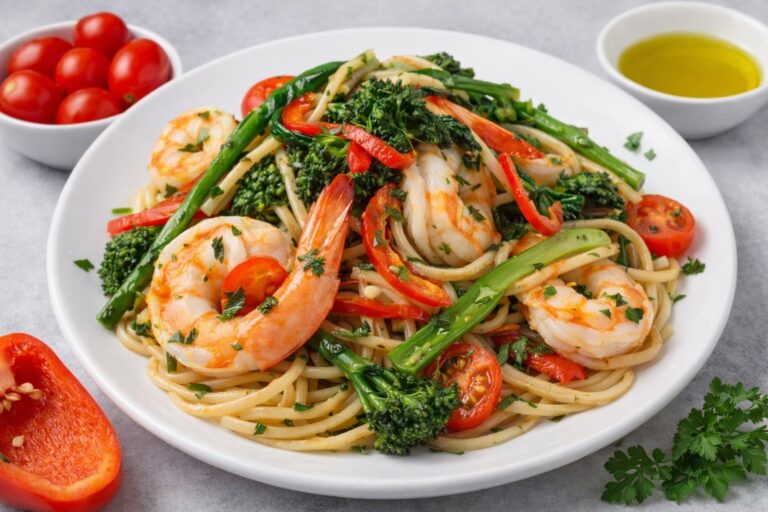
Spicy salmon, asparagus and quinoa

0
Diabetes friendly recipe
Low GI recipe
Low fat recipe
Low carb recipe
Dairy free recipe
Gluten free recipe
Heart healthy recipe


This delicious tuna salad is simple delicious. It is high in omega-3 fatty acids, vitamins, minerals and antioxidants. It’s relatively low in fat, sodium and cholesterol and very high in protein.

It’s diabetes friendly and heart healthy. It has no dairy or gluten.

The balsamic vinegar and olive oil dressing is light in flavour and light in calories. Eat this regularly for good heart health.

Nutrition rundown

  • High-protein meal (37.6g per serve) – supports muscle repair, satiety and metabolic health
  • Rich in omega-3 fatty acids from salmon – beneficial for heart, brain and anti-inflammatory support
  • Balanced macronutrient profile – protein, healthy fats and slow-release carbohydrates
  • Moderate calories (under 500 kcal per serve) – substantial but not heavy
  • Excellent fibre content (over 20% daily needs) from quinoa, spinach and asparagus
  • Naturally low in sugar – under 2g per serve
  • Low glycaemic load due to quinoa and vegetable fibre
  • Good iron content from spinach and quinoa supports oxygen transport
  • Strong magnesium contribution from quinoa is helpful for muscle and nerve function
  • Rich in potassium from salmon and greens supports blood pressure regulation
  • Provides vitamin K and folate from leafy greens is beneficial for bone and cellular health
  • Contains B-vitamins (especially B12 from salmon) is important for energy production
  • Low-moderate sodium level
  • Anti-inflammatory spice blend (paprika, cumin, coriander) adds antioxidants without calories
Recipe information
Serves: 4
Prep time: 20 mins
Cooking time: 5-20 mins
Recipe nutrition (per serving)
Calories: 489
Carbs: 33.8 grams
Protein: 37.6 grams
Fat: 22.4 grams

Ingredients

This quick and easy recipe is many layers of goodness. It is healthy, relatively low in fat, gluten-free and is very heart healthy, full of omega-3 fatty acids from the salmon, a heart-healthy oily fish.

To make the recipe vegan, omit the salmon and instead add 100g rice, plus a teaspoon each of sesame seeds and pecan nuts, plus a drizzle of tahini dressing – it will be a complete protein and really healthy.

Ingredients

  • 2 large cans salmon (250g) or 4 cooked salmon fillets, deboned
  • Large bunch of baby spinach, approx 3 cups – washed and roughly torn
  • 1 cup uncooked quinoa (any colour)
  • 1 heaped Tspn ground sweet red paprika powder
  • 16 asparagus spears
  • 1/4 Tspn ground cumin
  • 1/4 Tspn ground coriander
  • 1/4 Tspn ground sweet red paprika powder
  • 1/8 Tspn salt
  • 1 Tbsp olive oil

Method

  1. Wash the asparagus spears and cut off the ends. Cut each asparagus spear into sections, julienne style (about 2-3 for each asparagus)
  2. Heat the oil in a stainless steel pain and add the cut asparagus spears and sweet paprika powder.
  3. Saute the asparagus spears and the paprika powder until they are all coated with the paprika – about 3-4 minutes. Add a bit more olive oil if necessary.
  4. Remove the asparagus from the heat and set aside, covered (to keep it warm).
  5. Meanwhile, wash the quinoa in cold water and drain.
  6. Cook the quinoa by adding it to 1.5 Litres of water, together with the other spices (cumin, coriander, paprika).
  7. Bring the quinoa to the boil and then simmer for about 10-15 minutes, or until completed cooked.
  8. Once the quinoa has been cooked, drain any excess water (if there is any) and set aside.
  9. To serve, add equal amounts of the salmon to each plate.
  10. Then add a layer of the spinach leaves – equal amounts on each plate.
  11. Then add a layer of the quinoa – equal emounts on each plate.
  12. Finally add the asparagus on top – equal amounts on each plate and serve.

Nutrition information

  Nutrition InformationAmount% Daily
Value
Calories48924.3%
Calories from fat20110.1%
Total fat22.4 g28.7%
Saturated fat4.3 g18.0%
Cholesterol93.8 mg31.3%
Sodium277 mg12.3%
Carbohydrate5.7 g20.4%
Dietary fibre1.8 g6.0%
Sugars1.9 g2.1
Protein37.5 g75.2%

The % daily values are based on a diet of 2000 calories per day
These are approximate values.
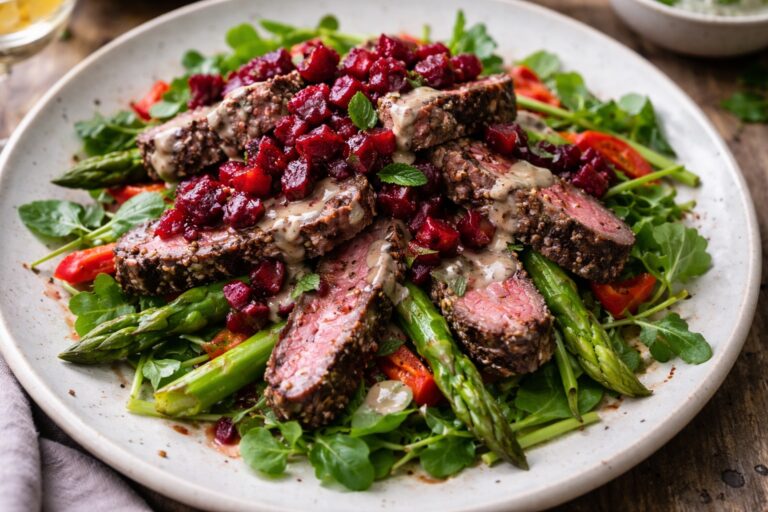
Chickpea & quinoa stuffed peppers

0
Diabetes friendly recipe
Low GI recipe
Low fat recipe
Low carb recipe
Dairy free recipe
Gluten free recipe
Heart healthy recipe
Vegetarian recipe
Vegan recipe


This vegetarian/vegan recipe is very easy to prepare and is very high in dietary fibre, very low in fat and is full of antioxidants, vitamins and minerals.

This recipe is very gut friendly, good for your heart and diabetes friendly. It’s also relatively high in protein despite it being vegan and without any meat.

Nutrition rundown

This is a well-balanced, plant-forward meal with moderate calories and strong fibre content, thanks to the quinoa, chickpeas and capsicums.

  • Fibre is excellent (29.3% daily value), supporting gut health and satiety.
  • Protein is moderate (19.2% daily value) from quinoa and chickpeas, making it satisfying without being heavy.
  • Fat content is heart-healthy, primarily from extra virgin olive oil, with low saturated fat.
  • Cholesterol-free, making it suitable for cardiovascular-conscious diets.
  • Sodium is low due to using homemade stock.
  • Provides a steady-release carbohydrate profile from quinoa, helping maintain stable blood sugar levels compared to refined grains.
  • Rich in vitamin C from the capsicums and tomato, supporting immune function and collagen production.
  • Contains a variety of antioxidant phytonutrients from herbs (parsley, oregano, thyme) which contribute anti-inflammatory benefits.
  • Offers plant-based iron from chickpeas and quinoa, important for energy production (absorption enhanced by the vitamin C in capsicum).
  • Supplies magnesium and potassium, supporting muscle function and blood pressure regulation.
  • Naturally low in saturated fat, helping maintain healthy cholesterol levels.
  • Provides B vitamins, particularly from quinoa, which assist with energy metabolism.
  • Contains healthy monounsaturated fats from extra virgin olive oil that support heart health.
  • The combination of fibre, protein and healthy fats makes it a high satiety meal, helping reduce overeating later.
  • Free from processed ingredients, making it a whole-food, minimally processed option aligned with a Mediterranean-style eating pattern.
Recipe information
Serves: 4
Prep time: 20 mins
Cooking time: 30 mins
Recipe nutrition (per serving)
Calories: 362
Carbs: 49.3 grams
Protein: 10.6 grams
Fat: 14.08 grams

Ingredients

  • 4 large red or green peppers (capsicums)
  • 1/2 cup cooked chickpeas
  • 1 cup quinoa, rinsed
  • 1/2 cup diced red pepper
  • 2 cups chicken stock (can substitute with vegetable stock to make it vegan)
  • 1 medium red (Spanish) onion, finely chopped
  • 1/4 cup carrot, finely sliced
  • 1/2 cup eggplant, diced
  • 1 large tomato, sliced thickly into 4 slices
  • 2 large cloves garlic, finely chopped
  • 2 Tbsp parsley, finely chopped
  • 2 Tbsp oregano, finely chopped
  • 2 Tbsp thyme, finely chopped
  • 2 Tbsp extra virgin cold pressed olive oil
  • 4 large bay leaves
  • Salt and pepper to taste

Method

  1. Heat the olive oil in a large pan over medium heat.
  2. Add the onion and garlic and saute for about 2 minutes, or until the garlic and onions are starting to get golden brown.
  3. Add the diced peppers, eggplant and carrots and saute for a further 5 minutes.
  4. Add the quinoa and saute for another 1-2 minutes.
  5. Add the chicken stock (or vegetable stock) and bring the mixture to a boil, uncovered.
  6. Reduce the heat, cover with a lid and simmer for about 15 minutes, or until the quinoa has cooked through and absorbed the stock.
  7. Add the chickpeas, herbs, salt and pepper to the quinoa mixture and mix through well.
  8. Slice the top of each of the peppers (capsicums) and remove all the seeds from the inside.
  9. Add a bay leaf to the inside of each pepper.
  10. Add a spoonful at a time of the quinoa and chickpea mixture to the pepper until they are full.
  11. As each pepper is filled, add it upright into a oven-proof dish.
  12. Fill each pepper with a little bit of water.
  13. Top each pepper with the tomato slice
  14. Cover the peppers with foil and bake for about 25-30 minutes in a medium oven (200°C) until the peppers are soft.
  15. Serve individual peppers with salad greens

Nutrition information

  Nutrition InformationAmount% Daily
Value
Calories351.417.6%
Calories from fat130.924.5%
Total fat14.5 g18.6%
Saturated fat2.1 g8.8%
Cholesterol0 mg0%
Sodium318 mg13.8%
Carbohydrate45.8 g16.7%
Dietary fibre8.2 g29.3%
Sugars8.7 g9.7
Protein9.5 g19.2%

The % daily values are based on a diet of 2000 calories per day
These are approximate values.
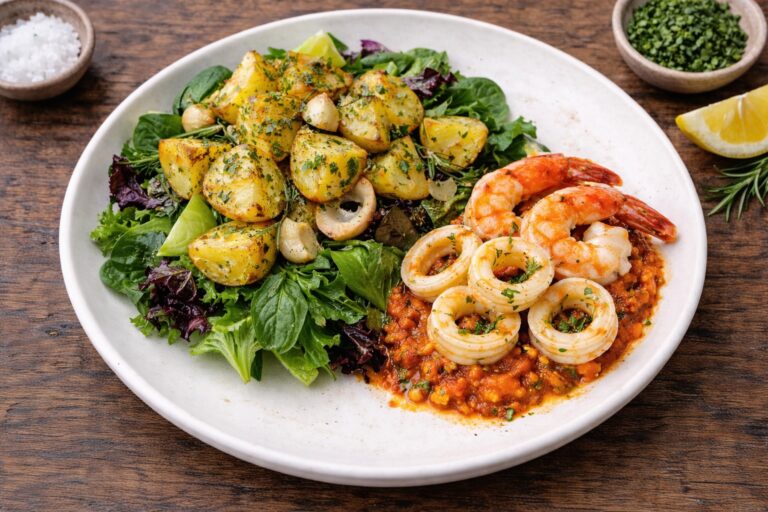
Chicken and vegetable pilaf with capsicum and walnut pistou

0
Diabetes friendly recipe
Low fat recipe
Dairy free recipe
Gluten free recipe
Heart healthy recipe


This recipe is perfect for summer. It contains a lot of different fresh (uncooked) vegetables, so it is full of many vitamins, minerals and antioxidants. It is slightly higher in cholesterol due to the chicken skin but this can be greatly reduced by not using any of the skin.

This is a great recipe for the family, but it can be easily served at a dinner party – it can be prepared earlier and reheated prior to the guests arriving.

Nutrition rundown

  • High in lean protein (almost 100% of daily needs) from whole poached chicken and cannellini beans – excellent for muscle repair, satiety and metabolic support.
  • Provides a strong balance of complex carbohydrates from basmati rice and beans, delivering steady-release energy rather than sharp glucose spikes.
  • Rich in dietary fibre (30% daily value) thanks to beans, capsicum, fennel, leek and tomatoes – these support gut health and blood sugar regulation.
  • Contains predominantly heart-healthy monounsaturated fats from extra virgin olive oil, with saturated fat kept moderate.
  • A good source of iron and zinc from chicken and beans, supporting immune function and oxygen transport.
  • Capsicum and tomatoes contribute substantial vitamin C and antioxidants (including lycopene), supporting skin and immune health.
  • Fennel, leek, garlic and thyme provide prebiotic compounds and anti-inflammatory phytonutrients.
  • Sodium is low due to using low-sodium home made stock.
  • Overall, this is a well-balanced Mediterranean-style meal combining protein, fibre, healthy fats and phytonutrient-rich vegetables for sustained energy and recovery.
Recipe information
Serves: 4
Prep time: 35 mins
Cooking time: 20 mins
Recipe nutrition (per serving)
Calories: 542
Carbs: 52.8 grams
Protein: 48.8 grams
Fat: 13.2 grams

Ingredients

  • 1 organic chicken, poached, skin torn into bite sized pieces
  • 1/2 cup dried cannelini beans, soaked overnight in cold water
  • 1 leek, trimmed and sliced into 1cm pieces
  • 1 baby fennel bulb, trimmed, cored and chopped
  • 4 organic tomatoes, chopped
  • 2 red capsicums, sliced into 5 cm pieces
  • 2 cloves garlic, finely chopped
  • 2 Tbsp extra virgin, cold pressed olive oil
  • 1 cup basmati rice
  • 1.5 L (or 6 cups) chicken stock
  • 1 small fresh red chilli, de-seeded and finely chopped
  • 1 small bunch thyme (5-6 large sprigs)
  • 1 portion of capsicum and walnut pistou

Method

  1. Cooked the drained cannelini beans in simmering water for about 30 minutes, until they are just tender (but not cooked completed).
  2. Drain the beans and set aside.
  3. Heat the olive oil in a large pot.
  4. Cook the leek, fennel and garlic over low heat until they are soft.
  5. Add chilli, tomatoes and thyme leaves and cook over high heat until the tomatoes are soft and pulpy.
  6. Add the chicken stock and rice and simmer uncovered over medium heat until the rice is just about cooked – for about 10 minutes.
  7. Add the beans and cook for a further 5 minutes or until everything is tender.
  8. Add the poached chicken pieces and stir through to combine.
  9. Add 1/3 of the capsicum and walnut pistou into the pilaf and mix through to combine.
  10. Season with salt and simmer for a further 5 minutes.
  11. Serve garnished with the thyme leaves and the rest of the capsicum and walnut pistou in a small bowl as extra sauce.

Nutrition information

  Nutrition InformationAmount% Daily
Value
Calories54227.1%
Calories from fat11821.8%
Total fat13.2 g19.7%
Saturated fat5.3 g22.1%
Cholesterol116 mg38.9%
Sodium330 mg15.2%
Carbohydrate52.8 g23.5%
Dietary fibre9.1 g30.3%
Sugars9.8 g19.5
Protein48.8 g97.2%

The % daily values are based on a diet of 2000 calories per day
These are approximate values.
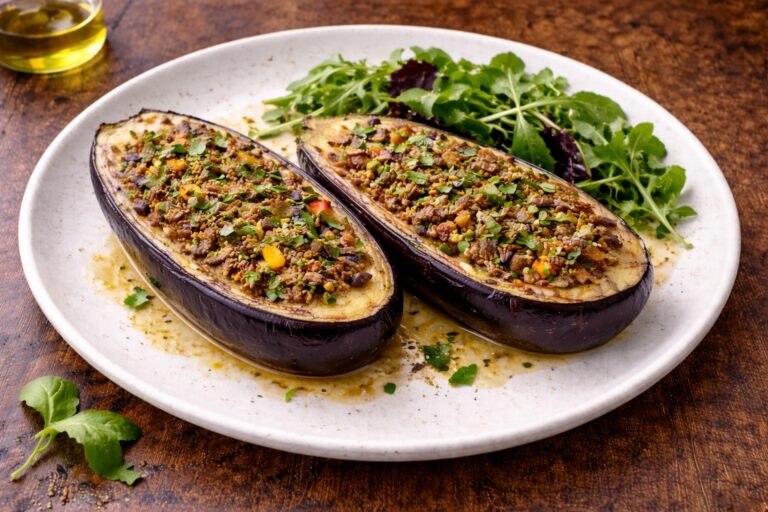
Beef and veggie burger

0
Diabetes friendly recipe
Low GI recipe
Low fat recipe
Low carb recipe
Dairy free recipe
Gluten free recipe
Heart healthy recipe


This recipe is quick and easy to prepare, is low in fat, has little sodium, is really high in dietary fibre and contains antioxidants, vitamins and minerals. It is perfect for summer days.

It is so high in fibre, really high in protein and is very nutrient dense. It is full of veggies so it makes the cholesterol count much less than if it was just a beef patty. Use salt reduced gherkins and beetroot, as this reduces the sodium levels.

To reduce the carbohydrates even more, you can omit the top bun, so it becomes an open beef burger.

To make this a vegetarian recipe, the beef can be omitted and cooked chickpeas or lentils can be used to make the burger.

Nutrition rundown

  • Balanced energy (~455 kcal) so it’s satisfying without being overly heavy, especially compared to typical takeaway burgers.
  • High-quality protein (~28 g) from lean beef and eggs supports muscle repair, satiety and stable blood sugar.
  • Low fat profile due to the lean beef and a small amount of olive oil, with saturated fat kept reasonable.
  • Excellent fibre (~12 g per serve) thanks to rye flour, wholegrain spelt bun, beetroot, eggplant and leafy greens — great for gut health and fullness.
  • Low sodium (~185 mg) due to minimal added salt and low-salt buns, making this heart-friendlier than standard burgers.
  • Rich in iron and zinc from beef, supporting immune health and energy production.
  • Loaded with antioxidants from capsicum, beetroot, tomato, rocket and spinach (vitamin C, beta-carotene, polyphenols).
  • Strong potassium content from vegetables and greens, helping balance fluids and support blood pressure.
  • Naturally low in added sugars — sugars come primarily from whole vegetables.
  • Micronutrient dense overall, delivering folate, vitamin K, magnesium and B-vitamins in one meal.
Recipe information
Serves: 6
Prep time: 25 mins
Cooking time: 30 mins
Recipe nutrition (per serving)
Calories: 455
Carbs: 56.9 grams
Protein: 39.6 grams
Fat: 11.7 grams

Ingredients – burger

  • 500g lean organic beef mince
  • 1 medium red (Spanish) onion, finely grated
  • 1 red capsicum, finely grated
  • 1 small eggplant, grated
  • 6 Tbsp rye flour
  • 2 organic eggs
  • 2 cups lettuce leaves, shredded
  • 4 medium tomatoes, thickly sliced
  • 2 beetroot, cooked and drained and sliced thickly
  • 3 gherkins, thickly sliced (optional)
  • 6 wholegrain spelt buns
  • 1 Tbsp chopped fresh parsley
  • 3 Tbsp chopped fresh mint
  • 1 Tbsp chopped fresh thyme
  • 2 Tbsp extra virgin, cold pressed olive oil

Ingredients – salad greens

  • 12 steamed asparagus spears cut in half
  • 12 snow peas, cut julienne
  • 1 Lebanese cucumber, sliced
  • 1 bunch rocket
  • 1 bunch baby English spinach
  • 1 green capsicum, sliced
  • 2 Tbsp extra virgin, cold pressed olive oil
  • 1 Tspn balsamic vinegar (or lemon juice)
  • Salt to taste

Method

  1. Put the beef, onion, capsicum, eggplant, flour, eggs, salt and herbs into a bowl and mix with your hands to combine all the ingredients.
  2. Shape the patty mixture to form 6 patties (this can be adjusted to make as little or as many as required).
  3. Add the patties to a flat tray and set aside in the refridgerator for 20 minutes, to set.
  4. Heat the olive oil in a large pan over medium heat.
  5. Fry the beef patties in the pan for 5-6 minutes on each side, until browned.
  6. Drain the beef patties on absorbent paper and keep warm.
  7. Cut the buns in half and toast or grill until they are golden brown.
  8. Top each bun base with the lettuce, then the tomato slices, beetroot slices, gherkins and one of the beef patties. Finish with the tomato sauce and then add the bun tops.
  9. Serve with the salad greens.

Method – salad greens

  1. Add equal amounts of the salad to each of the 6 plates.
  2. Combine all ingredients in a large bowl and toss to cover with dressing.

Nutrition information

  Nutrition InformationAmount% Daily
Value
Calories45522.8%
Calories from fat245.3%
Total fat11.7 g18.9%
Saturated fat3.4 g15.1%
Cholesterol42.0 mg16.9%
Sodium185.0 mg8.0%
Carbohydrate53.8 g23.3%
Dietary fibre11.8 g42.0%
Sugars1.2 g12.4
Protein39.6 g79.2%

The % daily values are based on a diet of 2000 calories per day
These are approximate values.
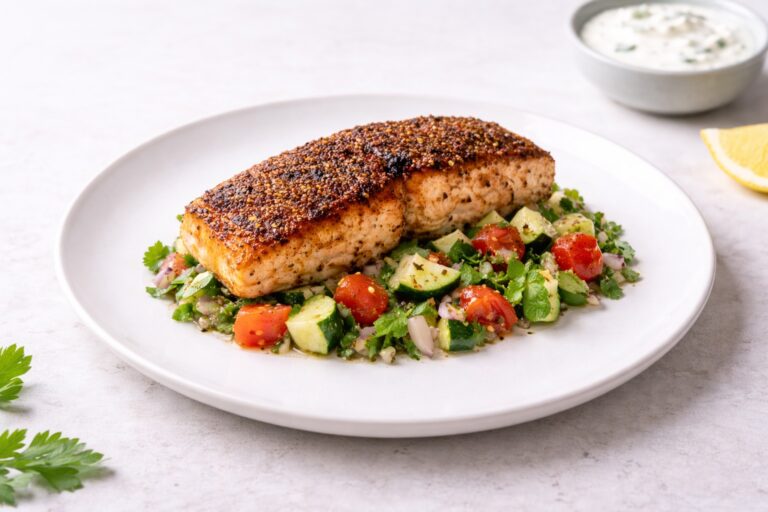
Heirloom tomato prawns

0
Diabetes friendly recipe
Low fat recipe
Dairy free recipe
Gluten free recipe
Heart healthy recipe


A delicious prawn recipe with a heirloom tomato-based recipe that is so sweet and tasty The basmati rice perfectly complements the prawns. This recipe is gluten-free, low in calories, rich in protein and is nutritious.

This recipe is simple, quick to make and very delicious.

Nutrition rundown

  • Moderate calorie meal (370 kcal) so it’s balanced for lunch or dinner without being overly heavy
  • High-quality lean protein (19.5g, 39.0% daily value) from prawns supports muscle repair, immune health and satiety
  • Naturally low in saturated fat (2.6g, 13.0% daily value) despite containing seafood and olive oil
  • Heart-healthy monounsaturated fats dominate due to the extra virgin olive oil
  • Healthy total fat profile (1.5g, 22.0% daily value) and mostly anti-inflammatory fats
  • Cholesterol is higher (130mg, 39% daily value) which typical for prawns, but dietary cholesterol has minimal impact on blood cholesterol for most people
  • Although prawns are high in dietary cholesterol, they are actually beneficial because they are very low in saturated fat and high in heart-healthy omega-3 fatty acids, which boost “good” HDL cholesterol.
  • Sodium remains low to moderate (304.2mg, 13.2% daily value) even with added salt it’s well within reasonable daily limits
  • Balanced carbohydrates (40.7g, 14.0% daily value) mainly from basmati rice for steady energy
  • Low sugar (4.9g, 5.4% daily value) and they’re naturally occurring sugars from tomatoes and shallots
  • Good fibre contribution (3.0g, 10.7% daily value) from tomatoes, shallots, garlic and basil
  • Tomatoes provide lycopene, a powerful antioxidant linked to heart and prostate health
  • Garlic contributes allicin compounds, known for cardiovascular and immune benefits
  • Fresh basil adds phytonutrients and vitamin K, supporting bone and cardiovascular health
  • Spring onions provide quercetin and flavonoids, which have anti-inflammatory effects
  • Low glycaemic impact when portion-controlled, especially if rice is cooled slightly before serving
  • Gluten-free naturally, making it suitable for coeliac-friendly meal planning
  • Rich in selenium and iodine from prawns — important for thyroid function
  • Contains iron and zinc, supporting oxygen transport and immune resilience
  • Well balanced macronutrient distribution, combining protein + healthy fats + complex carbohydrates
  • Mediterranean-style nutrient profile, supporting heart health and metabolic balance
Recipe information
Serves: 4
Prep time: 20 mins
Cooking time: 25 mins
Recipe nutrition (per serving)
Calories: 370
Carbs: 40.7 grams
Protein: 19.5 grams
Fat: 14.6 grams

Ingredients

  • 240g raw prawns – remove the outer shell, but leave the tails intact
  • Bunch shallots (spring onions) – finely cut
  • 3 cups of heritage tomatoes (heirloom, special tomatoes) – roughly cut into small pieces (2-3cm)
  • 1 cup basmati rice
  • 3 cloves of garlic, crushed
  • 3 Tbspn olive oil
  • 1/4 Tspn salt
  • 1/4 cup fresh basil

Method

  1. Wash the basmati rice several times.
  2. Add the rice, salt and about 1 tablespoon of the olive oil to 1.5 cups of water in a large stainless steel pot.
  3. Bring the rice to the boil and then simmer until cooked – this method will absorb all the water and create fluffly, lovely rice.
  4. Meanwhile, add the rest of the olive oil to a large frying pan (use either stainless steel orcast iron as they cook food more evenly and quickly).
  5. Add the crushed garlic and saute for 1-2 minutes. Ensure not to burn the garlic, so you may need to reduce the heat a little.
  6. Add the finely cut spring onions and cook for a further 3-4 minutes, or until the the shallots are slightly translucent.
  7. Add the chopped heritage tomatoes and chopped basil leaves and summer for for about 15-20 minutes, until the sauce has reduced a little.
  8. Lastly, add the prawns and cook for a further 5 minutes until the prawns are cooked.
  9. Serve the sauce on top of the rice with a little of the sauce around the rice.

Nutrition information

  Nutrition InformationAmount% Daily
Value
Calories37018.5%
Calories from fat13129.1%
Total fat14.5 g22.0%
Saturated fat2.6 g13.0%
Cholesterol130 mg39.0%
Sodium304.2 mg13.2%
Carbohydrate40.7 g14.0%
Dietary fibre3.0 g10.7%
Sugars4.9 g5.4%
Protein19.5 g39.0%

The % daily values are based on a diet of 2000 calories per day
These are approximate values.