Feeling tired after carbs and sugar

Question

Carbohydrates and sugars tend to make extremely tired after I eat them. Is there a reason and solution for this?

Answer

All carbohydrates get converted into glucose in the body, to be used by energy by every cell of the body. Once the carbohydrates are converted into glucose, they are released into the bloodstream.

Once the glucose is released into the blood, the pancreas then produces insulin to help the cells take in the glucose for energy. If there is too much glucose than is required, it gets stored in the liver and as fat around the body, to be broken down and used as required.

Foods that are simple carbohydrates or have a high glycemic index (GI) are broken down very quickly into glucose and this causes a big spike of glucose to be released into the blood very quickly, which the pancreas finds difficult to dissipate into the cells through the release of insulin, which is not enough to cope with the sudden and high influx of glucose in the blood.

This is the reason why you feel tired after a meal that has a high GI or if you eat a large meal that is carbohydrate based after not eating for many hours. Your body basically cannot cope with it and your pancreas may slowly stop working as efficiently if it is under such pressure all the time (this is how the condition insulin resistance occurs).

Basically most processed foods are made from processed flour, which has a high GI, so they are broken down into glucose very quickly and cause this to occur.

Foods that are considered to have a low glycemic index (low GI) get broken down into glucose slowly and they cause a very gradual release of glucose in the blood, which the pancreas is very well equipped to handle by release appropriate amounts of insulin.

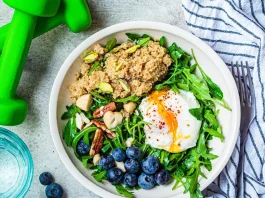
Foods that are made from 100% wholegrains will cause a much better insulin response in the body and are also better for you.

Have a look at the article on glycemic index and also the food values of various foods, which lists the glycemic index of many natural foods.

Eating disorder blowout days

Question

In the past I’ve struggled with eating disorders, and have realised that the only way I can control it is to have a ‘bad’ day once a week. In this way I’ve been able to start living a healthy life.

I’m in the healthy weight range now, but my BMI is near the overweight range. I eat 2000 calories a day, and 4000 every Sunday. I walk my dog for 30 minutes everyday. I also do a 15 minute workout every morning, consisting of 5 minutes skipping, 5 minutes of weights, 5 minutes of the bike and 30 sit-ups. I’m also a waitress and do lots of running around.

Will I be able to get down a few kilograms with this routine or will I put on weight?

Answer

Unfortunately, this kind of fitness/dietary/health plan will result in not only a “bad” day but a likely flabby body in the long term.

The amount of effort, time and intensity given to fitness (strength trainingcardioresistance training workouts) needs to equal or surpass the amount of calories consumed on a daily basis to result in weight loss or healthy weight management.

Walking the dog doesn’t not constitute a “cardio” workout – it is just that, “walking the dog.”  Five minutes of skipping and cycling is in my opinion, realistically, a “warm-up” to the 45-60 minutes of resistance training for the total body which I recommend be preceded or followed by a 30-45 minutes of cardio training.

You are simply not spending enough conscious time working on a quality fitness regimen that will help you achieve any measurable BMI adjustments.

  • Cardio Recommendations:  30 Minute Cardio Workout
  • Strength Workout:  20 Minutes To Leaner, Long Legs
  • Dietary Recommendations:  You really need to get rid of the “Bad Day”and make every day a good day!  Reward yourself for the good days that mirror the above plan (or closer to it than your current program) with some type of treat or snack at the end of the week. Make it delicious by considerably less than the 2000 calories noted.

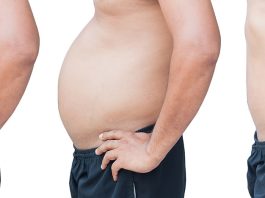
Want to lose stomach fat and build muscles

Question

I am trying to build my muscles and also burn fat, mainly from my stomach.

I am doing a weights session (with sit ups) every two days the the alternate days I am using the exercise bike for 30 minutes and also swimming 500 metres in the pool. I am resting 1 day per week, but I find I am not losing any fat from my stomach but rather from the muscles in my arms and chest instead. I am careful with my diet and avoid alcohol. Can you please advise?

Answer

Sounds like a good have a good fitness plan and protocol. Specifically the inclusion of the rest day, cardio and cross-training with swimming. You have not identified your age and it is also a factor as the older we get the more difficult it is to manage and maintain the middle section. It simply requires more work in all the variables (nutrition, cardio and strength conditioning).

That being said, while you say you are “careful with your diet,” 9 times out of 10, it is this component that will make or break the program. Clean healthy eating is crucial. For example, sugars and salt are easily hidden in most processed foods and can amount to excess calories and therefore extra work on the mid-section.

You should pay primary attention to your dietary habits (including your snacking habits) and continue the strength training. With strict adherence, that belly should fall into line.

Post workout food and drink

Question

I am trying to find the best food or drink to have after my workouts (spike). Nearly every body seems to suggest dextrose/maltodextrin but I am reluctant to use any type of highly refined sugars and try to keep things as natural as possible. It seems that most healthy alternatives either have too much fructose or have a low GI. I cant seem to find any information on how much glucose/fructose is in certain high GI foods (eg dates, date sugar, sucatant, amasake, watermelon, grapes, brown rice syrup).

Can you steer me in any kind of direction?

Answer

All the foods you have listed here have a high GI, which means they are broken down and digested very quickly by the body and send more glucose into the bloodstream.

To build muscle, I would recommend refueling depleted energy sources with a healthy protein and complex carb  – again, since it all gets converted to glucose – use the fuel source that stays within the system.  My favorite to precede or follow a good 60-90 minute workout is Muscle Milk RTD.  That is when I don’t eat grilled chicken and broccoli or salad.

Simple carbohydrates’s and high GI index sugars are temporary satisfiers – like eating a candy bar after a run in the park.

The following site has a database of information about glucose levels, GI (glycemic index) and GL (glycemic load) on a variety of foods:

The Official Web site of the Glycemic Index and GI Database

Best way to lose weight healthily

Question

My sister’s husband is overweight and he needs to lose weight. His doctor has advises him that he need to lose weight in order to be healthy. He wants to lose weight naturally and in a healthy. What is the best way to do this?

Answer

Trying to tackle any type of major weight loss on your own (or in this case, your brother-in-law by himself) can be very overwhelming. There are many different factors to take into consideration and everyone’s situation is different.

To set him up for success, I encourage him to seek the guidance of a dietitian and personal trainer. The dietitian will be able to evaluate his current dietary habits and outline a plan of action to begin losing weight naturally.

Physical activity is essential for successful long term weight loss. A personal trainer will provide activity guidelines that will be safe for your brother-in-laws current fitness level and work within his limitations (i.e. whether he works out at a gym or at home).

Also, don’t forget the importance of having friends/family that support his new healthy habits, which it looks like he must with your family support.

Good luck.

Please note that the information provided is for educational purposes only and is not meant to diagnose or treat medical conditions. Consult with your medical physician regarding appropriateness of using supplements in your healing process.

Chest pain when exercising

Question

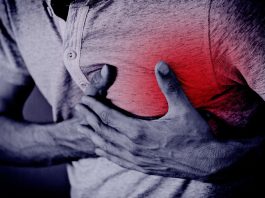
I’ve led a sedentary life working on computers before owning my Total Gym exercise unit. I notice when using it, I get sharp electrical type pains in my chest area which I’ve never felt before. 

I’m obese and 61 yrs old and not on any medications but am taking supplements for heart, thyroid and multivitamins. I grill or microwave my food and eat minimal meats. My father and his mother both died of heart attack and both were obese. Could this be a sign that I too have a heart condition?

Answer

I recommend you make an appointment to visit your medical doctor to investigate your chest pains, to determine if they are being caused by a heart condition.

Any type of chest pain should be investigated by your medical physician to rule out any heart condition (or diagnose it). Your doctor will need to perform a number of tests to determine the cause of your chest pain and advise you on treatment for your specific situation. This is the only way to diagnose a heart condition (or rule it out).

In the meantime, if you notice any pain in your chest while you are exercising, you should stop what you are doing and rest. If the pain becomes worse, seek immediate medical attention.

Please note that the information provided is for educational purposes only and is not meant to diagnose or treat medical conditions. Consult with your medical physician regarding appropriateness of using supplements in your healing process.

Weight loss plan guidelines

Question

Recently I have decided to lose weight and I have implemented a plan to create positive changes in my life. Could you please provide insights/comments regarding this? Am I eating too much? Too little? Should I increase my exercise time/frequency? Thanks for your help!

I am an 18 year old female, 5’ 6”, and 265 pounds. (Used to weight 270, lost 5 pounds thus far on plan). My meals often consist of:

Breakfast
2 hard boiled eggs (without yolks, approx 35 calories)
1 mini low-fat yogurt cup (approx 35 calories)
1 Glass of 1% Milk (250 ml, approx 110 calories)
OR 1 Bottled Water (0 calories)
Total: 180 Calories

Lunch
1 Average sized Banana (approx 105 calories)
OR 1 cup of red grapes (approx 114 calories)
1 Sandwich on 100% Whole wheat bread (approx 170 calories; Bread: 50 calories(I only have one slice) and Low-fat turkey breast/chicken: 120 calories *I do not add butter or cheese*)
1 Glass of 1% Milk (250 ml, 110 calories)
1 Bottled Water (0 calories)
Total: 385 – 394

Dinner
(Here is quite often when I allow myself to eat more)
2 cups of Romaine Lettuce (Approx 32 calories; no salad dressing)
85 g of whole wheat pasta (Approx 360 calories. Pasta: 310 calories. I often use 1 cup of Tomato Juice (approx 50 Calories) for sauce) Approx 120 calories for a meat substance. (Examples include: a can of tuna, half a chicken breast, etc)
1 Bottled Water (0 calories)
Total: 512 calories

Grand total of calorie intake per day: 1077 – 1086

Exercise:
(I’m going to be brutally honest – it’s usually about 5 times a week or so. Of course, there are always exceptions)
45 minutes – 1 hour on the treadmill: 200 – 250 calories burnt

Answer

Congratulations on your 5 pound weight loss! You are heading in the right direction.

With your food choices you are doing a good job eating a diet high in fruits/vegetables, low fat dairy, whole grains, and lean meat choices. My main concern with your diet intake is your total daily calories. You are below 1200 calories per day. I don’t recommend you drop your calorie intake to below 1200 calories per day. Restricting below this level increases the likelihood your metabolism will slow down. This will make losing weight more difficult. Bump your calorie intake back up to ~1200 per day.

Well done including exercise 5 days a week most weeks. The more often you exercise the better. Everyday is ideal, even if two of those days are just a light walk. Your time on the treadmill (45 – 60 minutes) is great. Continually push yourself. If your treadmill time gets easier for you, increase your incline and speed to keep your intensity up. Also, it’s important you add muscle building activities to your workout routine, such as 20-30 minutes of weight lifting. If you do not have experience lifting weights I recommend investing in a session with a personal trainer to ensure you do not injure yourself. You need to build muscle to boost your metabolism and keep you moving towards your goal weight.

Please note that the information provided is for educational purposes only and is not meant to diagnose or treat medical conditions. Consult with your medical physician regarding appropriateness of using supplements in your healing process.

Digestive issues and chest pain

Question

My brother has been having digestive issues for over 10 years and for the last 4 years, he has been getting a lot of chest pain and headaches. The chest pain comes on when he is resting/inactive. I have read that this could be prinzmetal angina, would this be a reasonable observation?

He is currently being treated by a Nutritional Doctor who believes my brother has low stomach acid, which is preventing many essential nutrients getting to his body. He also believes the lack of protein breakdown is preventing neurotransmitters being created, which may be the cause of his anxiety. Any assistance you can provide would be fantastic!?

Answer

Your specific health issues are not my area of speciality; however, I do want to refer you to where you can learn more about coronary artery spasms (Prinzmetal’s angina).

I recommend you continue to work with your medical physician to determine the cause and appropriate treatment of your brothers chest pain and headaches.  Also, discuss the possibility of low gastric acid, so your brother can be tested.

Please note that the information provided is for educational purposes only and is not meant to diagnose or treat medical conditions. Consult with your medical physician regarding appropriateness of using supplements in your healing process.

Relationship issues when not eating well

Question

I seem to notice that sometimes my partner and I struggle with getting along when we’re not eating well. Am I imagining this?

Answer

The concept of nutrition affecting our relationships makes sense. If food gives us energy, and that energy affects how we behave, how we connect with others and our overall posture as we move through our days, then it stands to reason that healthy nutrition supports healthy relating and poor nutrition does not.

Sugar cravings is an addiction that undermines our capacity for consistent, balanced energy. Simple carbohydrates are found in most processed foods and cause our blood sugar to spike and crash all day long. Eating proteins with essential amino acids and complex carbohydrates helps to regulate our daily energy pattern. This, in turn, promotes healthy, skillful interactions within our circle of family, friends and colleagues, AND within our own selves.

Food cravings mean that the body has its signals mixed up. When we are exhausted or blue, we have low blood sugar and/or low serotonin, and the body signals the brain that it needs a pick-me-up. This signal causes a sugar or carbohydrate craving.

Serotonin is our basic feel-good hormone. If serotonin is low, we feel sad or depressed. And hormonal imbalance or weak digestion can lead to low serotonin. Unfortunately, sugars and simple carbohydrates release a short burst of serotonin — we feel good for a moment, but soon return to our low-serotonin state — then crave more sugar and simple carbohydrates. It’s a downward spiral.

Here’s the good news! Poor nutrition, including sugar cravings, can be overcome. In order to move away from bad habits, we must first acknowledge that our bodies are going to complain initially. They have become accustomed to the sugar. But remember, this too will pass and your body will become accustomed to your new food choices. Your body will begin to crave what it gets used to. If you allow it to move through the transitional complaining period, and slowly introduce the delicious, natural taste of raw fruitsvegetables, and lots of healthy protein like nuts fish, eggs and cheese, your taste buds will adjust accordingly. You will begin to crave the healthier fare and actually become disinterested in the unhealthy food you once craved.

If we get out of relationships what we put in, then it stands to reason that an investment of higher quality nutrition will support a higher quality relationship. Relationships suffer when we get lazy with our emotional, physical and spiritual investments.

Try this experiment in your own relationship and see if healthier eating results in healthier relating. If “we are what we eat”, then don’t our relationships depend on what we eat, too?

Contact Sheryl

To learn more, visit www.coastalcoaching.weebly.com and contact Sheryl for a free “test-drive” coaching session

Dieting makes me feel hungrier

Question

I have tried numerous diets, but every time I lose weight, I just quit and put the weight back on.

Answer

From the little bit you’ve shared in your question, I believe your issue has more to do with your “relationship” with food versus finding the right diet.

Let me just give you a brief example:

If you know you have to say goodbye to a close friend, as D-day approaches you spend more and more time with them dreading the day you have to say goodbye. A similar response happens for many individuals when they think about going on a diet. You obsess about the food. In this situation you’d benefit from the help of an psychologist/emotional eating expert. I’d recommend you check out Dr. Melissa McCreery’s site at www.toomuchonherplate.com and consider contacting her for assistance so you can move past this and achieve long term weight loss.

Please note that the information provided is for educational purposes only and is not meant to diagnose or treat medical conditions. Consult with your medical physician regarding appropriateness of using supplements in your healing process.