Zone diet

0

The Zone diet is another of the popular low carbohydrate diets. It aims to balance the hormonal (ie insulin) response when foods are eaten. The diet is high in protein, low in carbohydrates and moderately high in fat. Meals are divided into the three main meals, plus 2-3 snacks per day. The type of carbohydrates recommended on this diet are low-density and low glycemic. This is to ensure that blood glucose levels and insulin response stay constant throughout the day.

The Zone diet recommends 40% carbohydrates, 30% protein and 30% fat at all meals and snacks.

The Zone diet has no phases – the principles of the diet are started from the first day of the diet.

The Zone diet has fewer dietary restrictions than many other low carbohydrate diets and recommends eating more fruit and vegetables.

A range of supplements are also recommended.

The Zone diet was devised by Dr Barry Sears.

Benefits of the Zone diet

The Zone diet claims to have the following benefits:

  • maintain stable blood sugar (and insulin) levels
  • have more energy
  • lessen cravings for sweet foods and junk foods
  • burn excess fat that has been stored in the body
  • prevent cardiovascular disease
  • lower “bad” (LDL) cholesterol levels
  • limits salt intake

Why the Zone diet works

The Zone diet includes:

  • regular meals and snacks ensure that blood sugar levels (and insulin) response are kept steady and regular
  • physical activity is recommended, which accelerates weight loss and feelings of well-being
  • provides good amounts of essential fatty acids (from olive oil and fish)
  • high in unsaturated fats (from regular olive oil and fish consumption)
  • processed foods are not recommended in this diet

Is the Zone diet good for you

The views in favour of the diet claim that:

  • provides an effective weight loss diet that works
  • limitation of very high glycemic foods from the diet is healthy
  • provides a way to balance blood sugar (and insulin) levels, so extremely beneficial for diabetics, pre-diabetics and those with Syndrome X

The views against the diet claim that:

  • it is high in saturated fats from all the recommended meat consumption
  • limiting certain foods is unhealthy as those foods contain very vital nutrients (vitamins and minerals) which are essential to good health – the diet does not allow enough vegetables and fruits
  • can be very complicated to work out portion sizes
  • time consuming in planning meals and working out portion sizes and cooking
  • the high protein load may lead to kidney damage

Cautions for the Zone diet

  • Hard to maintain for a long time (not really a lifetime diet plan)
  • Extra time required to prepare meals
  • Eating out can be difficult
  • Supplements need to be purchased
  • Expensive if purchasing pre-made Zone diet foods

To try this diet, speak to your medical practitioner or dietitian.

Vegetarian diet

0

The word vegetarian was first by the Vegetarian Society of the UK in 1847 to refer to a person who does not eat meat, fish, poultry or their by-products (milk, eggs).

Vegetarians do not consume meat (and some of the by-products such as dairy and eggs) for a variety of reason – some do so because they do not want to eat any animal flesh, others because they believe of the health benefits of plant-based foods are higher than meat-based foods and yet others because they do not want an animal to suffer just to provide them food. In addition to these reasons, there are other personal reasons people choose a vegetarian diet (and usually lifestyle).

Typical, vegetarians consume the following non-meat sources of food:

  • Breads – any types of breads and bread products
  • Cereals – wholegrain cereals, including breakfast cereals
  • Fruits – all types of fruits
  • Grains– barley, buckwheat, millet, oats
  • Legumes – beans, peas, soy
  • Meat alternative foods – any soy-based processed foods such as tofu, tempeh, miso
  • Nuts – all types of nuts
  • Pasta – all types of pasta
  • Rice – all types of rice
  • Seeds – all types of seeds
  • Vegetables – all types of fruits

Some vegetarians also consume dairy products and eggs.

There are many individuals in many countries who cannot afford to eat meat, like individuals in the Western countries are able to, so a vegetarian diet is a normal way of life for them. In addition, not so long ago (as early as 50 years ago), most people did not consume meat on the same scale as people are used to in the West – meat was considered a treat to be consumed at a special family meal and was not present in every meal.

Types of vegetarian diets

Today are several types of vegetarian diets:

  • Lacto-ovo vegetarians – these vegetarians consume dairy products and eggs (in addition to the non-meat foods they consume)
  • Lacto vegetarians – these vegetarians consume dairy products, but not eggs (in addition to the non-meat foods they consume)
  • Vegans – these vegetarians do not consume any type of animal products or by-products and are considered “strict vegetarians”

Benefits of a vegetarian diet

The main benefits of the different types of vegetarian diets :

  • Decreases blood triglycerides – because the vegetarian diets lack much saturated fats (which are what cause triglyceride levels to rise) there is less fat build-up in the blood
  • Decreases heart disease risk – lowered triglycerides, lack of saturated fat and proper intake of healthy fats mean a lowered risk for heart disease
  • Cholesterol lowering – lack of saturated fats, high intake of plant-based foods and adequate intake of unsaturated fats are all known to lower cholesterol
  • Weight loss – initially due to lack of high fat (and highly processed) foods in the diet and then in the longer term because of the lack of highly saturated foods which means slightly less overall calories are consumed
  • Prevention of cancer – high intake of plant-based foods, which are generally high in phytochemicals are known to be cancer preventative

Why a vegetarian diet works

Vegetarian diets, if followed correctly, are a great diet plan to follow (but they can sometimes be hard to maintain correctly) as they provide many health benefits and if whole foods are eaten only (with little or no processed foods), maintain a proper weight for the individual.

Is a vegetarian diet good for you

The benefits of a vegetarian diet (all types) are :

  • decreases blood triglyceride levels – this means there is less fat build up which could potentially cause heart disease
  • lowers “bad” (LDL) cholesterol
  • mainly includes unsaturated fats (there is very little saturated fat in any of the vegetarian diet types) so is following the recommendations of nutritionists for good health, especially good heart health

The limitation of a vegetarian diet are:

  • it requires quite a lot of planning to ensure all nutrients are consumed in proper quantities
  • can be a very strict diet and hard to follow in the longer term for some people (especially the stricter vegan diet)
  • requires a lot of reviewing of food labels to work out what ingredients they contain, to ensure they are all plant-based (or dairy and/or eggs for those vegetarians that eat these)
  • eating out can sometimes be difficult, although today, more places cater for dietary restrictions so it may not be too bad

Cautions for a vegetarian diet

Lacto-ovo and Lacto vegetarians with a wholesome, balanced diet will normally consume the right amount of high quality protein from their diet, given that they eat milk and eggs, which are high quality protein foods and they also consume soy, which is also a very good high quality protein.

Vegans however, need to combine their foods properly in order to get the full benefits of high quality protein, which is not a given for most plant-based foods (with the exception of soy, which is a very good high quality protein).

Most vegetarians will get adequate nutrients (carboydrates, protein, fats, vitamins, minerals, amino acids), from their diet, but if the vegetarian diet is not adhered to properly by intake of adequate food sources, it can make a person deficient in several important nutrients:

Certain individuals may need extra supplementation and/or care if they are on this type of diet, due to their special requirements:

  • pregnant women – require more of certain nutrients due to the needs of the unborn baby
  • lactating women – require more of certain nutrients for nourishing the newborn baby with their milk
  • infants – their growth and development relies greatly on consuming enough high quality protein
  • children – their growth and development relies greatly on consuming enough high quality protein
  • adolescents – their growth and development relies greatly on consuming enough high quality protein

To try this diet, speak to your medical practitioner or dietitian to provide a wholesome diet plan that can adequately take care of all nutritional requirements.

Co-enzyme Q10

Facts

Important co-enzyme Q10 facts

Co-enzyme Q10 is a vitamin-like substance which is a vitamin co-factor and which enzymes depend on to enable their correct functioning.

Co-enzyme Q10 is required to release energy inside the cells. These mini power plants provide the energy that runs the body.

Co-enzyme Q10 works in the mitochondria of cells. In a very complex process, co-enzyme Q10 shuttles tiny, electrically charged particles back and forth in the mitochondria among three essential enzymes that are needed to generate energy. Without co-enzyme Q10, the whole process would grind to a halt.

Co-enzyme Q10 is an important antioxidant on the cellular level.

  • Most of the co-enzyme Q10 in the body is contained within the heart
  • Co-enzyme Q10 (CoQ10) is one of the five most widely prescribed supplements in Japan, where it is used as a treatment for heart failure. It is also widely prescribed in Italy, Sweden, Denmark and Canada for the same condition
  • About half the CoQ10 in the body comes from foods eaten; almost all the rest is made in the liver. Many foods have at least some CoQ10 in them, so the average person eats about 3-5mg a day
  • CoQ10 is synthesised from tyrosine (together with several other vitamins and trace minerals)
  • Supplements of CoQ10 should be taken with food to enhance absorption
  • Supplements should be taken in the morning and evening
  • Supplementation may take up to eight weeks (or longer) to take effect
  • CoQ10 supplements are expensive
  • Look for CoQ10 supplements in an oil-base, which will help CoQ10 to be better absorbed as it is a fat-soluble nutrient
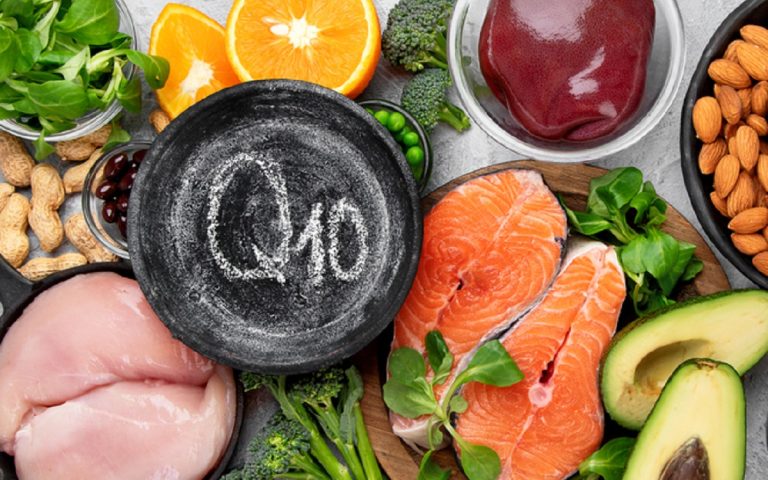
  • Common food sources of co-enzyme Q10 are: beefmackerelpeanutssardinessoyspinachvegetable oil

Co-enzyme Q10 works best with

Health

Co-enzyme Q10 and health

  • Cardiac help – CoQ10 can be extremely helpful for some types of heart disease. In a number of studies, CoQ10 has been show to be especially useful for people with heart failure. Since the heart muscle has the most mitochondria of any muscle in the body, boosting the CoQ10 levels in people with heart problems has been shown to help their hearts pump harder and better and circulate their blood better. Studies show that heart failure patients who take CoQ10 feel better overall and have to spend less time in the hospital (in recovery)
  • Lowering blood pressure – CoQ10 could help lower blood pressure, especially if it is already high because of a heart problem. CoQ10 helps the heart work better, and when the heart pumps more efficiently, blood pressure goes down. CoQ10 could help lower blood pressure that is high for no particular reason (essential hypertension). Research shows that about half of people with essential hypertension are low on CoQ10. Never stop taking blood pressure medication. Talk to a medical professional about Co Enzyme Q10 supplements
  • Cholesterol – CoQ10 may help keep cholesterol from oxidizing, which in turn keeps cholesterol from blocking arteries
  • Improving Immunity – CoQ10 levels drop when there is serious illness. Taking supplements may help the immune system to produce more infection-fighting antibodies
  • Clearing up gum disease (gingivitis) – many people with gun disease have low CoQ10 levels. Good dental care, along with taking extra CoQ10 could help clear up the problem faster
  • Improved athletic performance – athletic performance can be improved by using CoQ10 because it helps with energy production in the cells. There is some evidence that CoQ10 is a safe, natural way of improving athletic endurance, and the better shape a person is in initially, the better it works, although it still does also help the couch potatoes too
  • Improved energy – taking CoQ10 can help improve overall energy levels. This is good for people who work long hours, the elderly, people recovering from cancer treatments and people with chronic fatigue syndrome
  • Reducing heart attacks – CoQ10 reduces the “stickiness” of platelets (the tiny cells that form blood clots). If platelets are less likely to clump together to form blood clots, a heart attack is less likely. This is a promising new area of research, but it is too soon to recommend CoQ10 as a blood thinner or as a way to prevent heart attacks
  • Diabetes – current research indicates thatCoQ10 could benefit diabetes by helping prevent many complications such as heart disease and may also help keep blood glucose levels down. More research needs to be done in this area before it can be a recommended treatment
  • Treating cancer – some experimental work suggests that CoQ10 in high doses could slow or even stop tumour growth. A lot more research needs to be done before this becomes a useful treatment

People who wish to take an acidophilus supplement should talk to a medical professional before taking it.

Deficiency

People at risk of co-enzyme Q10 deficiency

  • People taking cholesterol-lowering drugs – these drugs may block production of CoQ10 so supplementation may be require
  • People unable to metabolise and use CQ10 – some people may genetic inability to metabolise and use CoQ10, resulting in deficiency

People at risk of co-enzyme Q10 deficiency

No co-enzyme Q10 deficiency symptoms have been reported in the general population, so it is generally assumed that normal absorption and a varied diet provides sufficient co-enzyme Q10 for healthy individuals.

Food sources

Food sources

Supplements

Types of co-enzyme Q10 supplements

Co-enzyme Q10 supplementation is available in the following ways:

  • Capsules – are usually freeze-dried, but sometimes aren’t
  • Powder – this is freeze-dried and refrigerated

Co-enzyme Q10 supplementation checklist

  • Check expiration date
  • Capsules are a good option for people who want no-fuss, no-mess co-enzyme Q10 supplement, have been prescribed a specific dosage and can take higher dosages without any side effects
  • Powders work best for people who want to control exactly how much co-enzyme Q10they ingest, especially if a lower dosage is preferred, especially initially, to test the supplement for any adverse effects

Dosage

Co-enzyme Q10 recommended dosage

Dosage of co-enzyme Q10 depends on the condition that is being treated. A medical doctor and/or alternative health care provider can advise on individual cases – this information is provided as a guide only:

LifestageAgeAmount (per day)
INFANTS0-12mthsNot recommended
CHILDREN1-8yrsNot recommended
CHILDREN9-18yrsSeek advice before taking it
ADULTS19-50yrsGeneral Dosage
50mg twice a day
Heart & Circulatory Disorders
max of 100mg twice a day
SENIORS51+yrsGeneral Dosage
50mg twice a day
Heart & Circulatory Disorders
max of 100mg twice a day
PREGNANTNot recommended
LACTATINGNot recommended

Toxicity

Overdosage, toxicity and cautions for co-enzyme Q10

Some people have experienced gastrointestinal symptoms when they took a CoQ10 supplement:

  • nausea
  • diarrhoea
  • heartburn
  • abdominal discomfort.

Adverse gastrointestinal effects may be minimized if daily doses higher than 100 mg are divided into two or three daily doses.

Since there are no studies into coenzyme Q10 and pregnant and lactating women, these supplements should be avoided by them.

Precautions

Precautions

People taking blood-thinning drug such as Warfarin (Coumadin), should talk to a medical professional before trying CoQ10.

Interactions

Interactions

References

References

  • Groff J L, Gropper SS, Hunt SM, Advanced Nutrition and Human Metabolism. West Publishing, USA, 1995
  • Hodgson JM, Watts GF. Playford DA, Burke V, Kroft KD. Coenzyme Q10 improves blood pressure and glycaemic control: a controlled trial in subjects with type 2 diabetes. European Journal of Clinical Nutrition 2002. 56 (11); 1137-1142
  • Langsjoen, P H. Introduction to Co-Enzyme Q10.
    Accessed 6 January 2007
  • Overvad K, Diamant B, Holm L, Holmer G, Mortensen SA, Stender S. Coenzyme Q10 in health and disease. European Journal of Clinical Nutrition 1999. 53 (10); 764-770
  • Sobreira C, et al. Mitochondrial encephalomyopathy with coenzyme Q10 deficiency. Neurology Journal 1997, Vol 48, Issue 5 1238-1243
  • Tanaka J, Tominaga R, Yoshitoshi M, et al. Coenzyme Q10: The prophylactic effect on low cardiac output following cardiac valve replacement. Ann Thorac Surg 1982

Last reviewed and updated: 6 May 2024

South Beach diet

0

The South Beach diet is another lower carbohydrate diet, which is based on the Glycemic Index. The diet recommends eating “good fats” and “good carbs” – what this means is that fats are still allowed in the diet, but ones which are unsaturated only and carbohydrates must come from low glycemic foods, which keep blood sugar levels stable.

The South Beach diet has three phases:

  • Phase 1: induction phase – this phase lasts for two weeks and the following foods are not allowed in this phase – bread, pasta, rice, potatoes, fruit, sugar, baked foods, alcohol. This is to initiate major fat burning by making the body burn the excess fat
  • Phase 2: intermediate phase – this phase allows the introduction of certain carbohydrates in moderation
  • Phase 3: maintenance phase – this phase is the least restrictive one, where more carbohydrates are introduced. This phase is also one which can be followed for life

The South Beach diet was devised by Dr Arthur Agatston through his research for a diet that would be beneficial for his heart patients.

Benefits of the South Beach diet

  • reduces risk of cardiovascular disease
  • reduces “bad” (LDL) cholesterol levels
  • effective in managing and preventing diabetes
  • effective and “doable” weight loss/management diet

Why the South Beach diet works

The reason why the South Beach diet works are:

  • unhealthy (saturated) fats are banned from the diet – these fats are responsible for causing heart disease and high cholesterol
  • healthy (unsaturated) fats are highly recommended (from olive oil, avocado, nuts and seeds and fish) – these are beneficial for heart health
  • lots of vegetables, nuts, seeds and legumes in the diet (which provide fibre and low GI carbohydrates, together with essential vitamins and minerals)
  • regular meals and snacks ensure that blood sugar levels (and insulin) response are kept steady and regular
  • provides good amounts of essential fatty acids (from olive oil and fish)

Is the South Beach diet good for you

The views in favour of the diet claim that:

  • the diet includes foods from all foods groups, which includes all the nutrients (vitaminsmineralsamino acids) required for good health
  • includes high amounts of fresh fruit, vegetables and legumes in the diet (which provide fibre and low GI carbohydrates, together with essential vitamins and minerals)
  • high in unsaturated fats (from olive oil, avocado, nuts and seeds), which are beneficial for heart health
  • low in saturated fat (meat is limited on the diet)
  • cereals and grains are included (providing fibre and low GI carbohydrates, together with essential vitamins and minerals)
  • provides a way to balance blood sugar (and insulin) levels, so extremely beneficial for diabetics, pre-diabetics and those with Syndrome X

The views against the diet claim that:

  • much of the weight loss initially is water loss, which can have an effect on the electrolyte balance of the body
  • needs to be closely monitored by a dietitian, to ensure it is working correctly and the dieter is not getting deficient in any vital nutrients

Cautions for the South Beach diet

  • Requires monitoring from a dietitian to ensure it works effectively
  • Extra time required to prepare meals
  • Expensive if purchasing premade South Beach diet foods

Perricone diet

0

The main focus of the Perricone diet is a little different to most other diets, in that it is not primarily about weight loss, but rather about living longer and looking better. The main premise of the Perricone diet is to reduce inflammation in all the body organs, rev up metabolism and improve immunity. The Perricone program includes a range of supplements and lotions, as well as the diet regime.

Benefits of the Perricone diet

The Perricone diet claims the following health benefits:

  • wrinkle minimisation
  • improvement of the skin’s texture and appearance
  • weight loss or management
  • beneficial effects on the heart, reducing incidence of heart disease
  • lowering of “bad” (LDLD) cholesterol levels

Why the Perricone diet works

The Perricone diet was specifically formulated to remove inflammation in the body, which Dr Perricone claims is the causing factor of wrinkles, skin conditions and whole host of medical problems. Dr Perricone’s diet and supplements are formulated to reduce the inflammation and thus reduce the effects of wrinkles and prevent further health problems.

Is the Perricone diet good for you

There has been some division on the opinion of the perricone diet. The views in favour of the diet claim that:

  • limitation of very high glycemic foods from the diet is healthy
  • reducing exposure to stressors has a beneficial effect on the body
  • limiting exposure to ultraviolet light decreased potential for skin cancers
  • supplementation with vital supplements assists the body when it is deficient in these nutrients

The views against the diet claim that:

  • the diet is largely unproven – more controlled clinical studies are required to prove this diet’s effectiveness
  • costly

Cautions for the Perricone diet

  • Expensive – required to buy a range of supplements and skin care products
  • Largely unproven
  • To try this diet, speak to your medical practitioner or dietitian.

Mediterranean diet

0

The Mediterranean diet is a very healthy diet which is based on the eating habits of the Mediterranean people (Greece, Italy etc). It is comprised of eating the following:

  • olive oil (with every meal)
  • fresh fruit
  • legumes
  • fish (a few times a week)
  • poultry (a few times a week)
  • bread
  • pasta
  • cheese
  • yoghurt
  • red wine (1-2 glasses with the main meal)

The foods below are either restricted or not allowed:

  • red meat
  • processed foods

A variation of the Mediterranean diet is the Sonoma diet.

Benefits of the Mediterranean diet

The Mediterranean diet is a very healthy diet which:

  • lowers the risk of heart disease
  • lowers LDL (“bad”) cholesterol levels
  • reduces the risk of chronic diseases such as diabetes

Why the Mediterranean diet works

The Mediterranean diet:

  • includes high amounts of fresh fruit, vegetables and legumes in the diet (which provide fibre and low GI carbohydrates, together with essential vitamins and minerals)
  • high in unsaturated fats (from regular olive oil and fish consumption)
  • cereals and grains are included (providing fibre and low GI carbohydrates, together with essential vitamins and minerals)
  • provides good amounts of essential fatty acids (from olive oil and fish)
  • very little red meat is eaten (which means there is low saturated fat in the diet)
  • high in antioxidants from fruit, vegetable and moderate red wine consumption with most main meals (purple grape juice is recommended for those that do not drink red wine)

These all add up to make this diet very healthy for the body, especially the digestive and the cardiovascular systems.

Is the Mediterranean diet good for you

The Mediterranean diet has been shown to be beneficial to all participants in studies performed.

  • there has been a great deal of scientific research showing that the diet decreases cardiovascular (heart) disease and type 2 diabetes
  • includes high amounts of fresh fruit, vegetables and legumes in the diet (which provide fibre and low GI carbohydrates, together with essential vitamins and minerals)
  • lowers “bad” (LDL) cholesterol levels
  • provides a way to balance blood glucose (and insulin) levels, so extremely beneficial for diabetics, pre-diabetics and those with Syndrome X
  • provides a healthy, sensible eating plan that can be maintained all throughout life

Cautions for the Mediterranean diet

  • None
  • Extra time required to prepare meals
  • To try this diet, speak to your medical practitioner or dietitian.

Low glycemic index diet

0

The premise of the Low Glycemic Index diet is that low GI foods break down into glucose more slowly, therefore maintaining blood sugar levels at a constant rate (instead of having them spike up and down erratically), which sustains energy levels and allows a person to feel fuller for longer.

This diet is aimed at being a lifestyle choice, to ensure normal weight is maintained as well as good health, all through life.

Benefits of the low glycemic index diet

  • reduces risk of cardiovascular disease
  • reduces “bad” (LDL) cholesterol levels
  • may help with management of polycystic ovarian syndrome (PCOS) disease
  • effective and “doable” weight loss/management diet

Why the low glycemic index diet works

The low glycemic index diet was specifically formulated to help people to either lose weight and/or eat more healthier foods, that have a lower glycemic load on blood insulin levels.

The low glycemic index diet includes:

  • lots of vegetables, nuts, seeds and legumes in the diet (which provide fibre and low GI carbohydrates, together with essential vitamins and minerals)
  • regular meals and snacks ensure that blood glucose levels (and insulin) response are kept steady and regular
  • provides good amounts of essential fatty acids (from olive oil and fish)
  • high in unsaturated fats (from regular olive oil and fish consumption)

Is the low glycemic index diet good for you

There has been some division on the opinion of the glycemic index diet. The views in favour of the diet claim that:

  • there has been a great deal of scientific research showing that the diet decreases cardiovascular (heart) disease and type 2 diabetes
  • includes high amounts of fresh fruitvegetables and legumes in the diet (which provide fibre and low GI carbohydrates, together with essential vitamins and minerals)
  • lowers “bad” (LDL) cholesterol levels
  • provides a healthy, sensible eating plan that can be maintained all throughout life

The views against the diet claim that:

  • the GI of a food depends on many factors, including length of storage, ripeness and processing
  • each person’s metabolism and body chemistry will alter the effects of GI and GL on a food
  • the GI of mixed meals can be difficult to determine

Cautions for the low glycemic index diet

  • Extra time required to prepare meals
  • To try this diet, speak to your medical practitioner or dietitian.

Atkins Diet

0

This diet is based on a premise that eating less carbohydrates, more protein and more (“good quality”) fats will lead to weight loss.

Severely restricting the carbohydrates in the diet will lead the body to burn the excess fat and thus will instigate weight loss.

The Atkins diet has three phases:

  • Phase 1: induction phase – this phase lasts for two weeks and carbohydrates are almost completely removed from the diet (only 20 grams of carbohydrates are permitted each day). This is to initiate major fat burning by making the body burn the excess fat
  • Phase 2: Ongoing weight loss phase – this phase is the basic reduction diet. Up to 60 grams of carbohydrates are allowed daily, but a limit of 35 to 40 grams is recommended for most people. Dieters can add more carbohydrates into their diet, but are still losing weight.
  • Phase 3: Pre-Maintenance phase – this phase of the diet lasts about 2 – 3 months, with weight loss of less than a kilo per week. It is a transition from the Ongoing Weight Loss phase to the Maintenance phase, to be followed when only a small amount of weight is left to lose
  • Phase 4: Maintenance phase – this phase is for those dieters who have reached their goal weight and want to maintain it. Carbohydrate consumption is set to 90 grams, although most people find they need to have less than this in order not to gain weight

Benefits of the Atkins diet

The views in favour of the diet claim that the main benefits are

  • it decreases blood triglyceride levels – this means there is less fat build up which could potentially cause heart disease
  • lowers “bad” (LDL) cholesterol
  • weight loss

Why the Atkins diet works

The Atkins diet works, especially in the first few weeks due to its carbohydrate limit, as it forces the body to burn excess fat, thereby initiating weight loss.

Is the Atkins diet good for you

There are divided opinions on the benefits of the Atkins diet. The views in favour of the diet claim that:

  • it decreases blood triglyceride levels – this means there is less fat build up which could potentially cause heart disease
  • lowers “bad” (LDL) cholesterol
  • weight loss

The views against the diet claim that:

  • initial weight loss is mainly water loss
  • dieters experienced some discomforting side effects of the diet
  • it is an expensive diet
  • very strict diet and hard to follow in the longer term
  • the high protein load may lead to kidney damage
  • eating out can be difficult

Cautions for the Atkins diet

There have been several studies on the Atkins which have shown that the following adverse effects can occur:

  • acidic urine – which can promote osteoporosis
  • diarrhoea
  • weakness
  • lethargy
  • muscle cramps

To try this diet, speak to your medical practitioner or dietician.

Recommended calorie intake by age group

Each age group and gender need different amount of calories, depending on the amount of activity they partake in each day. There is also a recommended intake for carbohydrates, protein and fats.

The following tables and calculations give a general guideline for reasonably active individuals – less or more active individuals will require less or more of the nutrients. Consult your dietitian for a tailored calorie plan.

Calorie intake

This table gives a general guide on the calorie intakes recommended for all age groups – people who are more active may need more calories, while those that are less active may need less calories. Apart from the general recommended calorie intake information below, we also have a recommended calorie intake calculator which produces your specific calorie requirements (based on your individual information).

lifestageGENDER / ageCALORIES
INFANTSBoys: 0-1yrs
Girls: 0-1yrs
n/a
TODDLERSBoys: 1-3yrs
Girls: 1-3yrs
1,230
1,165
CHILDRENBoys: 4-6yrs
Girls: 4-6yrs
1,715
1,545
CHILDRENBoys: 7-10yrs
Girls: 7-10yrs
1,970
1,740
TEENAGERSBoys: 11-14yrs
Girls: 11-14yrs
2,220
1,845
TEENAGERSBoys: 15-18yrs
Girls: 15-18yrs
2,755
2,110
ADULTSMen: 19-50yrs
Women: 19-50yrs
2,550
1,940
SENIORSMen: 19-50yrs
Women: 19-50yrs
2,550
1,940
PREGNANT WOMENWomen: <18yrs
Women: 19-50yrs
n/a
LACTATING WOMENWomen: <18yrs
Women: 19-50yrs
n/a


To calculate the general recommended calories for your individual circumstances (male/female, age/weight/height and activity level), we have added a recommended calorie intake calculator.

Calculating calories

The usual form of denoting energy intake is either calories (which is really a kilocalorie, but shortened to calorie) or kilojoules. The “calorie” content shown on food packaging, is usually the shortened form of the proper term, which is “kilocalorie”. Kilojoule is the newer way to denote energy intake and is a decimal term.

  • 1000 calories = 1 kilocalorie
  • 1 kilocalorie = 4.2 kilojoules

Carbohydrate intake

Latest recommendations for carbohydrates, are that they should consist of about half of the daily calorie intake – which is approximately 45%-65% of the total daily calorie intake.

Carbohydrates provide the following amount of energy:
4 kcal / g

An adult on a 2000 calories a day diet needs:

For 45% of the calorie intake:

  • 900 calories should be carbohydrate foods
    (2000 x 0.45 = 900) or
  • 225g of worth of carbohydrate foods
    (900 calories / 4 calories/g = 225g)

For 65% of the calorie intake:

  • 1,300 calories should be carbohydrate foods
    (2000 x 0.65 = 1300) or
  • 325g of worth of carbohydrate foods
    (1300 calories / 4 calories/g = 325g)

Fat intake

Fats (or lipids, which is the nutritional / scientific term) come in all types, but the ones that are recommended to be eaten on a regular basis are the unsaturated ones (polyunsaturated and monounsaturated fats).

Latest recommendations for fats, are that they should consist of about 25%-35% of the total daily calorie intake.

An adult on a 2000 calories a day diet needs:

  • 60g unsaturate fat (if 25% of calorie intake)
  • 90g unsaturate fat (if 35% of calorie intake)

Protein intake

Latest recommendations for proteins, are that they should consist of about 15%-35% of the total daily calorie intake, or 0.8g per kg of body weight per day (infants and children – the recommended intake is slightly higher because they require a lot more protein due to the fact they are growing and require it to build more muscle tissue).

A 60g adult on a 2000 calories a day diet needs:

  • 48g protein (60kg x 0.8g/kg)

An 80g adult on a 2000 calories a day diet needs:

  • 64g protein (80kg x 0.8g/kg)

The main recommendations of healthier eating

Do the following

  • eat a variety of foods each day
  • eat breakfast every day
  • eat regular meals throughout the day to ensure you stabilise your blood sugar levels
  • eat 3-4 fruits a day
  • eat at least 5-7 different coloured vegetables a day
  • eat 1-3 servings of dark-green, leafy vegetables each day (these servings should be part of the 5-7 servings of vegetables)
  • ensure most of the servings of vegetables each day are raw, although steaming is okay as that keeps the nutrients in
  • try to cook tomatoes in olive oil, which releases the antioxidant lycopene from the tomatoes – studies have found that cooked tomatoes (especially if they have been cooked in olive oil) have a higher antioxidant content than raw tomatoes, although raw tomatoes are still very good for you too
  • eat lean cuts of meat 3-4 times a week – meat is a good source of quality protein
  • eat eggs a few times a week – eggs are highly recommended as an excellent source of protein and the yolk is full of antioxidants
  • eat oily fish (such as salmon, mackerel, sardines, tuna) three times a week – if you are pregnant, there are certain fish (and shellfish) that need to be avoided: shark, swordfish, sea bass, tile fish, tuna steaks (these are fish that may have high mercury levels, which can cause health problem for the unborn baby)
  • eat plenty of wholegrain or wholewheat breadscereals or non-wheat alternatives (for gluten intolerance), such as quinoatapiocasoysemolina
  • ensure you include plenty of legumes such as barleylentils and chickpeas in your diet each day
  • use olive oil sunflower oil or canola oil (check to make sure the canola oil is not genetically modified – if it is not, it will usually say so on the label) when cooking or in salads – the best of these are cold pressed oils which retain all of their flavour, aroma, and nutritional value
  • eat a handful of nuts and seeds each day – they contain essential fatty acids and various vitamins and minerals necesarry for good health

Avoid the following

  • limit intake of sugar and sugary foods
  • limit intake of fried foods
  • limit alcohol intake – women are advised to have no more than 2 alcoholic drinks per day and men advised to have no more than 3 alcoholic drinks per day, with at least 2 alcohol free days per week
  • limit intake of processed foods – most of the nutrients in these foods have been stripped away by processing, so you are eating empty calories which do nothing to enhance health

Dietary guidelines around the world