
Nutrition of refrigerated foods

Question

Does refrigerated food keep its nutritional value for long?

Do you know at what point that refrigerated food no longer has the nutritional value of fresh food? And how long can food be kept refrigerated before it loses all its nutrients?

Answer

Thank you for your email.

Generally food does not lose any nutrients during freezing and can be frozen indefinitely – the low freezing temperature halts any bacterial organism or other harmful deterioration.

Once we defrost meat it should not be frozen again.

Minerals in foods can not be lost but there can be slight loss in the vitality of fresh foods due to freezing. If you choose between fresh vegetables or frozen the fresh may have more nutrients, as the process of blanching (a way to process vegetables for freezing in the manufacture industry) can lead to lower vitamin levels.

There is usually no time frame for loss of nutritional value, but some foods have expiry dates and this should be adhered to.

Fresh is ideal when it comes to fruit and vegetables.

Frozen fruit and vegetables are still higher in nutrients than tinned fruit or vegetables and depending on the process of freezing preparation the nutrient content may be the same as for the fresh fruit or vegetable.

For meats and fish it does not make much impact whether fresh or frozen in relation to nutrient levels.

Please note that the information provided is for educational purposes only and is not meant to diagnose or treat medical conditions. Consult with your medical physician regarding appropriateness of using supplements in your healing process.

Do antibiotics cause weight gain

Question

I am an avid martial artist of many styles and also a bodybuilder. Recently I had to take a long break from my training regime due to a bad flu, which was long lasting. I was prescribed Clarac 250mg (clarithromycin).

I got back in the gym tonight and I have been keeping my old diet up for the 3 weeks that I didn’t train, but I noticed after taking these tablets or possibly the lay off, I have grown about an inch wider, yet my muscle mass seems the same. It’s like my body structure has grown. I am 22 and 1/2 years old so I wouldn’t expect a growth spurt at my age.

Have these antibiotics somehow made me grow? Do they contain some ingredient that could do such a thing or is this just late coincidental growth spurt? Please give your opinion on the matter if this is in your area of expertise

Answer

Thank you for your email.

It is generally known that the ends of our long bones close at about age 21, thus one can not grow taller in height. Of course this is a general age of end of height growth yet perhaps in a rare case you did have a growth spurt yet that seems highly improbable unless a medical professional may verify.

It is a common practice for farmed animals to be fed antibiotics to curb infection and promote growth in size. The antibiotics kill ammonia producing bacteria (of course many other bacteria strains are also killed) and this affects our bowel flora (natural bacteria in the digestive tract). Basically ammonia can slow growth so less ammonia (produced from protein metabolism) enables greater growth in farmed animals. Once again the course of antibiotics may not be the cause of a quick growth spurt but it does place a slight burden on our bowel flora. Perhaps a mixture of not having physical strain, the gym work outs, and rest may also have enabled tissue growth. The antibiotics may be linked but to know for sure would require medical tests for validation.

Please note that the information provided is for educational purposes only and is not meant to diagnose or treat medical conditions. Consult with your medical physician regarding appropriateness of using supplements in your healing process.
How soon after overeating does weight gain occur

Question

Can you tell me how soon after overeating will the average person gain kilograms (or ounces) in weight on their body? Is it a day, two days, or longer?

Answer

How soon one may gain weight after over eating has various dependable issues.

If one over ate fruit or vegetables, the scale will show a weight gain immediately but that is mainly fluid which will be excreted via urine in several hours generally.

The effect of more dense foods is not an equal measure as digestion requires energy output.

We know that science states presently that 1 gram of fat is giving 9 calories and if not used by the body then stored as fat. The fat adds weight. Yet how soon is once again an individual matter. Let’s say someone may be recovering from illness or under stress (this increases nutritional needs) then the intake of a certain amount of food will be quickly used and little may be left for storing and thereby a more gradual weight gain is a result. However the same certain amount of food in another inactive person may increase weight immediately after digestion. The more one is inactive the quicker the weight gain.

The food may weigh 500 grams or so many ounces but that does not result in 500 grams increase in body weight as soon as it goes into our body. First we need energy to digest it, the loss of water (food has water generally) are some basic factors that depend on the type of food and the individual. We burn energy all the time so in a way losing weight unless we consume energy adequately.

The pace of weight gain generally may be after a day but still for some people they relate it takes several days! It all depends on what we do in the time after the food intake and our state of health at time of intake. Someone with poor digestion will lose the expected weight gain soon with the following bowel movements as it is excreted.

Perhaps try to view over eating as a strain on the digestive system. For habitual binge eaters the consensus is probably immediate! Or definitely noticed on the scale within a week.

Please note that the information provided is for educational purposes only and is not meant to diagnose or treat medical conditions. Consult with your medical physician regarding appropriateness of using supplements in your healing process.

Noradrenaline

What is noradrenaline?

Noradrenaline is a neurotransmitter that is used by the sympathetic nervous system to send messages to other nerves and also muscle tissue.

Noradrenaline is also a hormone that is produced and secreted by the medulla (inner part) of the adrenal glands in direct response by nervous stimulation.

Noradrenaline causes blood pressure to rise, the heart to beat faster, increases metabolism and blood glucose levels and increases energy production and blood flow to the extremities.

Important noradrenaline facts

  • The amino acid tyrosine is a precursor to noradrenaline
  • Dopamine needs to be synthesised to produce noradrenaline
  • Noradrenaline is known as a neurohormone as it acts as both a neurotransmitter and hormone
  • Noradrenaline is also known as norepinephrine
  • Noradrenaline is a neurotransmitter of the adrenergic nervous system
  • Noradrenaline stimulates the body systems to prepare to “fight or flight”, which is a well-known human preservation reaction to any dangerous situations

Why noradrenaline is important

Noradrenaline activates two types of cell membrane receptors:

  • A-receptors – contracts smooth muscle (except in the intestines)
  • B-receptors – relaxes smooth muscles; increases rate and force of heart muscle contractions

Noradrenaline is also an important neurotransmitter in many parts of the central nervous system, where it participates in blood pressure regulation, arousal and mood.

Will fibre affect medication absorption

Question

Will fibre affect and/or absorb the medications I take?

Answer

Thank you for your question. The answer is yes

Fibre increases the passage of anything taken through our digestive system and thereby reduces the time for absorption rates. Note that fibre, namely soluble forms, can bind to drugs and thereby hinder absorption. It is imperative to have fibre in the diet. One can just avoid high fibre foods or fibre supplements away from meal times. It is always worth keeping the two separate intakes of drugs and fibre about two hours apart.

It is always worth discussing your concern with your health care professional as he or she will know what type of medication is being taken. It does happen that fibre generally may reduce absorption slightly which is fine and safe (as drugs can be toxic in high dosages) but when one needs strong dosages of certain medications then one would avoid high fibre foods or fibre supplements at the time of medication intake.

Do try and always have fibre as fibre is vital in preventing many states of ill health. It is a matter of balance and one needs to take into account the individual, the dietary lifestyle and the type of medication.

Please note that the information provided is for educational purposes only and is not meant to diagnose or treat medical conditions. Consult with your medical physician regarding appropriateness of using supplements in your healing process.

Can garlic stay in the fridge in oil

Question

My mother tells a story about fresh garlic and I am trying to see whether it is true or a myth.

She says that fresh garlic if mixed with oil can become toxic if it is left to sit like that for several days. To avoid this toxicity, she tell me to use powdered garlic as opposed to fresh garlic when making salad dressing that I intend to keep in the refrigerator for a couple of days. Do you have any information on this?

Answer

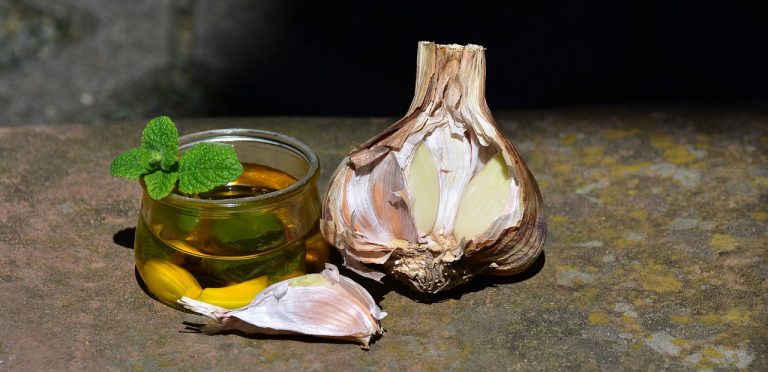
As far as I’m aware garlic is perfectly fine in an oil or vinegar form. In fact it is used medicinally in those forms.

Garlic (whole form) has proven anti-bacterial properties that permit it to be able to be stored without added preservatives. Powdered forms are another story, as it can be inclined to be possibly slightly rancid. The best way to store your garlic and for its most effective intakes, keep it in fresh form (unpeeled) in the fridge within a sealed glass jar and just detach a clove and peel it when needed for meals.

Hope this clears up your perception on our healthy garlic.

Please note that the information provided is for educational purposes only and is not meant to diagnose or treat medical conditions. Consult with your medical physician regarding appropriateness of using supplements in your healing process.
Lactic acid

What is lactic acid?

Lactic acid forms when glucose is metabolised during anaerobic exercise, for example during intense, short bursts of exercise such as running a 200m or 500m sprint.

When energy is required for the body, it is provided by the breakdown of adenosine triphosphate (ATP). Lactic acid is one of the substances that helps to recycle ATP for energy.

During intense exercise the lactic acid produced at a faster rate than the muscle tissues can remove it.

Important lactic acid facts

  • Lactic acid is a subtance that quickly builds up in the bloodstream after intense bursts of exercise
  • Lactic acid is found in sour milk products such as: yoghurt, buttermilk, some cottage cheeses

Why lactic acid is important

Excessive lactic acid in the blood causes muscles to fatigue very quickly, which can take up to an hour to remove from the bloodstream.

There are, though, ways to accelerate the removal of lactic acid from the bloodstream – cooling down sufficiently after exercising is the best way of fastr-tracking lactic acid build up and this is best done by stretching or exercising slower, as this ensures a rapid and continuous supply of oxygen to the muscles.

Healthy nutrition on a budget

Question

If someone is on a really limited budget, when they shop for groceries, what are the top picks in terms of the most nutritious foods, that are the cheapest to buy, but will also stave off a feeling of hunger? What do you suggest?

Answer

Thank you for your email.

To be specific on what foods to buy can be irrelevant as food prices alter according to availability. In the UK purchasing strawberries for vitamin C may be economical but it may not be in another country. Indeed South Africa is supplied well with citrus oranges and nectarines for vitamin C. However you can follow some broad tips for keeping your pockets heavy or not empty at least!

Use local produce, as locally grown fresh produce is usually cheaper than imported produce!

Processed foods, which are ready-made foods that only require a quick heat up can be pricey. It is much cheaper to buy your own fresh, locally grown produce and cook everything from scratch.

Frozen carrots may be more pricey than buying loose fresh carrots. It is time consuming to peel, clean and dice the carrots but at least cheaper! Remember a tin of carrots or a packet of carrots may both be tasty but the nutritional value may not beat fresh carrots. Try to buy whole foods from markets and the harbour may have bargain deals on fish. Shop around, stores do vary in prices.

Animal produce may be more pricey but when it comes to fast foods such as hamburgers the price is relatively low. Yet the nutritional value is way too low to be worthy of your pocket contents.

Use lentils and beans for proteins to replace meats but always mix your lentils and beans with cereal grains (one part lentils/beans two parts cereal) to uplift the plant protein.

Buy your wholefoods in bulk as that is always a good way to make a saving at the checkout. Try not prepare excess food that leads to wastage. Keep your diet simple yet varied. Spices and herbs make all the difference. Often the aroma and appeal of a chef’s delight can be attributed to herbs. It is a matter of correct mixing and presentation!

Remember buying in small smart packaging will always cost more than buying direct from a supplier in mundane packaging. Support local suppliers and soon you will know when and where the next bargain is to be had. Prepare your own foods and that alone will save your packets. You will be consuming less preservatives and more vital rich nutritional based whole foods.

Please note that the information provided is for educational purposes only and is not meant to diagnose or treat medical conditions. Consult with your medical physician regarding appropriateness of using supplements in your healing process.

Nutrition advice for vegans and vegetarians

Question

My wife and I have been vegetarians for 10 years and we are slowly heading towards dropping animal protein altogether. Would you recommend an iron and vitamin B12 combined supplement?

In regards to iodine intake, what would be better, seaweed derivatives ie, kelp and nori, or a supplement. We try not to add salt to our food or buy commercial breads so we don’t get iodine in our diet from those. Any advice would be greatly appreciated.

Answer

Thank you for your email.

It would be worthy to supplement iodine, vitamin B12, iron and zinc. As for iron it is best taken with vitamin C. Also note that the quality of plant proteins can be boosted by combining groups together.

Iodine is usually sourced from kelp (seaweed) so basically a kelp supplement will serve you well. Of course one can also rather eat some types of seaweed. Note we only need so much iodine and it is usually always best to follow the supplement guidelines.

Taking a vitamin B12 supplement is especially beneficial as we age to support neurological (brain) health. A complex vitamin B supplement could be of support as B vitamins function well together and to prevent any potential deficiency.

Our prime sources of zinc are animal sources and a 15mg zinc supplement would be ideal. Although some cereal grains and nuts with seeds do contribute fairly well in zinc.

Lastly iron from animal sources is more efficiently absorbed than from plant sources (in different forms). However accompanying vitamin C will boost the use of plant iron. Once again anything from 100mg to 1000mg daily of vitamin C will serve you well. You may not need to be too concerned with iron (being male or post menopausal for a woman) but generally 18mg daily will be fine.

Always mix your plant wholefoods (one part pulse – beans, lentils and two parts cereal – rice, wheat, maize, rye, barley or oats). Remember high protein foods such as buck wheat, millet, lentils and peanuts. There are of course many brilliant plant foods out there! They are extremely healthy and protect us from diseases and fast track ageing. Do try and have as much variety as possible and there are many types of plant foods to maintain and promote well-being.

Congratulations on your dietary progress, remember there is ample natural organic salt in many plant foods such as leafy vegetables but hardly any in cereal grains. We need the healthy salts in moderation just as we need many nutrients in balance. Bread can be far more appealing when prepared according to personal tastes (perhaps with seeds) and definitely superior when home baked with whole grain flours.

If you should have any further questions do email any time.

Please note that the information provided is for educational purposes only and is not meant to diagnose or treat medical conditions. Consult with your medical physician regarding appropriateness of using supplements in your healing process.

Linoleic acid

What is linoleic acid?

Linoleic acid (or conjugated-linolenic acid – CLA) is an essential omega 6 fatty acid. It is found predominantly in plant sources.

Foods with the highest source of linoleic acid are:

Linoleic acid must be obtained in the diet, as the body cannot produce this essential fatty acid.

Important linoleic acid facts

  • Linoleic acid is also known as conjugated-linolenic acid (CLA)
  • Linoleic acid produces hormone-like substances called prostaglandins
  • Linoleic acid is found in the cell membranes in the body

Why linoleic acid is important

Conjugated linoleic acid is a polyunsaturated fatty acid, which are good for health.

In order to be utilised by the body, linoleic acid needs to be converted into the more active omega 6 essential fatty acid of gamma-linolenic acid (GLA).