Lactose intolerance

What is lactose intolerance?

Lactose intolerance is the inability to digest most of the lactose in food taken in, due to a shortage of the enzyme lactase.

Lactose is a dissacharide sugar present in milk (also called “milk sugar”), which means it is made up of two monosaccharides (glucose and galactose).

The enzyme lactase is normally produced in the small intestine and functions to separate the two sugars from each other. Lactase breaks down the lactose, the main sugar in milk, into two smaller sugars glucose and galactose to be absorbed in the bloodstream.

Important lactose intolerance facts

  • Lactose intolerance is the most common disorder in the world
  • Lactose intolerance has several grades of severity, from not producing many symptoms to being very severe and producing very uncomfortable symptoms
  • There are various tests that can be conducted to test for lactose intolerance (and the severity of the lactase enzyme deficit)

Why lactose intolerance is important

Undigested lactose enters the colon (large intestine) where it gets digested by bacteria, producing lactic acid and other acids. This can cause some unpleasant symptoms in many people.

Lactose intolerance can cause the following gastric symptoms:

  • Abdominal cramps and pain
  • Bloating
  • Diarrhoea
  • Flatulence
  • Gas
  • Nausea

The severity of the symptoms depends on a few factors:

  • The level of lack of lactase enzyme in the digestive tract
  • The amount of lactose ingested

Myelin sheath

What is a myelin sheath?

The myelin sheath is a covering that is around many long nerve fibres, which is made from a fatty, waxy substance that is white in colour.

The myelin sheath is in place to protect the nerve fibres from damage and to insulate them (just like electrical wiring).

The myelin sheath increases the rate at which nerve impulses can be sent.

Important myelin sheath facts

  • The part of the nerve fibre that is myelinated is the axon
  • The myelin sheath allows electrical impulses to go extremely fast through the nerve fibres (compared to an unmyelinated nerve fibre)
  • Myelinated nerve fibres are found in both the central nervous system (CNS) and peripheral nervous system (PNS)
  • Multiple sclerosis is a “demyelinating illness”, where the myelin sheath progressively disappears

Why the myelin sheath is important?

The myelin sheath is really important as it allows nervous impulses to be sent through the nervous tissues (nerve fibres) in a coordinated and functional manner.

If the myelin sheath somehow gets worn away, or is not there, the nervous impulses cannot be sent through the nerve fibres properly and the result is an inability to to control muscles and mobility.

Why do we crave sweet foods

Question

Can you please tell me what are the reasons we crave sugar or sweet foods?

Answer

To begin with, the cause of sugar cravings often represents an underlining problem. It may be candida, an overgrowth of the fungus candidiasis in the colon that lead to sugar cravings as it feeds on sugar. Do note that such an assumption needs a complete medical history and probably bowel related tests to be sure. The partial solution would be sugar restriction.

The other possible cause could be a lack of serotonin, an important neurotransmitter in the nervous system, which can lead to carbohydrate cravings. The term carbohydrate covers all sugars. In this case 5-HTP, a precursor of serotonin, can actually support weight loss. Once again 5-HTP should not be taken long term and without guidance as it can lead to imbalances.

It is safest to not jump to conclusions and making assumptions without taking one’s complete medical history. A common cause though is blood sugar imbalance or reactive hypoglycaemia, where one needs sugar to feel able to cope, face the day and to function! Yes we need sugar but dependence on sugar and not complex carbohydrates indicates we need a sugar boost to lift our blood sugar quickly, which indicates an underlying problem with poor blood sugar levels. Of course the sugar intake gives us the boost but after two hours we need another one and so the cycle continues! The answer is dietary with the support of minerals and vitamins, such as zinc, chromium and the B vitamins.

Hope this helps but do seek out a practitioner that you have faith in to assist you in the diagnosis of cravings.

Please note that the information provided is for educational purposes only and is not meant to diagnose or treat medical conditions. Consult with your medical physician regarding appropriateness of using supplements in your healing process.


Intrinsic factor

What is intrinsic factor?

Intrinsic factor is a glycoprotein which is secreted by parietal cells of the mucous membranes of the stomach.

Intrinsic factor has an important role in the absorption of vitamin B12 (cobalamin) in the intestine.

Important intrinsic factor facts

  • Intrinsic factor helps to absorb the vitamin B12 (cobalamin) in food
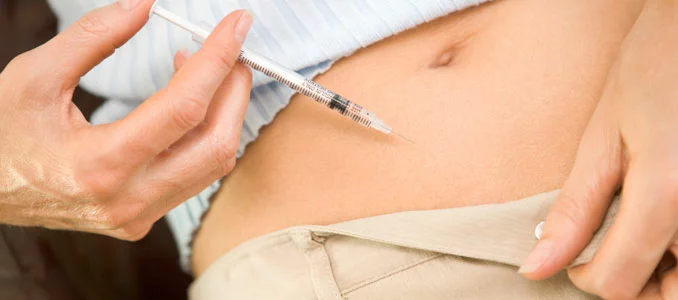
  • People with a lack of intrinsic factor need to get injections of vitamin B12 (cobalamin) to prevent pernicious anaemia

Why intrinsic factor is important

Intrinsic factor is an important protein in the body. If not enough intrinsic factor is produced or it is not used properly, it can result in the condition called pernicious anaemia , which is a type of anaemia caused by a failure to absorb vitamin B12 (cobalamin).

Lack of intrinsic factor can also cause a deficiency of vitamin B12 (cobalamin), which can lead to all sorts of health problems.

Insulin

What is insulin?

Insulin is a hormone that is produced within the islets of Langerhans of the pancreas, which is an organ in the gastrointestinal tract, located behind the liver. The pancreas, while not an endocrine organ, has endocrine tissue and functionality.

When carbohydrates are digested they are broken down to glucose and absorbed into the bloodstream. The pancreas detects the spike in glucose (by sampling the blood that passes through it) and secretes insulin in response, which gives the signal that the extra glucose should be taken into the skeletal muscles and other cells.

Insulin targets most cells in the body, binds to them and activates receptors to allow the cells to absorb the extra glucose that is circulating in the blood.

Important insulin facts

  • Insulin is a protein
  • Insulin should be between 5-20 mcU/mL if the blood test has been taken when fasting (nothing eaten prior to the blood test)
  • Insulin reduces the levels of glucose in the blood
  • Insulin ensures that all cells are able to absorb the glucose required for their energy needs
  • Insulin resistance is a pre-diabetic condition which means that the cells become resistant to the effects of insulin and the pancreas has to output more insulin to try to get the excess glucose out of the blood stream and into the cells
  • If insulin continues to not work properly, if it does not activate the cells to absorb the glucose in the bloodstream, the pancreas can become basically defunct in its activity and diabetes can be the end result

Why insulin is important

Insulin provokes a wide range of important actions:

  • Increases the uptake of glucose in skeletal muscles
  • Enable muscles to store glucose in the form of glycogen
  • Decreases the breakdown of fat cells for energy
  • Increases the uptake of amino acids and protein synthesis
  • Decreases glycogen breakdown in the liver
  • Decreases the rate that the liver releases glucose into the blood

Insulin resistance is a – condition which means that the cells become resistant to the effects of insulin, after which the pancreas secretes more insulin to compensate for the fact that the cells are not absorbing glucose properly.

Another effect of insulin resistance is that there are high levels of glucose in the blood. After some time of this, the pancreas becomes unable to keep up with the requirement of insulin (to remove the glucose from the blood stream and get it take into the cells) and type 2 diabetes is the result.

Hysterectomy

What is a hysterectomy?

A hysterectomy is a medical procedure in which the uterus (womb) is removed, but the rest of the reproductive organs are usually left intact. Sometimes the cervix is also removed, but that is dependent on why the hysterectomy was performed in the first place.

A hysterectomy is a major surgical procedure and is permanent – you cannot get your uterus back once you remove it. But it is sometimes a necessary and only option.

While hysterectomy may be necessary for women with uterine, cervical or ovarian cancer, there are other alternative medical procedures that can be performed instead of hysterectomy, especially in younger women of child-bearing years for benign conditions.

Important hysterectomy facts

  • Hysterectomy is the most common type of elective surgery for Australian women
  • Hysterectomy is a major procedure which requires full sedation and time to recover from it
  • Hysterectomy procedures are slowly decreasing, as other options are taken up instead

Why a hysterectomy is important

A hysterectomy procedure is normally recommended for the following health conditions:

  • Cancer – hysterectomy is probably the best treatment option for gynaecological cancers of the uterus, cervix or ovaries. Other treatment options may also be available, but these depend on the stage of the cancer and need to be further discussed
  • Fibroids – hysterectomy has traditionally been recommended for women with uterine fibroids, especially ones which are large and especially if the women has completed bearing all the children she intends to bear (other procedures are now recommended for women of child-bearing age)
  • Prolapse – when the muscles supporting the vagina and uterus/cervix start to descend into the vagina a lot of health problems can happen (incontinence, pelvic pressure, bowel movement difficulty), then hysterectomy is offered as the last resort to alleviate these conditions
  • Endometriosis – hysterectomy may be a last resort if the symptoms of endometriosis do not improve with medication or conservative surgery
  • Heavy bleeding – hysterectomy is also offered to women who experience heavy bleeding every month and suffer from anaemia, lethargy and other symptoms as a last resort if other non-surgical methods do not improve their bleeding

Today there are other procedures that can also help with most of the conditions above, but must be performed with consultation of a medical specialist to determine if they are right for the individual.

Human growth hormone (HGH)

What is human growth hormone (HGH)?

Human growth hormone (HGH) is one of the hormones that is produced by the anterior pituitary gland (which itself is controlled by the hypothalamus gland).

HGH secretion is released under the influence of a number of factors:

  • Growth hormone releasing hormone (GHRH)
  • high levels of amino acids and low levels of fatty acids in the blood stream
  • Low levels of HGH
  • Stress
  • Blood levels of a number of hormones

Secretion of HGH is inhibited by a number of factors:

  • Growth hormone inhibiting hormone (GHIH)
  • Low levels of amino acids and high levels of fatty acids in the blood stream
  • Obesity
  • High levels of HGH

Important human growth hormone (HGH) facts

  • There is little evidence to suggest HGH can reverse ageing
  • Studies show that people taking HGH injections increase their lean muscle tissue and reduce body fat
  • In the USA, HGH is illegal to use without a doctor’s prescription
  • HGH can cause undesirable several side effects (similar to steroids)
  • Some doctors prescribe HGH as an anti-ageing remedy

Why human growth hormone (HGH) is important

The body makes HGH to promote growth during childhood. HGH also maintains tissues and organs in a healthy state throughout life.

From around the age of 40, the pituitary gland reduces the amount of HGH that it produces, which could be one reason why cells and tissues age and slowly stop working as effectively as they did during childhood and younger years.

Human growth hormone therapy is currently approved for:

  • Children with Turner’s syndrome
  • Children with kidney failure
  • Children with short stature
  • Children with Prader-Willi syndrome
  • Muscle wasting associated with AIDS / HIV

Hormones

What are hormones?

Hormones are chemical substances which are produce by the endocrine system. Hormones can be either fat-soluble (which means they require a protein to carry them in the blood) or water soluble (which means they can freely travel through the blood).

The main hormones produced in the body are:

  • Adrenaline – from the adrenal medulla
  • Androgens (DHEA) – from the adrenal cortex
  • Anti-diuretic hormone – from the posterior pituitary gland
  • Calcitonin – from the thyroid
  • Glucagon – from the pancreas
  • Glucocorticoids (cortisol) – from the adrenal cortex
  • Human growth hormone – from the anterior pituitary gland
  • Insulin – from the pancreas
  • Leutinising hormone – from the ovaries and testicles
  • Mineralocorticoids (aldosterone) – from the adrenal cortex
  • Noradrenaline – from the adrenal medulla
  • Oestrogen – from the ovaries
  • Oxytocin – from the posterior pituitary gland
  • Parathyroid hormone – from the parathyroid glands
  • Progesterone – from the ovaries
  • Testosterone – from the testicles
  • Tri-iodo-thyronine – from the thyroid
  • Thyroxine (T4) – from the thyroid

Important hormones facts

  • Hormones can act on cells close to where they are released, or or on cells that distant
  • Hormone levels can be measured by simple blood tests (but these levels can fluctuate at different times of the day and month depending on a number of factors)
  • Hormones take a long time to exert their effect on the target cells and tissues, but the exert a long-term response
  • Hormones are produced by endocrine glands or by organs that also have endocrine tissue
  • Hormones control many many processes in the body, including blood fluid levels, metabolism, growth, reproduction, gestation, delivery and lactation

Why hormones are important

Hormone secretion is controlled by a number of mechanism:

  • Level of circulating hormone – this is the most common mechanism to control hormone secretion and happens through a negative feedback mechanism
  • Direct sampling of the blood – some endocrine tissues can sample the blood that passes through them to determine if a certain hormone needs more regulation
  • Nervous stimuli – nervous tissue stimulates certain hormones
  • Hypothalamus – this organ controls the endocrine system by controlling activity of the pituitary gland (both the anterior and posterior)

Hormone activity in the body control a number of vital metabolic processes, such as level of blood glucose, menstruation, lactation, puberty, metabolism.

Homocysteine

What is homocysteine?

Homocysteine is an amino acid that is produced in the body as a byproduct after meat is eaten.

Homocysteine has serious implication in heart disease and especially in causing levels of LDL (bad) cholesterol levels to rise and become oxidised. It also makes blood more sticky and clot more frequently which can increase the risk of artery or other blood vessel blockages, which can lead to stroke. In addition to this, conditions such as atherosclerosis can become worse.

Important homocysteine facts

  • Homocysteine levels increase after eating a lot of meat
  • High homocysteine levels are a danger signal and could lead to serious heart problems
  • High homocysteine levels are a risk for heart disease
  • The B vitamins lower homocysteine levels

Why homocysteine is important

Homocysteine is normally synthesised into other (harmless) amino acids by the body in most people who eat enough fresh vegetables and fruits, but in those people who do not consume enough B vitamins, this may not happen properly, while in yet other people they may not have enough of the right enzymes to process homocysteine properly irrespective of whether or not they eat adequate amounts of the vegetables and fruits.

The B vitamins which help the most with neutralising homocysteine and bringing it to a normal level are:

There can also be other causes of high homocysteine levels, which need to be investigated.

Homocysteine levels

Homocysteine levelsValue
Normal<12 µmol/L
Moderately high12-15 µmol/L
High> 15 µmol/L


Glycogen

What is glycogen?

Glycogen is the storage form of glucose. When there is more glucose than is required in the body, the hormone insulin enables it to be stored in the body for future release – when the body needs it.

The liver and skeletal muscles can convert glucose into glycogen and store it in their tissues. The liver can convert glycogen back into glucose but the skeletal muscles cannot, instead they release it into the bloodstream where glucagon (hormone in the pancreas) converts it to glucose through a process called glycogeneloysis.

Important glycogen facts

  • The body needs glycogen as an important energy source
  • Glucose is converted into glycogen by the liver and skeletal muscles to be stored until required
  • Lack of glycogen causes extreme fatigue and lethargy

Why glycogen is important

Glycogen metabolism (conversion into glucose) is a really important metabolic function, as it ensures that the body uses and stores glucose properly. If glycogen metabolism becomes abnormal, it can lead to diabetes.

Diabetes basically happens when there are excessive levels of insulin which causes liver glycogen to be stored and released in abnormal amounts (too much or too little). When glucose metabolism (and insulin levels) become normal, glycogen metabolism also normalises too.