How many calories in sugar

Question

How many calories are supplied by 1 teaspoon of sugar?

Answer

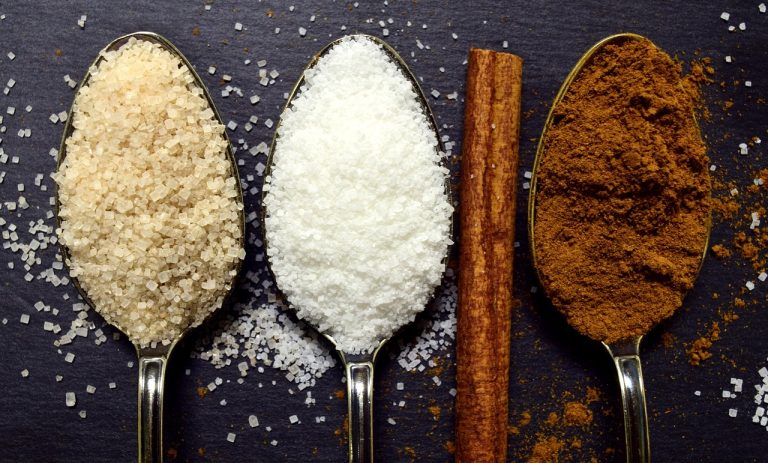
Sugar, whatever the source (brown, white) is similar in calories. Brown, unprocessed sugar just has a few more trace minerals, vitamins and is just a little better for you than white sugar.

The amount of calories in sugar is:

  • 1 teaspoon (4g) = 15 calories
  • 1 tablespoon (12g) = 45 calories
  • 1 cup (250g) = 770 calories
  • 1 ounce (28g) = 105 calories

Please note that the information provided is for educational purposes only and is not meant to diagnose or treat medical conditions. Consult with your medical physician regarding appropriateness of using supplements in your healing process.

Diet program sedentary worker

Question

I am a 54yr old female with a sedentary lifestyle and work as a driver 7 days on 7 days off, with 12 hour shifts on alternating days and nights. I weigh 107kg and am 170cm tall.

Would you recommend the “Lite’n’Easy” program for me? If so how many calories should I be on?

Answer

The best way to achieve weight loss and a healthier body is through a combined dietary plan together with an exercise program. It is difficult to achieve long term weight loss through just a restricted diet alone.

There are a number of diet programs that are available to try and the “Lite’n’Easy” diet program is one which provides a restricted calorie intake for people who wish to lose weight, through portion controlled breakfast, lunch and dinner, as well as protein shakes and other snack food items.

These diet programs can work to help you lose weight, but they must be strictly monitored, so that you do not exceed the calorie intake in order to lose weight.

Exercise should play an important part in everyone’s life. You should try to aim to walk for about 30 minutes almost every day. If you cannot make extra time after or before work, then try to park your car further away from your workplace, so that you have to walk to get there – this may help to provide some of the recommended daily exercise.

The range of calories you need to consume on a daily basis, are as follows:

  • Totally sedentary – approximately 2000-2200
  • Some light exercise – approx 2400-2600

Please note that the information provided is for educational purposes only and is not meant to diagnose or treat medical conditions. Consult with your medical physician regarding appropriateness of using supplements in your healing process.
Leucine tolerable upper limit

Question

The tolerable upper level for leucine is listed as 170-1100 mg.

What does this mean and why is the range so wide? Does it mean 170-1100 mg per kilogram of body weight or is this just 170-1100mg in total?

Answer

Leucine does not have an official tolerable upper limit.

The tolerable upper limit range covers children to adults and that is the reason it is such a wide range. The tolerable upper limit is an approximate level for children (at the lower end) to adults (at the higher end).

To determine if you or your child requires any extra leucine, you need to discuss this with your doctor or registered dietician, who can advise you on the best way to do this.

Please note that the information provided is for educational purposes only and is not meant to diagnose or treat medical conditions. Consult with your medical physician regarding appropriateness of using supplements in your healing process.

Understanding GI rating

Question

I have Diabetes Type 2 and monitor carefully what I eat.

Over time, I have come across packaged foods in the supermarket that have no GI rating at all. Can you tell me why some foods have no GI rating and if these foods have any effect on my blood sugar levels?

Answer

It is great that you monitor the food you eat, as that is the best way to control your symptoms.

The GI (glycemic index) rating symbol can only appear on foods which meet certain criteria, so that is why it does not appear on all foods.

To have the GI rating symbol on a food, it is required that the food meets the following standards:

  • low in calories, fat, salt, sugar
  • contains significant amounts of fibre

Foods which have a high GI (glycemic index) will generally increase blood sugar levels, but if high GI foods are eaten together with low GI foods, then the overall effect will be a medium GI food. There is also the glycemic load (GL) to consider when eating foods high in carbohydrates.

To learn more about GI and find out what the GI is of the foods you want to purchase, you can do so at the Official Glycemic Index, which has a huge database of foods.

Please note that the information provided is for educational purposes only and is not meant to diagnose or treat medical conditions. Consult with your medical physician regarding appropriateness of using supplements in your healing process.
Protein shake for breakfast

Question

I am usually in a big hurry to get to work in the morning and I don’t find I am getting a healthy breakfast.

I wanted to a make a shake in the morning with fruit, I was just wondering if I should add a protein supplement, as I know you should have protein at every meal, right? I am 5’6 and 130 pounds and athletic.

Answer

You are very correct in the assumption about protein being required at every meal.

If you make a healthy shake and use milk and/or yoghurt, you will be getting enough protein without the requirement for a protein supplement. One glass of milk should be adequate and if you decide to use yoghurt as well, this will boost your intake of not only protein, but also other essential nutrients such as calcium and magnesium.

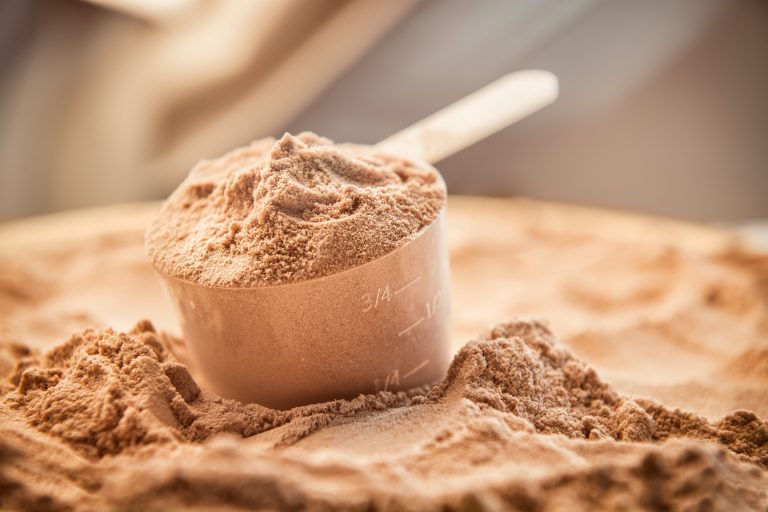
If you are exercising a lot, you may need some extra protein in your diet and this can be achieved with a protein supplement, after breakfast preferably, to help boost your reserves.

Please note that the information provided is for educational purposes only and is not meant to diagnose or treat medical conditions. Consult with your medical physician regarding appropriateness of using supplements in your healing process.
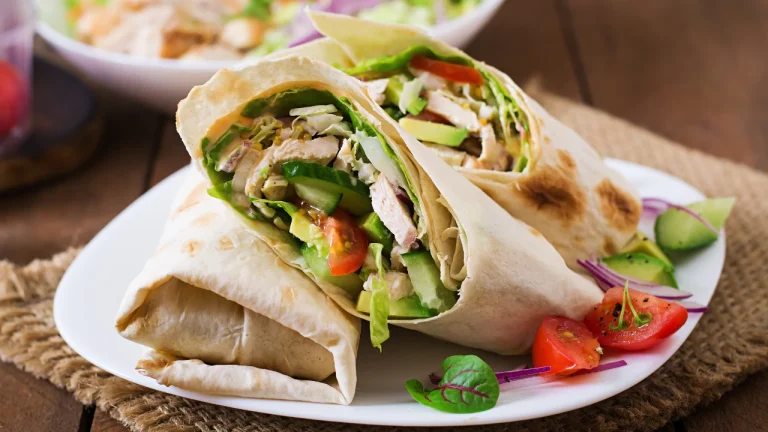
Which is healthier – wraps or bread

Question

Are sandwich wraps healthier then regular sandwiches? I have heard people say that sandwiches are healthier and have less calories than wraps.

I normally eat (and prefer) wraps over sandwiches but if they are not as healthy, I will change it for calorie reasons to do so.

Answer

There is no difference in eating wraps or sandwiches, but it really depends on the type of wrap of sandwich you are comparing. If you are comparing white (processed) with wholegrain, then the wholegrain will be better for you, irrespective of whether it is in the form of a wrap or a sandwich.

Whatever you eat, just try to ensure that it is made of wholegrains and is not white (processed), as that is the most healthiest for you.

Please note that the information provided is for educational purposes only and is not meant to diagnose or treat medical conditions. Consult with your medical physician regarding appropriateness of using supplements in your healing process.
Natural healing strategies after plastic surgery

Question

I will be undergoing plastic surgery on my nose in three weeks and I want to quicken my recovery. Are there any vitamins / herbs that I can take to prevent bruising too much?

Answer

Yes there are vitamins and herbs which you can take after surgery to promote healing, reduce swelling and to also reduce some of the subsequent bruising (you cannot actually prevent all bruising, as the surgery is a trauma to the body and will cause some bruising).

Vitamin C is renowned to help the blood capillaries (smallest blood vessels) heal more quickly from the trauma of the surgery and thus reduce the swelling associated with this type of surgery. The best formula to take is a non-acid one.

The herb arnica is also re known to help promote healing and reduce the amount of bruising that follows the surgery. Arnica can be taken in a cream or gel, which you can rub delicately on the nose area several times a day (as recommended by the manufacturer).

You also should eat lots of fruits and vegetables each day to promote the healing process and quicken recovery time. Fruits and vegetables are packed full of vitamins, minerals and antioxidants, which will all speed up the recovery process. Aim to have 3-5 fresh fruits and 5-7 raw (or slightly steamed) vegetables every day and try to make them organic, as they have more nutrients.

Make sure you drink enough water each day – around 8 glasses a day is adequate.

In addition to this, do not smoke and do not be exposed to second hand smoke during your recovery, as this could slow your recovery.

Please note that the information provided is for educational purposes only and is not meant to diagnose or treat medical conditions. Consult with your medical physician regarding appropriateness of using supplements in your healing process.
Natural solutions for rosacea

Question

What are some natural remedies / products for rosacea that can be used to help my condition?

Answer

The treatment of rosacea depends on where on the body it is found and if the eyes are also affected.

The best to deal with rosacea is to fight it internal, so that it does not present any symptoms externally.

The best healing vitamins/minerals/other nutrients for rosacea are:

  • Zinc – this mineral helps the skin layers to heal much more quickly and effectively and therefore reduce the symptoms of rosacea
  • Vitamin B3 (niacin) – this vitamins works really well together with zinc to help with healing the skin and reducing the symptoms associated with rosacea
  • Vitamin A / betacarotene – vitamin A is absolutely essential for the skin, as it is required to ensure that all the layers of the skin (dermis) are in a healthy condition. Betacarotene can be converted into vitamin A, but this conversion may be defective in some people, so vitamin A is the preferable supplement in this case
  • Vitamin C (including bioflavonoids) – these are essential for helping the capillaries (smallest blood vessels) to be healthy and function properly, which may help to reduce symptoms
  • Vitamin E – this vitamin helps to prevent free radical damage and helps to promotes healthy skin, as it reduces skin inflammation and symptoms associated with rosacea
  • Omega 3 essential fatty acids – reduce inflammation everywhere in the body and can help to reduce the redness and inflammation of the skin that is associated with rosacea

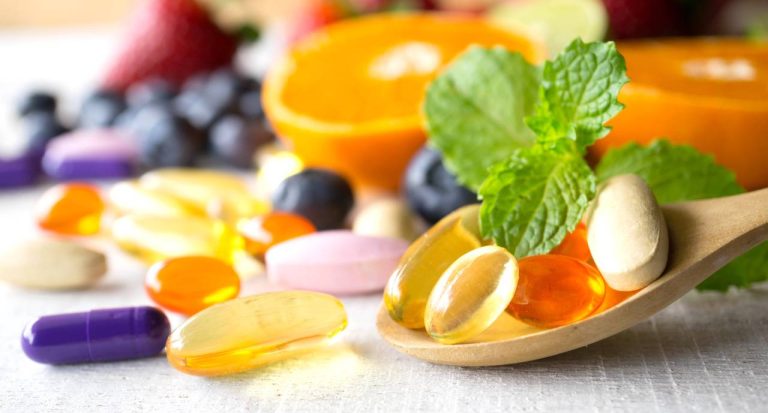
You can either buy a supplement with all of these nutrients or find a product that has some of these nutrients in the cream. It is most beneficial to get the nutrients in the form of food you are eating and also from supplements. You also need to ensure that any supplements you wish to take do not interfere with any medication or health conditions you may have, so consult your doctor prior to taking anything.

Please note that the information provided is for educational purposes only and is not meant to diagnose or treat medical conditions. Consult with your medical physician regarding appropriateness of using supplements in your healing process.
Zinc for fertility

Question

I have found articles that say the required level of zinc is between 8 and 11 mg depending on whether you are male or female.

I give zinc supplements (25mg) to my husband, as I do not think the food we eat provides 11mg per day. Should he take the supplements daily, since maximum zinc intake per day is a total of 40mg. I am trying to get pregnant.

Answer

Zinc is a mineral that is vital for the health of sperm and is therefore thought to be important in helping women become pregnant with healthy, viable sperm that can impregnate an ovum.

Zinc supplements are recommended if (a) the diet is lacking in this important mineral, or (b) if a couple wants to get pregnant and wants to increase the chance of producing healthy, viable sperm.

Look at the ingredients list of the supplement and you will see that although the amount of zinc in there is 25mg, the actual equivalence of elemental (and available) zinc is much less than that, so it is unlikely that your husband will overdose on zinc (as long as you are following the manufacturers recommended daily intake of the supplement).

If you are still unsure, seek the advice of your doctor, or even a pharmacist at your local pharmacy/chemist.

Please note that the information provided is for educational purposes only and is not meant to diagnose or treat medical conditions. Consult with your medical physician regarding appropriateness of using supplements in your healing process.

How much juice for children

Question

I was wondering, for a child under 5 and an adult what is the nutrition intake for each daily? How much juice would each be able to have daily – what is the recommended amount?

Answer

You can find the nutrition intake information for yourself and your child in the recommended calorie intake tables. There is also a recommended calorie intake calculator which you can use to determine if you are getting enough calories in your diet.

Juice is not recommended on a daily basis for infants and children because it is packed too high with calories, but does not have all the fibre that the fresh fruit has eaten raw. In addition to this, most fruit juices have a lot of sugar added to them, which are not healthy for young children.

If you want to give your child some juice, it is preferable that you juice some fresh, organic fruit yourself and use all the fibre in the juice – that way, you know you are given your child wholesome juice that you have prepared yourself.

It is much better to give your child a fruit salad with fresh organic fruit than fruit juice.

Another suggestion is: you can steam some fruit (for maybe five minutes) and then mash it up (or blend it) with some ground up nuts (such as walnuts or almonds) and add some yoghurt. This makes a great, nutritious snack for your child, packed full of vitamins and plenty of calcium too.

Please note that the information provided is for educational purposes only and is not meant to diagnose or treat medical conditions. Consult with your medical physician regarding appropriateness of using supplements in your healing process.