Calcium

Facts

Why calcium is good for you

Calcium is the most abundant mineral in the body. About 98% of the calcium in the body is in the bones, while another 1% is in teeth and the other 1% circulates in the blood. Calcium is required all through life to keep bones and teeth strong and healthy.

The calcium in blood has very useful and important functions to perform, so much so that the body will pull calcium from the bones to make sure there is enough in the blood.

Calcium in the blood helps regulate heartbeat, controls blood pressure, clots blood, contracts muscles and sends messages along nerves. Calcium is also required to make certain hormones and enzymes, especially the ones that control digestion, how energy is made and fats are used. It also helps build connective tissues.

Bones, while hard, are actually living tissue. Old bone is constantly being broken down and replaced with new bone at a specific rate until the age of about 35. After that age, the rate that new bone can replace old bone decreases and saved up bone is drawn upon. Some slow bone loss is a normal part of aging, but if not enough calcium is taken in, the process can happen too fast, especially in women who have reached menopause. If too much bone is lost and there is not enough calcium to help replace the old bone with new, bones become thin, brittle and break very easily. This is called osteoporosis

If the bones are strong to begin with and plenty of calcium in foods (or supplements) are taken in all through a person’s life, the bones will stay strong throughout life. Even if osteoporosis has already set in, calcium may help slow it down.

Important calcium facts

  • Calcium is the most abundant mineral in the body
  • Calcium works with vitamin D to keep the blood levels of calcium normal. Vitamin D is required to help bones hold onto their calcium.
  • Magnesium helps to body absorb calcium and vitamin D properly. The basic rule is: ½ as much magnesium as calcium
  • Since the body needs to use calcium 24 hours a day, it is best to space out calcium over the day and have calcium-rich foods with every meal
  • To help build stronger bones and teeth, calcium needs to work together with magnesiumboronvitamin D and phosphorus to create healthy bone tissue
  • In order for the levels of calcium and magnesium to be at the correct levels and ensure health is maintained, the ratio of calcium to magnesium should be 2:1
  • Calcium are better absorbed with some dairy, such as a few spoonfuls of yoghurt, some milk, a piece of cheese. This helps to ensure the stomach produces enough acid to break down the supplement to be able to absorb the calcium in it
  • Don’t take calcium supplements on an empty stomach or with other foods, as they wont be absorbed as well
  • Calcium is required to make sure all the body’s muscles contract properly and all nerve impulse fire off correctly to enable them to send messages through the nervous tissues to all areas of the body
  • If there is a vitamin D deficiency, it could lead to a calcium deficiency, as vitamin D helps the body absorb calcium and if there is insufficient vitamin D intake in the diet, it could lead to a calcium deficiency and bone loss
  • Calcium is needed to activate enzymes responsible for the digestion of fats and proteins, as well as in enzymes that help to produce energy for the body
  • Calcium helps to build connective tissues, which helps to keep the body together.
  • Osteoporosis affects many people, especially women after menopause, when their oestrogen levels go down and is very costly for the health system

Calcium works best with

Health

Calcium and health

  • Heart disease – two important studies showed a link between atherosclerosis and osteoporosis. In the first study, researchers found that women who had the most bone loss from osteoporosis were also most likely to have calcium-containing plaque blocking their carotid arteries. Because the carotid arteries carry blood to the brain, these women were at a higher risk of having a stroke. The second study showed that men and women with low vitamin D levels also had higher rates of calcium-containing plaque in the arteries leading to their hearts, making them more vulnerable to heart attacks. More follow-up research is being done, but these studies show how important calcium is for every aspect of long-term health
  • High blood pressure – calcium may help prevent or treat high blood pressure in some people. People not getting enough calcium in their diet are more likely to get high blood pressure than people who get the RDA or more. In general, the higher level of calcium in the blood, the lower the blood pressure. Studies show that taking calcium supplements each day, can lower blood pressure for some people. People with high blood pressure should talk to a medical professional about calcium supplements BEFORE taking them, especially if taking any other prescription drugs
  • Low calcium intake in childhood leads to rickets
    Insufficient calcium intake in childhood leads to the disease rickets, where the bones (and teeth) become too soft and deformed, growth is stunted and the skull is not formed properly. Rickets is entirely preventable and rarely occurs in developed nations where foods rich in calcium are in abundant supply. It is more of a problem in countries where there is famine.
  • Calcium helps to prevent osteoporosis
    Calcium is one of the most important minerals that is needed by the body to help prevent osteoporosis – a disease which causes a break-down in the bone tissue matrix by a lack of calcium and which causes the bones to be very brittle and break easily.
  • Calcium is vital for the parathyroid and thyroid glands to work properly
    The thyroid and parathyroid glands rely on a specific (but very small) amount of calcium to function properly and if these levels are disturbed, then either or both these glands can malfunction. When blood calcium levels are too low, the parathyroid hormones release parathyroid hormone (PTH), which stimulates the break down of bone tissue to release enough calcium into the blood (this means that there is a decrease in any new bone tissue formation). The release of PTH also stimulates increased activation of vitamin D and decreased excretion and increased intestinal absorption of calcium and magnesium. This has huge implications on bone tissue loss and osteoporosis. Conversely, if there is too much calcium in the blood, the thyroid gland releases the hormone calcitonin, which stimulates the bone cells to increase new bone tissue formation and to stop any break-down of bone tissue.
  • Calcium regulates the heartbeat, ensuring it beats regularly
    Calcium, along with magnesium, is vital for ensuring the heart beats properly and regularly. Calcium regulates the way that the heart muscle cells contract and then relaxes in each heartbeat. The strength of heartbeat depends entirely on the amount of calcium released and the cell’s sensitivity to the calcium.
  • Calcium is vital for ensuring healthy blood pressure levels
    Many recent studies show that high blood pressure (hypertension) could be a result of low dietary calcium intake together with a high dietary sodium intake. The studies showed that both men and women who were given a calcium supplement had a dramatic reduction in blood pressure (back to normal levels), which was similar or better than the reduction achieved with conventional blood pressure medication and that the people with hypertension who were most sensitive to the blood pressure elevating effects of salt has the most benefit.  In addition, other studies show that there is a definite correlation between pregnant women who had high blood pressure (a major risk factor for pre-eclampsia, a condition which poses a risk for the mother and baby’s lives) and a low calcium dietary intake.
  • Calcium helps prevent heart disease
    Two important studies have shown a link between atherosclerosis and osteoporosis. In one study, it was determined that women who had osteoporosis were more likely to have calcium-containing plaque blocking their carotid arteries (these are the arteries that lead to the brain) and thus bring a higher risk for stroke. The other study showed that both men and women how had low levels of vitamin D also had higher rates of calcium-containing plaque in the arteries leading to the hearts, which has a higher risk of heart attack.
  • Enables the blood to coagulate properly when required
    Sufficient calcium is required to enable the blood to coagulate (or clot) properly when any of the body tissues are damaged, to help heal and repair the tissues more quickly.
  • Calcium is needed to maintain cell membrane elasticity and general cell health
    Calcium helps to maintain and restore a normal electric cell potential between both sides of the cell membrane. Calcium is also effective in transporting essential minerals through the cell membrane wall and into the cell. In these important ways, calcium is vital in maintaining the health of cell membranes, without which leaves the cells open to attack by undesirable chemicals and toxins and can cause or contribute to a wide range of diseases. Calcium regulates of both cell death and the mechanisms underlying cell proliferation, which can become defective and cause cancer. Research has shown that the various characteristics of calcium signalling in the cell ultimately determining the cell’s fate.

People who wish to take a calcium supplement should talk to a medical professional before taking it.

Current research

  • Calcium may be implicated in Alzheimer’s Disease
    Recent research suggests that a disruption of the calcium in synapses of neurones (the endings of nerves that send the messages to other nerves) could cause the impairment in nerve signalling, thus causing cognitive defects, which are part of the initial symptoms of Alzheimer’s Disease.
  • Calcium may reduce incidence of colon cancer
    Recent research shows that people who get enough vitamin D from sunshine and enough calcium from dairy foods, have a reduced incidence of colon cancer and that those people who had colon cancer and had a low calcium had a higher chance of dying from the cancer than the people who had a higher calcium intake. Another study showed that people with colon cancer who were supplemented with calcium, had a significant decrease in the number of cancer cells in the lining of the colon after about the second month of supplementation. Promising research shows that the lower that calcium intake is, the more likelihood to develop colon cancer, possibly because calcium blocks the growth of cancer cells.
  • Calcium may be implicated in muscular dystrophy disease
    Recent research shows that there is a correlation between misregulation of calcium levels and underlying cellular activity and pathogenesis of Duchenne muscular dystrophy (DMD). Further research is going on in this area to determine the exact cause and how misregulation of calcium interferes with proper muscle activity, with a view on how to prevent muscular dystrophy.

People in these groups who wish to take a calcium supplement should talk to a medical professional about it.

Deficiency

Groups at risk of calcium deficiency

Over half of all young people today (especially women) do not get the recommended daily intake of calcium in their diet, probably because they do not eat enough foods rich in calcium.

Calcium deficiency occurs when there is less than 200mg intake of calcium from foods per day.

The following groups are most at risk of deficiency:

  • People taking corticosteroid drugs
    Medicines such as cortisone, hydrocortisone, prednisone and dexamethasone, used by people with asthma, lupus, rheumatoid arthritis, inflammatory bowel disease and other medical problems, while they are lifesavers for people with these conditions, can also cause bone loss by breaking down bone faster than it can be replaced. Doctors previously thought that glucocorticoid drugs only caused problems with bone loss if taken in high doses, but recent research shows that taking consistent amounts of these drugs for long periods of time also cause bone loss. Talk to a medical professional about having a bone density test and about taking calcium and vitamin D supplements
  • People taking thyroid drugs
    Large doses of thyroid drugs (eg Synthroid) over a long period can lead to bone loss
  • People taking cholesterol-lowering drugs
    People taking cholesterol lowering medications are at risk of calcium deficiency because these types of medications cause bone loss by breaking down bone faster than it can be replaced. These drugs (eg Cholybar, Questran) can block absorption of calcium and fat-soluble vitamins such as vitamin D and vitamin A
  • People with a lactose intolerance
    People who are lactose intolerant, may not be eating enough non-dairy calcium-rich foods to get enough calcium in their diet, due to their condition
  • People taking aluminium antacids
    Non-prescription antacids that contain aluminium (eg Maalox, Rolaids, Gelusil) can cause the body to store up aluminium in the bones instead of calcium. This could create weakened bones, especially in people with kidney problems. If these antacids are not used regularly, then it is not a major concern, but people taking these antacids regularly for heartburn should talk to a medical professional about other ways to control it
  • Smokers and alcoholics
    Heavy drinkers and smokers have a higher risk for osteoporosis and those that do both are at an even greater risk. Smokers seem to have a lower bone density than non-smokers (it is a not yet known why), so that is a risk factor in itself. A recent study showed that smoking doubles the risk of hip fractures, even if osteoporosis is not present. Alcohol interferes with absorption of calcium and heavy drinkers often do not eat well and do not get enough calcium in their food
  • People taking certain prescription drugs
    Certain drugs, while valuable therapies for specific health problems, can sometimes interfere with and block calcium absorption. Some prescription drugs do not mix well with calcium supplements and can cause adverse problems if taken together or even hours apart. It is important to consult a medical professional if you are taking ANY prescription drugs and want to try calcium
  • People on a high protein diet
    People who are on a higher protein diet, may need more calcium in their diet than people who eat less protein (or predominantly eat a vegetarian diet), this is due to the amount of natural phosphates in vegetables and ensuring the correct calcium/phosphorus ratios in he body.
  • Post-menopausal women
    Women who have been through menopause are at greater risk of osteoporosis due to the decreased levels of oestrogen in their body (oestrogen has a protective effect on the heart and also ensures adequate uptake of calcium into the bones)

People in these groups at risk of deficiency should talk to a medical professional about calcium supplements before trying them.

Symptoms of calcium deficiency

Calcium deficiency occurs when intake of calcium in the diet is less than 200mg per day. Low levels of calcium can cause the following deficiency symptoms:

  • Osteoporosis
    Osteoporosis is a disease which causes a break-down in the bone tissue matrix by a lack of calcium. This breakdown causes the bones to be very brittle and break easily.
  • Osteoarthritis
    Low levels of calcium intake in the diet are implicated in the health condition osteoarthritis (while this condition does have other risk factors, low levels of calcium is the most common reason why it occurs).
  • Rickets
    Insufficient calcium intake in childhood leads to the disease rickets, where the bones (and teeth) become too soft and deformed, growth is stunted and the skull is not formed properly. Rickets is an entirely preventable calcium deficiency health condition.
  • Soft, yellow teeth
    Another symptoms of calcium deficiency is when the teeth start to become more yellow (less white) and so the teeth can get softer and be predisposed to tooth decay.
  • Muscle cramps
    Muscle cramping in the legs are early sign of calcium deficiency. The cramps generally occur at night.
  • Dry skin and brittle nails
    Another common calcium deficiency symptom is dry skin and brittle nails that break easily.

Food intakes

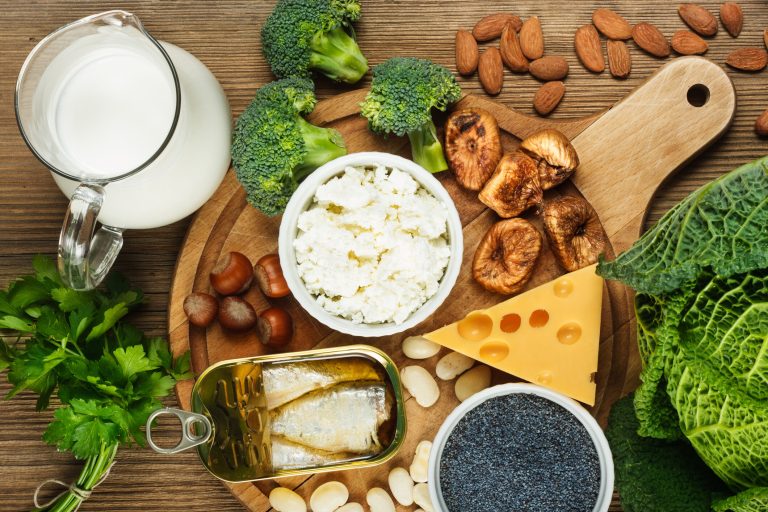
Calcium in food

FOODAMOUNTcalcium (mg)
Yoghurt, plain low-fat1 cup415
Ricotta cheese, part skim½ cup337
Milk1 cup300
Swiss cheese, processed28g272
Cheddar cheese28g204
Salmon (with bones)85g203
Colby cheese28g194
Pudding, instant chocolate½ cup149
Mozzarella cheese28g147
Tofu, uncooked½ cup130
Navy beans1 cup128
Spinach, cooked28g122
Turnip greens, cooked½ cup99
Sardines (with bones)85g92
English muffin1 regular90
Ice-cream, vanilla½ cup85
Almonds, dry roasted28g80
Chickpeas1 cup78
Brie cheese28g52
Swiss chard, cooked½ cup51
Kidney beans1 cup50
Okra½ cup50
Black beans1 cup47
Kale, cooked½ cup47
Broccoli, cooked½ cup36
Sunflower seeds28g34
Sweet potato, baked1 medium32
Cabbage, cooked1 large25
Egg½ cup25
Potato, baked1 medium20
Collard greens, cooked½ cup15
Peanuts28g15


Daily intake

Calcium recommended daily intake (RDI)

RDAlifestageageamount
INFANTS0-6mths
7-12mths
210mg
270mg
CHILDREN1-3yrs
4-8yrs
500mg
800mg
CHILDREN9-18yrs1300mg
ADULTS19-50yrs1000mg
SENIORS51+yrs1200mg
PREGNANT<18yrs
19-50yrs
1300mg
1000mg
LACTATING<18yrs
19-50yrs
1300mg
1000mg
TOLERABLE UPPER LIMITlifestageageamount
INFANTS0-12mthsn/a*
CHILDREN1-13yrs2500mg
CHILDREN14-18yrs3500mg
ADULTS19-50yrs2500mg
SENIORS51+yrs2500mg
PREGNANTall ages2500mg
LACTATINGall ages2500mg
Toxic LevelsGenerally non-toxic, but excessive levels of calcium may increase the need for magnesium

The tolerable upper limits should only be taken for short periods and only under medical supervision.

* The tolerable upper limit for calcium for infants aged 0-12 months has not yet been determined due to a lack of data about the adverse effects in this age group. The only source of calcium intake should be from food (breast milk and/or baby formula).

Toxicity

Toxicity

Calcium is generally non-toxic. Large amounts over 5,000mg (5g) may increase the requirement for magnesium.

Symptoms of toxicity

Too much calcium from supplements is not advisable, as it can cause a whole range of ill effects from overdosage:

  • Asthma
  • Depression
  • Gall stones
  • Hypercalcaemia (high blood levels of calcium)
  • Imbalance of calcium/phosphorus ratio
  • Kidney stones
  • Memory impairment
  • Muscle weakness
  • Spurs
  • Thyroid gland imbalance (hyperparathyroid)
  • Vitamin K malabsorption

If the calcium to potassium ratio is >2:1, this can result in reduced bone strength and interference with vitamin K synthesis and/or absorption. Amounts > 2grams may cause hyperparathyroidism.

People experiencing any of the above toxicity symptoms should discontinue their calcium supplements and seek medical advice.

Overdosage and toxicity is more likely to occur from taking too many supplements, whereas dietary intake of calcium is highly unlikely to cause overdosage.

Precautions

Precautions

In general, calcium supplements produce no major problems for otherwise healthy individuals, but certain people should not take calcium supplements without first consulting their doctor for advice:

  • People with kidney or liver disease
  • People with any type of medical condition

People taking any type of medication should talk to a medical professional about calcium supplements before taking them.

Interactions

Interactions with medications and supplements

Calcium has detrimental interactions with the following medications and supplements:

  • Calcibind
    xxx
  • Cellulose sodium phosphate
    Cellulose sodium phosphate medications are used to prevent kidney stones. When calcium supplements are taken at the same time as these medications, it can decrease the effect of the medication and cause the kidney stones to continue to be formed.
  • Digitalis
    Digitalis medications are used to prevent congestive heart failure and some types of heart arrhythmias (irregular heart beats). When calcium supplements are taken at the same time, they can cause further irregular heartbeats and decrease the function of the digitalis medication.
  • Etidronate
    Etidronate medications are used to prevent osteoporosis (and other bone thinning conditions). When calcium supplements are taken at the same time, they decrease the effects of the medication. Etidronate medications should be taken at least 2 hours after taking any calcium supplements to prevent any decrease of the medication’s effects.
  • Gallium nitrate
    Gallium nitrate is used to treat high calcium blood levels (hypercalcaemia) that may occur with cancer. Calcium supplements should not be used if this medication is prescribed as it will inactivate the function of the medication and continue to cause high calcium blood levels.
  • Iron supplements
    Iron supplements are used to treat iron-deficient anaemia. Calcium supplements can decrease the absorption of the iron supplements if they are taken at the same time, unless vitamin C supplements are taken at the same time as the iron supplements. Even foods high in calcium can cause an absorption problem if they are taken at the same time as iron supplements (unless vitamin C is also taken).
  • Oral contraceptives and oestrogen
    Oral contraceptives and oestrogen medications are used as contraceptives in premenopausal women and for reducing symptoms on menopausal women. If calcium supplements are taken at the same time, the medication can cause an increased calcium absorption.
  • Phenytoin
    Phenytoin medications are used to prevent and manage seizures in people with epilepsy. If calcium supplements are taken at the same time, it can cause a decreased effect of both the phenytoin medication and also the calcium. It is advisable not to take calcium supplements within 1-3 hours of taking the phenytoin medications.
  • Tetracyclines (oral)
    Tetracyclines (oral) are antibiotics used to treat a variety of bacterial infections. If calcium supplements are taken at the same time as the tetracycline medication it can cause a reduction in the absorption of the tetracycline and nullify its effect.

Calcium has beneficial interactions with the following medications and supplements:

  • Magnesium-containing medications or supplements
    Magnesium-containing medications or supplements are used for a variety of reasons, but mainly to relax the muscles. Calcium supplements taken at the same time as the medications will increase the absorption of magnesium and calcium in the body (from food or supplements).
  • Vitamin D
    Vitamin D supplements are used to help with calcium absorption, especially in people with osteoporosis or risk of developing it. If calcium supplements are taken at the same time, the vitamin D can help the calcium be better absorbed.

Calcium’s effect on lab tests

Calcium has an effect on the following lab tests:

  • Serum hydroxycorticosteroid
    Serum (blood) concentrations of hydroxycorticosteroid can be elevated when calcium supplements are taken over a long time and at high levels. These class of medication deplete calcium levels in the body
  • Serum phosphate (phosphorus)
    Serum (blood) concentrations of phosphate (phosphorus) may be reduced when calcium supplements are taken over a long time and at high levels.

Other interactions with calcium

Calcium also has interactions with the following substances:

  • Alcohol
    Alcohol can decrease the absorption and increase the elimination of calcium, so it could cause a deficiency that will require supplementation if the alcohol intake is excessive and over a long term.
  • Caffeine
    High intake of caffeine (from coffee, tea, soft drinks and chocolate) can reduce absorption of calcium, so eat foods high in calcium (or take calcium supplements) at least an hour or so before having any caffeine containing drinks or food.

References

References

  • USDA National Nutrient Database – provides nutrient values for foods (accessed 5 January 2005)
  • Osiecki, H. The Nutrient Bible. Bio-Concepts Publishing QLD, 2002
  • Whitney EN, Cataldo DB, Rolfes SR. Understanding Normal and Clinical Nutrition, 6th Edition. Wadsworth/Thomson Learning, 2002

Last updated: 6 May 2024

Chloride

Facts

Why chloride is good for you

Chloride, along with potassium and sodium, is an electrolyte. An electrolyte is a mineral that dissolves in water and carries an electrical charge. Since the body is mostly made up of water, electrolytes are found everywhere in the body. They exist inside the cells, in the spaces between cells, in the blood, in lymph glands and everywhere else.

Chloride has a negative charge (while potassium and sodium both have a positive charge). Because electrolytes have electrical charges, they can move easily back and forth through cell membranes. This is important because as they move into a cell, they carry other nutrients in with them and as they move out of it, they carry out waste products and excess water.

Chloride in the diet works with potassium and sodium, the two electrolytes, to control the flow of fluid in blood vessels and tissues, as well as regulating acidity in the body, and also forms part of hydrochloric acid in the stomach.

To keep body fluid levels in balance, your cells need to have a lot of potassium inside them and a lot of sodium in the fluids outside them. To keep the balance, sodium and potassium constantly move back and forth through the cell membranes.

Important chloride facts

  • Sufficient amounts of betacarotene is required so that the body is able to assure adequate uptake of chloride from the foods eaten
  • Chloride (together with potassium and sodium) work together to keep the amount of water in the cells and around them (ie the blood) at the right levels
  • Chloride helps to alleviate fluid retention
  • Chloride helps to balance sodium, blood pH and assist in good kidney function
  • Chloride helps to control the flow of fluid in blood vessels and tissues
  • Chloride is required to form part of hydrochloric acid (gastric juices required to digest food) in the stomach
  • Heavy perspiration from physical activity or high temperatures can cause chloride loss

Chloride works best with

Health

Chloride and health

  • Severe diarrhoea and/or vomiting
    Chloride, one of the electrolytes usually becomes deficit during severe diarrhoea, so supplementation is required (in the form of a electrolyte remedy)
  • Chloride helps to balance sodium sodium levels
    Chloride helps to balance sodium levels in the body, by combining with sodium and tempering the levels of sodium so that there are no adverse effect from high sodium levels.
  • Chloride ensures the kidneys work properly
    Chloride assist in good kidney function by enabling the blood and other fluids to pass through the kidneys where they are filters to remove toxins and other waste products, so that most of the fluid can be re-absorbed back into the blood stream and conserve the body fluids. Thus the kidney function effectively and produce urine normally.
  • Chloride regulates acidity in the blood
    Chloride is also required to help regulate the pH level (acidity) of the blood and other fluids in the body so that they remain at an appropriate and healthy level.
  • Chloride is necessary for adequate stomach acid
    Chloride joins with hydrogen to make hydrochloric acid (HCl), which is the what the acid in the stomach is made from, so chloride is a part of stomach acid, which is necessary for protein digestion (pepsin), vitamin B12 absorption (intrinsic factor) and the absorption of certain minerals. When stomach acid is neutralised, chloride is reabsorbed by the intestine and recycled as required.
  • Chloride helps to relieve gastrointestinal problems
    Gastrointestinal problem have a basis in inadequate or abnormal levels of the electrolytes, of which chloride is one. The abnormal chloride levels enable inadequate filtration and removal of waste products through the kidneys, which can result in excessive circulation of toxins that damage tissues such as the mucosal layers of the gastrointestinal tract. The mucosal layers of the gastrointestinal tract form a protective layer to protect against damage from acidity, pathogens and toxins.
  • Chloride helps relieve sinusitis
    Sinusitis is greatly relieved by chloride, especially when it is used in combination with sodium (salt). The combination, when mixed with water helps to open up the sinus passages, especially the maxillary sinuses, reducing inflammation and allows better air circulation within the sinuses.

Chloride assist in good kidney function by enabling the blood and other fluids to pass through the kidneys where they are filters to remove toxins and other waste products

People who wish to take a chloride supplement should talk to a medical professional before taking it.

Deficiency

Groups at risk of chloride deficiency

Generally speaking, most people will not be at a risk for chloride deficiency as we eat too much salt in our foods anyway and salt is composed of sodium and chloride.

It is only in illness/infection that people become deficient, not just in chloride, but in all the electrolytes.

but some people may still be at risk of deficiency:

  • People that have been vomiting or have have had severe diarrhoea
    People that have been vomiting or have severe diarrhoea from either a bacterial/viral infection or food poisoning will be losing a great deal of their electrolytes, including chloride through the fluids eliminated from their body and will need to replace them to keep their body in balance. A medical professional will usually prescribe an over-the-counter electrolyte remedy for to take. Fluid loss must be replaced by drinking a lot of water. It is vital for small children and babies to replace the water and electrolytes lost from vomiting and diarrhoea, as it can be a serious problem if they are not
  • People that have been sweating excessively
    People that have been sweating excessively, through either a fever, high intensity physical activity or from high air temperatures may need to replace their chloride (and other electrolytes) to keep their body in balance.

People in these groups at risk of deficiency should talk to a medical professional about chloride supplements before taking them.

Symptoms of chloride deficiency

A deficiency of chloride is extremely rare and unlikely to occur. If it does occur, it may cause the following symptoms:

Food sources

Chloride in food

Good sources of chloride are:

  • Celery
  • Kelp (seaweed)
  • Olives
  • Salt
  • Tomatoes
  • Cheese
  • Cocoa
  • Cured meats
  • Legumes
  • Table salt
  • Canned food
  • Wholegrains
  • Rye
  • Sauces
  • Salad Dressings
  • Tomatoes

Daily intake

Chloride recommended daily intake (RDI)

RDAlifestageageamount
INFANTS0-6mths
7-12mths
180mg
570mg
CHILDREN1-3yrs
4-8yrs
1500mg
1900mg
CHILDREN9-18yrs2300mg
ADULTS19-50yrs2300mg
SENIORS51-70yrs
71+yrs
2000mg
1800mg
PREGNANTall ages2300mg
LACTATINGall ages2300mg
TOLERABLE UPPER LIMITlifestageageamount
INFANTS0-12mthsn/a*
CHILDREN1-3yrs
4-8yrs
2300mg
2900mg
CHILDREN9-13yrs
14-18yrs
3400mg
3600mg
ADULTS19-50yrs3600mg
SENIORS51+yrs3600mg
PREGNANTall ages3600mg
LACTATINGall ages3600mg
Toxic LevelsNone given

The tolerable upper limits should only be taken for short periods and only under medical supervision.

* The tolerable upper limit for chloride for infants aged 0-12 months has not yet been determined due to a lack of data about the adverse effects in this age group. The only source of calcium intake should be from food (breast milk and/or baby formula).

Toxicity

Toxicity

Chloride is toxic at doses greater than 5,000mg (5g) per day.

Toxicity symptoms

Excessive intake of chloride (above the tolerable upper limit) is not advised as it can cause the following toxicity symptoms:

  • Fluid retention
  • High blood pressure

People who experience any of the above toxicity symptoms should discontinue their chloride supplements and see their doctor for advice.

Overdosage and toxicity is more likely to occur from taking too many supplements, whereas dietary intake of chloride is highly unlikely to cause overdosage.

While a high concentration of chloride in the body may result in fluid retention, sodium is normally the reason for the retention.

Precautions

Precautions

Chloride in general for otherwise healthy adults does not cause any adverse reactions. People with any health conditions should consult their doctor if they would like to try supplementing with it.

Interactions

Interactions with medications and supplements

The following are the medications and supplements that are more likely to cause a reaction with chloride supplements:

  • Diuretics
    Diuretic medications may cause an excessive elimination of chloride, which can lead to unbalanced electrolyte levels in the body, so supplementation may be required.
  • Calcium, phosphorus, potassium, sodium
    The minerals calciumphosphoruspotassium and sodium are all electrolytes, just like chloride. These minerals, when taken together, ensure that blood pH (acidity levels) are balanced for optimal health and ensure that fluid retention is relieved.

Diuretic medications may cause an excessive elimination of chloride, which can lead to unbalanced electrolyte levels in the body, so supplementation may be required

Other interactions with chloride

There are none reported.

Chloride’s effect on lab tests

There are none reported.

References

References

  • USDA National Nutrient Database – provides nutrient values for foods (accessed 5 January 2005)
  • Osiecki, H. The Nutrient Bible. Bio-Concepts Publishing QLD, 2002
  • Whitney EN, Cataldo DB, Rolfes SR. Understanding Normal and Clinical Nutrition, 6th Edition. Wadsworth/Thomson Learning, 2002

Last updated: 6 May 2024
Cobalt

Facts

Why cobalt is good for you

Cobalt is an essential trace mineral that is a constituent of vitamin B12. Cobalt is a necessary cofactor for making the thyroid hormone thyroxine. Cobalt also aids in forming haemoglobin ( and healthy red blood cells).

Important cobalt facts

  • Cobalt is a part of the vitamin B12 molecule
  • The liver stores most of the body’s cobalt
  • It’s required for folate and fatty acid metabolism
  • Some athletes use cobalt to enhance performance by increasing aerobic fitness as it seems to help enhance cell respiration

Cobalt works best with

Health

Cobalt and health

  • Cobalt is necessary for the health of the thyroid
    Cobalt is very necessary for the health of the thyroid as it is a necessary co-factor for making the thyroid hormone thyroxine. The thyroid, through thyroxine regulates metabolism – the rate at which fats and carbohydrates are used for energy.
  • Cobalt is important for healthy red blood cells
    Cobalt is needed to ensure the red blood cells are healthy (for much the same reason that vitamin B12 is required for healthy red blood cells) – it helps to create properly formed and sufficient amounts of haemoglobin, which is needed to carry oxygen to all the cells in the body.
  • Cobalt is involved in enzyme reactions
    Cobalt, much in the same way as vitamin B12 (cobalamin), is involved in a variety of enzyme reactions to enable various body processes.
  • Cobalt is needed for nerve health
    Cobalt is needed to help make the protective insulating material (myelin sheath) that protects the nervous tissues and helps with the rapid and proper relay of messages through the nervous tissues.
  • Anaemia
    Some research shows that cobalt may help to treat anaemia that does not respond to other treatment

People who wish to take a cobalt supplement should talk to a medical professional before taking it.

Deficiency

Groups at risk of cobalt deficiency

There has never been a reported case of cobalt deficiency, as so little of it is required in the diet.

The only people who could be at risk of deficiency:

  • Strict vegetarians or vegans
    Meats and meat products are the only foods with high levels of cobalt, with plant foods having lower levels of cobalt. This means that some people who are on a strict vegetarian or vegan diet could become deficient in cobalt if they do not get sufficient amounts of both cobalt and vitamin B12 (cobalamin) from the plant foods in their diet.
  • People with eating disorders
    People with eating disorders such as anorexia nervosa or bulimia are either not consuming enough food in the first place, or the food they are consuming is being expelled too quickly after meals through induced vomiting so the nutrients (including cobalt) are not being absorbed.
  • People with recent severe burns or injuries
    People who have recently experienced severe burns or major injuries to their body may need be deficient in cobalt (and vitamin B12) because their body is using up much of it to help heal the wounds sustained in the burns or injuries. The injuries are in need of more oxygen supply and platelets (to help clot the blood and stimulate healing) and all the reserves of cobalt are used up to make more vitamin B12 (cobalamin) and more may be required to aid in quicker healing.

People in these groups at risk of deficiency who wish to take a cobalt supplement should talk to a medical professional before taking it.

While cobalt is necessary for optimal health, there have never been any cobalt deficiencies reported

Symptoms of cobalt deficiency

Cobalt is necessary to make vitamin B12. A deficiency of cobalt may lead to a deficiency of vitamin B12 and lead to pernicious anaemia.

Symptoms of pernicious anaemia:

  • appetite loss
  • bleeding gums
  • balance problems
  • confusion, headache and poor memory
  • headache
  • nausea
  • pale gums, lips, tongue
  • sore tongue
  • weight loss
  • weakness and tingling in the arms and legs

Food sources

Cobalt in food

Cobalt is found predominantly in:

Some beers contain high levels of cobalt.

Daily intake

Cobalt recommended daily intake (RDI)

RDA0.12mcg
TOLERABLE UPPER LIMIT1-2mcg
TOXIC LEVELS> 30mg

The tolerable upper limits should only be taken for short periods and only under medical supervision.

Toxicity

Cobalt toxicity 

Cobalt is toxic at doses greater than 20-30mg per day.

Acute cobalt toxicity

Symptoms of cobalt toxicity include):

  • Enlarged heart
  • Enlarged thyroid gland
  • Polycythemia – too many red blood cells

People who experience any of the above toxicity symptoms should discontinue their cobalt supplements immediately and call their doctor for advice.

Chronic cobalt toxicity

Cobalt intake over the recommended daily intake can produce the following, short-term symptoms:

  • nausea
  • vomiting
  • diarrhoea
  • skin rashes
  • hot flushes

Overdosage and toxicity is more likely to occur from taking too many supplements, whereas dietary intake of cobalt is highly unlikely to cause overdosage

Precautions

Precautions

  • High doses of cobalt interferes with iodine uptake and this can result in goitre and hypothyroidism
  • Ingestion of cobalt powder on a regular basis can cause pneumonociosis – a lung condition
  • Dermatitis has been reported on contact with cobalt
  • High amounts of cobalt for long periods of time could adversely affect the heart and might decrease fertility in men

Interactions

Cobalt’s interactions on medications and supplements

The following are the medications that are more likely to cause a reaction with cobalt supplements:

  • Colchicine (acute gouty arthritis medication)
  • Neomycin (antibiotic medication)
  • Para-aminosalicylic acid (tuberculosis medication)
  • Phenytoin (anticonvulsant medication)

Other interactions with cobalt

Some beer contains cobalt as a stabiliser, which means some people that drink large amounts of these beers may develop cobalt toxicity symptoms, including heart disease and congestive heart failure.

Cobalt’s effect on lab tests

Cobalt supplementation may cause inaccurate lab results (false negative) for blood levels or cause deficient absorption of cobalt or vitamin B12 (cobalamin) if taken at the same time as any of the medications listed above.

References

References

  • Griffith, HW. Minerals, Supplements and Vitamins – the Essential Guide. 2000 Fisher Books
  • Osiecki, H. The Nutrient Bible. Bio-Concepts Publishing QLD, 2002
  • Whitney EN, Cataldo DB, Rolfes SR. Understanding Normal and Clinical Nutrition, 6th Edition. Wadsworth/Thomson Learning, 2002

Last updated: 6 May 2024

Iron

Facts

Why iron is good for you

Iron is required to carry oxygen in the blood. Every one of the red blood cells in the body contains a protein called haemoglobin (four atoms of iron are attached to every atom of haemoglobin molecule). In the lungs, oxygen molecules attach to the iron atoms and are carried to the blood cells. When the oxygen reaches its destination, it is swapped for the waste carbon monoxide and carried back to the lungs where it is removed by exhalation.

Important iron facts

  • Iron is a trace minerals which means only very small amounts of this mineral are required to enable the proper functioning of the body
  • Iron is the most abundant trace mineral in the body
  • Iron comes in two categories: haeme iron, found in meat and non-haeme iron, found in plant foods.
  • Haeme iron is much more easily absorbed from foods than non-haeme iron
  • Non-haeme iron absorbed can be increased by eating even a small amount of food that has haeme iron in it
  • Eating foods with vitamin C helps the body absorb more of the non-haem iron
  • The iron content of vegetable foods can be increased by using cast-iron cookware
  • Copper is vital for iron metabolism
  • Iron is also found in some enzymes which are required for chemical processes in all parts of the body. Many enzymes that contain iron are needed for energy production
  • Iron supplements (tablets or fluid) cause the stools to become quite darkened (almost black) and this is quite normal, as it is due to the natural red-black colour of the iron
  • The amount of oxygen in the body determines how much oxygen gets to the rest of the body. Not enough iron and fewer red blood cells are made. Not enough red blood cells, then anaemia occurs – weak, tired, pale and short of breath
  • Sometime the liquid form of iron can cause the teeth to become temporarily discoloured when it comes into contact with them. If this occurs, then just brush the teeth with bicarbonate of soda to remove the temporary stain. To prevent it from happening in the first place, mix the liquid iron supplement with juice or try to avoid contact with the teeth when drinking it

Iron works best with

Health

Iron and health

  • Iron helps to treat iron-deficient anaemia
    iron helps anaemia by increasing the number of red blood cells that are circulating in the blood and also in the stores of red blood cells. The condition anaemia occurs when there are low levels of iron in the blood. Iron is important as it is a key component of haemoglobin, which carries oxygen to every cell in the body. Anemia can be caused by a number of conditions, including loss of blood during heavy menstruation, pregnancy, blood donation, bleeding ulcers, as well bleeding during and after surgery
  • Iron is required for a healthy immune system
    Iron is needed to maintain and regulate many of the functions of the immune system, to ensure it runs smoothly and prevents illness and infection.
  • Iron enables properly formed haemoglobin
    Iron is a vital component of haemoglobin, the substance which carries oxygen to every single part of the body. Adequate iron intake ensures that haemoglobin is well formed and functioning properly
  • Iron is an oxygen carrier
    Iron’s most important benefit is that it carries oxygen and helps to transfer that oxygen from one cell to another. This helps to ensure the cells can respirate and perform their functions normally.
  • Iron is needed for a healthy brain
    The brain uses around 20% of the oxygen in the body. This means it is critical that the body has adequate levels of iron, to ensure the brain gets the level of oxygen it requires to function in a healthy way.
  • Menstrual problems – iron helps to replace the iron and blood lost when a woman has her periods, especially if she loses a lot of blood each menstrual cycle

People who wish to take an iron supplement should talk to a medical professional before taking it.

Deficiency

Groups at risk of iron deficiency

Iron deficiency is common, with at least 25% of the population being at risk of iron deficiency. The following are the groups who may be at a high risk of having an iron deficiency:

  • Women and girls who are menstruating
    Women and girls who are menstruating need more iron to replace that which has been lost during monthly menstruation. Women and girl who have heavy menstrual low and longer menstrual periods may be at a higher risk of iron deficiency due to the higher than normal blood loss each month.
  • Teenage girls
    Teenage girls need extra iron to enable their continuous growth and development.
  • Babies and toddlers
    Babies and toddlers need a lot of iron, due to their rapid growth and development and if they do not get enough iron, may fall behind in their mental development.
  • Women who are pregnant or breastfeeding
    Women who are pregnant or breastfeeding need more iron to supply to their growing foetus or newborn child for their proper growth and development.
  • Athletes
    Athletes may need extra iron because they are using more of it when they are exercising – it helps provide more oxygen to their cells to help with cell respiration and endurance.
  • People who are malnourished
    People who are malnourished are not eating enough of any foods, so may become deficient not just in iron but in all the minerals and vitamins.
  • People under stress for a long period
    People who experience long term stress may become deficient in iron, because their body uses the stores of iron for dealing with the stress (including all the tissues in the body affected by it) and especially the lack of cell respiration could result in anaemia.
  • People who have lost a lot of blood
    People who have lost a great deal of blood through an accident or injury or even in surgery will need to have their blood loss reversed through supplementation, either intravenously (if it an acute deficiency) or through tablet / liquid supplementation.
  • Vegetarians or vegans
    People who eat a predominantly vegetarian diet may become deficient in iron if they are not eating the plant foods rich in iron with foods rich in vitamin C.
  • People with anaemia
    People who have the condition anaemia either do not have enough red blood cell, haemoglobin or stored red blood cells. Anaemia can be due to a variety of factors, but iron-deficient anaemia is directly due to a deficiency of iron in the diet.

People in these groups at risk of deficiency should talk to a medical professional about iron supplements before taking them.

Symptoms of iron deficiency

Iron deficiency causes the following symptoms:

  • Anaemia
  • Behavioural problems
  • Breathing difficulties
  • Fatigue
  • Heart palpitations upon exertion
  • Iron-deficient anaemia
  • Irritability
  • Memory and learning problems
  • Pale skin, mucous membranes and nails
  • Poor immunity
  • Sore tongue
  • Weakness

People who experience any of the symptoms above should seek the advice of their doctor about iron supplementation.

Food sources

Iron in food

FOODAMOUNTiron (mg)
Liver, chicken85g7.3
White beans1 cup6.6
Liver, beef85g5.8
Oysters, raw6 medium5.6
Black beans1 cup3.6
Molasses, blackstrap1 Tbsp3.5
Chickpeas1 cup3.2
Kidney beans1 cup3.2
Spinach, cooked½ cup3.2
Prune Juice2/3 cup3.0
Potato, baked85g2.7
Barley1 cup2.1
Raisins, seedless2/3 cup2.1
Beef, mince85g1.8
Lima beans½ cup1.8
Wheatgerm¼ cup1.8
Almonds, dry roasted30g1.1
Chicken85g1.1
Tomato juice1 cup1.1
Bread, whole wheat1 slice0.9
Brussels sprouts½ cup0.9
Walnuts30g0.7
Broccoli, cooked½ cup0.6
Kale½ cup0.6
Pecans30g0.6
Strawberries1 cup0.6
Peanut butter2 Tbsp0.5
Tomato1 medium0.5


Daily intake

Iron recommended daily intake (RDI)

RDAlifestageageamount
INFANTS0-6mths
7-12mths
0.27mg
1.1mg
CHILDREN1-3yrs
4-8yrs
7mg
10mg
CHILDREN9-13yrs
male: 14-18yrs
female: 14-18yrs
8mg
11mg
15mg
ADULTSmale: 19-50yrs
female: 19-50yrs
8mg
18mg
SENIORS51+yrs8mg
PREGNANTall ages27mg
LACTATING<18yrs
19-50yrs
10mg
9mg
TOLERABLE UPPER LIMITlifestageageAMOUNT
INFANTS0-12mths40mg
CHILDREN1-8yrs40mg
CHILDREN9-13yrs
14-18yrs
40mg
45mg
ADULTS19-50yrs45mg
SENIORS51+yrs45mg
PREGNANTall ages45mg
LACTATINGall ages45mg
TOXIC LEVEL>100mg

The tolerable upper limits should only be taken for short periods and only under medical supervision.

Toxicity

Toxicity

Too much iron (>100mg) can be very toxic and in fact, lethal.

Iron supplements may be fatal for adults when taken in doses of 200-250 mg/kg per body weight.

Acute iron toxicity

Acute toxicity from taking too much in iron supplements – over 100mg can cause the following symptoms:

  • Blood in stools *
  • Congestion of blood vessels
  • Fatigue
  • Headache
  • Increased pulse *
  • Paleness
  • Rapid increase in respiration and chest pain *
  • If toxicity continues – coma and death within 6-8 hours

* People who experience the highlighted symptoms should seek immediate emergency treatment.

Chronic iron toxicity

Chronic toxicity of iron from taking higher than the therapeutic dose of supplements for a long time can cause the following symptoms:

  • Abdominal pain
  • Drowsiness
  • Headache
  • Throat pain

People who experience any of the above toxicity symptoms should discontinue their iron supplements and see their doctor for advice. Overdosage and toxicity is more likely to occur from taking too many supplements, whereas dietary intake of iron is highly unlikely to cause overdosage.

To reduce iron toxicity and its symptoms, supplement with the following:

Precautions

Precautions

Certain people should not take iron supplements at all:

  • People with acute hepatitis
    People with acute hepatitis (an acute or severe form of liver inflammation) irrespective of the cause should avoid iron supplementation because the excess iron levels can irritate the liver and cause it to be further inflammed, exacerbating symptoms.People with acute hepatitis (an acute or severe form of liver inflammation) irrespective of the cause should avoid iron supplementation because the excess iron levels can irritate the liver and cause it to be further inflammed, exacerbating symptoms.
  • People with haemosiderosis or haemochromatosis
    People with any condition that causes an excessive accumulation of iron in the body (such as haemosiderosis or haemochromatosis) needs to avoid taking iron supplements, as they will only add to the high levels of iron in the body and possibly cause toxicity symptoms.
  • People with haemolytic anaemia
    People with haemolytic anaemia have a condition where the red blood cells are being destroyed and adding an iron supplementation will only further exacerbate symptom, so should be avoided.
  • People that have had many blood transfusions
    People that have had repeated blood transfusions have a weakened immune system and more fragile red blood cells, so should also avoid iron supplementation until their immune system is no longer compromised.

Certain people should not take iron supplements without first consulting their doctor for advice (to ensure iron supplementation does not conflict adversely with their condition):

  • People who have any type of liver or kidney disease
  • People with kidney or liver disease
  • People with pancreatitis
  • People with any type of intestinal disease
  • People with any type of coronary artery disease
  • People with excessive blood levels of vitamin C
  • People with alcoholism

Interactions

Interactions with medications and supplements

The following are the medications and supplements that are more likely to cause a detrimental reaction with iron supplements:

  • Allopurinol
    Iron supplements are not recommended to be taken at the same time as the medication Allopurinol (used for conditions such as gout), as it may cause an excess amount of iron, more than is normal and healthy to be stored in the liver.
  • Antacids
    People taking antacids should not take iron supplements at the same time, as the antacids will block the iron absorption and cause it to be poorly absorbed.
  • Cholestyramine
    People taking Cholestyramine should not take iron supplements at the same time, as the Cholestyramine (used to lower cholesterol) will block the iron absorption and disable the effects of the iron.
  • Pancreatin
    People taking Pancreatin should not take iron supplements at the same time, as the Pancreatin (used to improve the digestion of fatty foods) will decrease the iron absorption.
  • Penicillamine
    People taking Penicillamine (used to treat active rheumatoid arthritis) should not take iron supplements, because the iron can decrease the effect of Penicillamine.
  • Sulfasalazine
    People taking Sulfasalazine should not take iron supplements at the same time, as the Pancreatin (an anti-inflammatory agent in the treatment of inflammatory bowel and rheumatoid arthritis) will decrease the effect of the iron supplements.
  • Tetracyclines
    People taking Tetracyclines (an antibiotic medication) should not take iron supplements at the same time, because the iron can decrease the effect of the Tetracyclines. It is recommended to take the iron 3 hours before or 2 hours after taking the Tetracycline medication, or start the iron supplement after completing the Tetracycline.

Beneficial interactions with iron

The following are the medications and supplements that are more likely to cause a beneficial (or neutral) reaction with iron supplements:

  • Calcium
    Calcium supplements, if taken at the same time as iron supplements, will decrease the absorption of the iron supplements unless vitamin C supplements are taken at the same time, to ensure the iron is properly absorbed.
  • Copper
    Iron supplements help with the proper absorption of the copper supplements and should be taken together.
  • Vitamin C
    Vitamin C is a good supplement to take at the same time as an iron supplement, as it helps the iron to be better absorbed. The vitamin C is vital for helping the iron make healthy red blood cells and haemoglobin.
  • Vitamin E
    Vitamin E supplements will decrease the absorption of any iron supplements, so always take the iron with some vitamin C too.
  • Zinc
    High levels of zinc supplements will decrease the absorption of any iron supplements, so always take the iron with some vitamin C supplements at the same time too.

References

References

  • USDA National Nutrient Database – provides nutrient values for foods (accessed 5 January 2005)
  • Osiecki, H. The Nutrient Bible. Bio-Concepts Publishing QLD, 2002
  • Whitney EN, Cataldo DB, Rolfes SR. Understanding Normal and Clinical Nutrition, 6th Edition. Wadsworth/Thomson Learning, 2002

Last updated: 6 May 2024

Copper

Facts

Why copper is good for you

Copper is an essential trace mineral. It is required in the formation of haemoglobin, red blood cells and for healthy bones. It helps with the formation of elastin as well as collagen – making it necessary for wound healing. Copper works closely with iron for these functions.

Copper is a vital component of a number of essential enzymes. It is essential for energy production, connective tissue formation, iron metabolism, melanin formation and it also has an antioxidant function.

Copper is also necessary for the manufacture of the neurotransmitter noradrenaline as well as for the pigmentation of hair.

Important copper facts

  • Copper is needed to help the body metabolise and use iron. Copper works together with iron to ensure haemoglobin is healthy and can carry enough oxygen to all the cells in the body to enable cell respiration
  • Copper is also involved in producing several enzymes which help with cell respiration
  • Copper is required so that the body can make proper collagen and elastin, which helps to keep the skin, hair and nails healthy and in good condition
  • The absorption of large amounts of vitamin C and zinc can negatively influence the level of copper in the body, while large amounts of fructose can make a copper deficiency worse
  • Be careful of having any liquids stored in copper containers, as the liquid could absorb too much of the copper
  • Penicillamine is used to bind copper and enhance copper’s elimination in Wilson’s disease, a genetic disorder resulting in copper overload
  • Processed foods may inhibit the proper absorption of copper. A diet high in processed foods is not advised, to ensure correct copper absorption

Copper works best with

Health

Copper and health

  • Copper is required for healthy red blood cells
    Copper is required to help make properly formed and sufficient amounts of haemoglobin, which is needed to carry oxygen to all the cells in the body. This ensures that the red blood cells are healthy and functioning properly
  • Copper is an antioxidant
    Copper has antioxidant properties because it is a component of the super antioxidant made by the body – superoxide dismutase. Copper helps to fight the damaging effects of free radicals by neutralising them before they can harm any of the tissues or cells in the body and in particular preventing mutation of the DNA
  • Copper is vital for neuron (nerve) health
    Copper helps to maintain and regulate healthy myelin sheaths (the fatty insulating substance around most nerve cells), which also helps to promote a healthy central nervous system, due to the important role that the myelin sheath has on enabling healthy nerve impulses
  • Copper is needed to make neurotransmitters
    Copper is needed to help manufacture two neurotransmitters – dopamine and noradrenaline (norepinephrine), which are vital in the proper functioning of the brain and in enabling regulated mood and cognitive functions
  • Copper promotes normal insulin function
    Copper is required to enable proper insulin function – to signal to cell receptors to accept glucose for energy
  • Cardiovascular disease
    Several studies based on geographic regions have found that increased blood copper levels are associated with an increased risk of cardiovascular disease
  • Osteoporosis
    Osteoporosis has been observed in infants and adults with severe copper deficiency, but it is not clear whether marginal copper deficiency contributes to osteoporosis
  • The immune system
    Copper is known to play an important role in the development and maintenance of immune system function, but the exact mechanism of its action is not yet known

People who wish to take a copper supplement should talk to a medical professional before taking it.

Deficiency

Groups at risk of copper deficiency

Severe copper deficiency is relatively uncommon, yet approximately 25% of the population may be at risk of copper deficiency. The following groups are at most risk of deficiency:

  • Infants/children fed only cow’s milk formula
    Cow’s milk is relatively low in copper, so children and babies fed cow’s milk formula could become deficient. Specific groups at highest risk are: premature babies, especially those with low birth weights, babies with severe diarrhoea and children and babies suffering from malnutrition
  • People with malabsorption syndromes
    People with celiac diseaseCrohn’s diseaseulcerative colitis, sprue and short bowel syndrome due to surgical removal of a large portion of the intestine may be deficient in copper
  • People taking high levels of vitamin C or zinc supplements
    People taking high supplemental levels of vitamin C and/or zinc could become deficient in copper because both of these nutrients block copper absorption when they are taken in high doses. Copper supplementation is highly recommended in these cases.
  • People on restricted medical diets
    May not be getting enough copper due to the restriction of a medical diet and may need supplementation
  • People with cystic fibrosis
    Recent research has indicated that people with cystic fibrosis may also be at increased risk of copper insufficiency

People in these group at risk of deficiency should talk to a medical professional about copper supplements before taking them.

Symptoms of copper deficiency

Copper can be stored in the body, so deficiency is rare. If there is copper deficiency, there will almost always be an iron deficiency too, which can lead to anaemia as well as increase the likelihood for infections, osteoporosis, thinning of bones, thyroid gland dysfunction, heart disease as well as nervous system problems.

One of the most common clinical signs of copper deficiency is an anemia that is unresponsive to iron therapy but corrected by copper supplementation.

A lack of copper may lead to increased blood fat (triglyceride) levels.

General symptoms of copper deficiency include:

  • Anaemia
  • Bone demineralisation
  • Decreased dopamine and noradrenaline levels
  • Faulty collagen formation
  • Increased infections
  • Loss of hair
  • Low white blood levels
  • Skin pigmentation

People who experience any of the symptoms above should seek the advice of their doctor about copper supplementation.

Food sources

Copper in food

FOODAMOUNTcopper (mcg)
Liver (beef), cooked28g1,265
Oysters, cooked1 medium670
Crab meat, cooked85g624
Clams, cooked85g585
Cashews28g529
Sunflower seeds28g519
Lentils, cooked1 cup497
Hazelnuts28g469
Mushrooms, raw, sliced1 cup344
Almonds28g332
Peanut butter (chunky)2 Tbsp165
Shredded wheat cereal (Weetbix)2 biscuits143
Chocolate (semisweet)28g198
Hot cocoa mix28g169


Daily intake

Copper recommended daily intake (RDI)

RDAlifestageageamount
INFANTS0-6mths
7-12mths
200mcg (0.2mg)
220mcg (0.22mg)
CHILDREN1-3yrs
4-8yrs
340mcg (0.34mg)
440mcg (0.44mg)
CHILDREN9-13yrs
14-18yrs
700mcg (0.7mg)
890mcg (0.89mg)
ADULTS19-50yrs900mcg (0.9mg)
SENIORS51+yrs900mcg (0.9mg)
PREGNANTall ages1000mcg (1.0 mg)
LACTATINGall ages1300mcg (1.3mg)
TOLERABLE UPPER LIMITlifestageageamount
INFANTS0-12mthsn/a*
CHILDREN1-3yrs
4-8yrs
1000cg (1.0mg)
3000mcg (3.0mg)
CHILDREN9-13yrs
14-18yrs
5000mcg (5.0mg)
8000mcg (8.0mg)
ADULTS19-50yrs10000mcg (10.0mg)
SENIORS51+yrs10000mcg (10.0mg)
PREGNANT<18yrs
19-50yrs
8000mcg (8.0mg)
10000mcg (10.0mg)
LACTATING<18yrs
19-50yrs
8000mcg (8.0mg)
10000mcg (10.0mg)
Toxic Levels>40000mcg (or >40mg)

The tolerable upper limits should only be taken for short periods and only under medical supervision.

* The tolerable upper limit for copper for infants aged 0-12 months has not yet been determined due to a lack of data about the adverse effects in this age group. The only source of copper intake should be from food (breast milk and/or baby formula).

Toxicity

Copper toxicity 

Copper is toxic at doses greater than 40mg per day.

Acute copper toxicity

Acute copper toxicity (> 250mg) causes the following symptoms:

  • Coma *
  • Fever
  • Low blood pressure *
  • Tachycardia (irregular heart beat) *

* People who experience the highlighted symptoms should seek immediate emergency treatment. Toxic levels of copper can ultimately cause death.

Chronic copper toxicity

Chronic copper toxicity (>40mg) causes the following symptoms:

  • Abdominal cramps
  • Anaemia
  • Bloating of the hands and feet
  • Diarrhoea
  • Dizziness
  • Depression
  • Fatigue
  • Green stools
  • Irritability
  • Joint and muscle pain
  • Light sensitivity
  • Muscle aches
  • Nausea
  • Nervousness
  • Premature ageing
  • Psychosis
  • Vomiting
  • Wrinkling of the skin

People who experience any of the above toxicity symptoms should discontinue their copper supplements and seek the advice of their doctor.

Overdosage and toxicity is more likely to occur from taking too many supplements, whereas dietary intake of copper is highly unlikely to cause overdosage.

Precautions

Precautions

Certain people should not take copper supplements:

  • People with Wilson’s disease or people with Menkes syndrome
    People with Wilson’s disease or Menkes syndrome have a metabolic disorder which causes them to accumulate abnormally higher than normal levels of copper in the brain and liver. This can cause acute hepatitis which may become chronic, drooling, open mouthedness, psychosis, headaches, miscarriage Copper supplementation is not advised as it can really exacerbate their condition.

Certain people should seek medical advice before taking copper supplements:

  • Women who are pregnant or breastfeeding
    Women who are pregnant or breastfeeding and are considering taking copper supplements should consult with their doctor before taking them.

Interactions

Interactions with medications and supplements

The following are the medications and supplements that are more likely to cause a reaction with copper supplements:

  • Cadmium
    Cadmium may interfere with the absorption and usage of copper, so should be avoided. Cadmium should be avoided in any case as it is a toxin.
  • Fibre
    There is some research that shows high fibre intake can interfere with absorption and usage of copper, but the effects are not too severe and can usually be remedied as soon as the high fibre intake is somewhat decreased.
  • Molybdenum
    Molybdenum maintains correct ratios of copper to molybdenum. If high supplements of copper are used, then molybdenum also needs to be supplemented.
  • Oral contraceptives
    Oral contraceptives are used to prevent contraception. If copper supplements are taken at the same time as oral contraceptives, then the oral contraceptives can increase copper levels in the body.

Other interactions with copper

  • Copper levels increase in certain health conditions
    Research shows that blood copper levels may increase in people with the following health conditions – rheumatoid arthritis, cirrhosis of the liver, heart attack, schizophrenia and tumours.
  • Copper levels decrease in certain health conditions
    Research also shows that blood copper levels may decrease in people with the following health conditions – hypothyroidism, kwashiorkor, leukopenia, nephrosis, neutropenia and sprue.
  • High levels of zinc and vitamin C can block copper absorption
    High levels of either zinc or vitamin C can block absorption and therefore blood levels of copper in the body. People taking either of these supplements need to take a copper supplement to enable correct copper levels in the body and balance the levels of all these nutrients to be more normalised.

Copper’s effect on lab tests

Copper has the following effect on lab tests:

  • Serum cobalt levels
  • Serum iron levels
  • Serum nickel levels

People taking copper supplements and the above supplements can cause falsely elevated levels of copper.

References

References

  • USDA National Nutrient Database – provides nutrient values for foods (accessed 5 January 2005)
  • Osiecki, H. The Nutrient Bible. Bio-Concepts Publishing QLD, 2002
  • Whitney EN, Cataldo DB, Rolfes SR. Understanding Normal and Clinical Nutrition, 6th Edition. Wadsworth/Thomson Learning, 2002

Last updated: 6 May 2024

Fluoride

Facts

Why fluoride is good for you

Fluoride is a trace mineral, yet has a very important role in ensuring teeth and bones are healthy and it is especially implicated in preventing tooth decay.

When teeth and bone are formed calcium and phosphorus forms crystalline structures called hydroxyapatite. Fluoride then replaces a part of the hydroxyapatite crystal, creating fluorapatite, which makes the bones stronger and gives the teeth better resistance to decay.

Fluoride is involved in maintenance and regulation (activation and deactivation) of several important enzyme systems in the body.

Important fluoride facts

  • Foods cooked in fluoridated water will get more of this nutrient
  • Not every water system in every country is fluoridated, check with the local council to know for sure
  • Fluoride is one of the trace minerals, which means only a small amount of it is required in the diet to ensure good health

Fluoride works best with

Health

Fluoride and health

  • Tooth decay
    Many studies have shown that fluoride prevents dental caries (cavities) so now most water supplies have fluoride added. There is some conflicting evidence about the safety of water fluoridation, which has not be absolutely proved to be safe or effective, but most literature shows it to be safe in the doses administered. It is only when fluoride concentration in water supplies reaches 150 parts per million that it can cause toxic symptoms (normal fluoridated water contains 1 part per million)
  • Fluoride is needed for healthy bones and teeth
    Fluoride has a very important role in ensuring teeth and bones are healthy and it is especially implicated in preventing tooth decay.
  • Fluoride helps to metabolise calcium, iron and magnesium
    Fluoride has an important role in helping the body metabolise and use the minerals calciumiron and magnesium, two of which are important in mineralisation of bones and teeth to ensure they are healthy and strong. When teeth and bone are formed, calcium and phosphorus forms crystalline structures called hydroxyapatite. Fluoride then replaces a part of the hydroxyapatite crystal, creating fluorapatite, which makes the bones stronger and gives the teeth better resistance to decay.
  • Fluoride is needed to activate many enzymes
    Fluoride is required to activate the activity of a number of important enzymes in the body

People who wish to take an fluoride supplement should talk to a medical professional before taking it.

Deficiency

Groups at risk of fluoride deficiency

Very few people are at risk of fluoride deficiency as most water supplies are fluoridated, but the following may be the only groups who are at risk:

  • People who don’t drink much water
    May have less exposure to fluoride and may be at risk of deficiency
  • People who live in areas with low water fluoride content
    Some studies show that people living in areas with water that has been fluoridated at low levels or not at all, may be at a higher risk for fluoride deficiency. Other studies show that if the diet is varied and includes plenty of whole foods, then risk of fluoride deficiency will be low.

Symptoms of fluoride deficiency

Symptoms of fluoride deficiency are:

  • Increased dental cavities
  • Weakened tooth enamel

While there is a lot of research indicating that fluoridating water supplies help to decrease dental cavities, there is also some conflicting research showing that fluoridating water supplies has proven to be neither safe nor effective. Diet (especially high sugar and processed food intake) plays a bigger role in the development of dental cavities than water fluoridation.

Food sources

Fluoride in food

FOODAMOUNTfluoride (mcg)
Black tea made with tap water1 cup884.0
Raisins, seedless1 cup (165g)386.0
Blue crab, canned1 can (125g)262.0
Coffee made with tap water1 cup215.0
Tap water1 cup169.0
Cranberry juice1 cup168.0
Instant oats cooked with water1 cup168.0
Spinach, cooked1 cup (180g)68.0
Tuna, canned in oil1 can (125g)53.0
Potato chips, plain1 packet (50g)53.0
Cheddar cheese1 cup (132g)46.1
Kellogg’s Raisin Bran cereal1 bowl (30g)39.7
Carrots, cooked no salt1 cup (78g)37.0
Red wine (table variety)1 glass30.6
General Mills Cheerios1 bowl (30g)20.3
Asparagus, cooked no salt½ cup (90g)19.7
Bread, Rye1 slice16.3
Bread, Wholewheat1 slice13.7
Bread, White1 slice12.3


Daily intake

Fluoride recommended daily intake (RDI)

RDAlifestageageamount
INFANTS0-6mths
7-12mths
0.01mg
0.5mg
CHILDREN1-3yrs
4-8yrs
0.7mg
1.0mg
CHILDREN9-13yrs
14-18yrs
2.0mg
3.0mg
ADULTSmale: 19-50yrs
female: 19-50yrs
4.0mg
3.0mg
SENIORSmale: 51+yrs
female: 51+yrs
4.0mg
3.0mg
PREGNANTall ages3.0mg
LACTATINGall ages3.0mg
TOLERABLE UPPER LIMITlifestageageamount
INFANTS0-6mths
7-12mths
0.7mg
0.9mg
CHILDREN1-3yrs
4-8yrs
1.3mg
2.2mg
CHILDREN9-18yrs10mg
ADULTS19-50yrs10mg
SENIORS51+yrs10mg
PREGNANTall ages10mg
LACTATINGall ages10mg
Toxic Levels> 30mg

The tolerable upper limits should only be taken for short periods and only under medical supervision.

Toxicity

Toxic levels of fluoride

Fluoride is toxic at doses greater than 20mg per day.

Acute fluoride toxicity

Acute toxicity from taking too much in fluoride supplements – over 50mg can cause the following symptoms:

  • Severe fluorosis*
  • Skin rash, especially if it has a rapid onset

Chronic fluoride toxicity

Chronic toxicity of fluoride from taking higher than the therapeutic dose of supplements for a long time can cause the following symptoms:

  • Abdominal pain
  • Constipation
  • Fluorosis*
  • Loss of appetite
  • Mottling and discolouration of teeth
  • Mild skin rash
  • Nausea
  • Pain or tingling in arms, face and legs
  • Vomiting

People who experience any of the above toxicity symptoms should discontinue their fluoride supplements and see their doctor for advice. Overdosage and toxicity is more likely to occur from taking too many supplements, whereas dietary intake of fluoride is highly unlikely to cause overdosage.

Fluorosis

Fluorosis is a condition which occurs when there has been a high intake of fluoride (either over a long time or in a short duration) and affects the teeth by giving them a mottled an discoloured appearance. Fluorosis only occurs during tooth development (in young children and teenagers) and cannot be reversed.

Fluorosis

Overdosage of fluoride is called fluorosis and it affects the teeth by giving them a mottled appearance. Fluorosis only occurs during tooth development (in young children and teenagers) and cannot be reversed.

Mild cases of fluorosis causes

  • the teeth have white spots and some mottling in their appearance

Severe cases of fluorosis causes

  • the enamel becomes pitted and very badly stained.

Other signs of toxicity/overdosage of fluoride

  • abdominal pain
  • diarrhoea
  • nausea
  • vomiting
  • pain or tingling in arms, face and legs

Synergistic nutrients that reduce fluoride toxicity

The following nutrients reduce toxicity of excessive fluoride intake:

Precautions

Precautions

Certain people should not take fluoride supplements at all:

  • People who live in an area that water is highly fluoridated

The local council or local government need to be contacted in order to determine if a water supply has high levels of fluoridation. If this is the case, then extra fluoride supplements may produce toxic effects, such as fluorosis, a condition which affects the teeth mainly by causing a mottling of the colour.

Certain people should not take fluoride supplements without first consulting their doctor for advice:

  • People who have an underactive thyroid (hypothyroidism)
    People with an underactive thyroid may experience an increase in the symptoms of their condition if they take high levels of fluoride supplements
  • People who have osteoporosis
    People with osteoporosis may experience an increase in the symptoms of their condition if they take high levels of fluoride supplements
  • Women who are pregnant
    There is conflicting research about the benefits of fluoride supplementation on the unborn foetus, so further advice is needed before taking fluoride supplements.

Interactions

Interactions with medications and supplements

The following are the medications and supplements that are more likely to cause a reaction with fluoride supplements:

  • Aluminium hydroxide
    Aluminium hydroxide (an antacid) decreases absorption of fluoride, so this medication should be taken at least 2 hours before or after taking fluoride supplements.
  • Calcium supplements
    Calcium supplements decrease absorption of fluoride, so should be taken several hours apart or not at all.
  • Milk and other dairy products
    Milk, just like calcium supplements causes fluoride to be less absorbed, so take fluoride supplements at least 2 hours before or after drinking milk (or larger amounts of other dairy products such as cheese, yoghurt or cream).
  • Vitamin C and glutathione
    Vitamin C and glutathione both detoxify the body of excess levels of fluoride, by reducing absorption of fluoride.

Other interactions with fluoride

There are none reported.

Fluoride’s effect on lab tests

Fluoride has the following effects on lab tests:

  • Serum calcium
  • Serum phosphatase
  • Protein-bound iodine
  • Serum aspartate aminotransferase (SGOT)

Fluoride supplements can cause falsely decreased levels of serum calcium, phosphatase and protein-bound iodine as well as falsely increased levels of SGOT.

References

References

  • Bratthall D, Hansel-Petersson G, Sundberg H. Reasons for the caries decline: what do the experts believe? European Journal of Oral Science. 1996 104:416-22
  • Burt BA, et al. The effects of a break in water fluoridation on the development of dental caries and fluorosis. Journal of Dental Research, 2000. 79(2):761-9
  • Neurath C. Tooth decay trends for 12 year olds in nonfluoridated and fluoridated countries. Fluoride 2005. 38:324-325
  • Osiecki, H. The Nutrient Bible. Bio-Concepts Publishing QLD, 2002
  • Whitney EN, Cataldo DB, Rolfes SR. Understanding Normal and Clinical Nutrition, 6th Edition. Wadsworth/Thomson Learning, 2002

Last updated: 6 May 2024

Iodine

Facts

Why iodine is good for you

Iodine is required to make the thyroid hormones that regulate metabolism. While iodine’s only function is to make thyroid hormones, it still has a very important role in the body. The thyroid hormones play a big role in growth, cell reproduction, nerve functions and how cells use oxygen. One of the thyroid hormones – thyroxin – regulates how fast energy is used from food. If there is not enough dietary iodine, the thyroid swells up in an effort to make more hormones, a condition that is called hypothyroidism (an underactive thyroid). The swelling is called goitre.

Important iodine facts

  • Iodine is a trace mineral, which means only a small amount of it is required in the diet to ensure good health
  • Iodine is needed to create thyroid hormones TSH, T3 and T4. These hormones regulate all cells in the body, including metabolism
  • Iodine levels are tested as soon as a baby is born, to test for neurological issues
  • Most of the iodine, about 75%, is stored in the thyroid
  • Iodine deficiency in pregnancy causes a severe form of disability in newborns called congenital hypothyroidism, which causes impaired neurological function, stunted growth, and physical deformities
  • Iodine, in the form of potassium iodide, is used in the case of nuclear reactor accidents to protect the thyroid gland from damage (including thyroid cancer) by absorbing the radioactive iodine that is released
  • Until well into the 20th century, iodine deficiency was a serious problem in the western world. To solve the iodine problem, salt producers began adding iodine to table salt around 1924. Iodine deficient diseases (such as goitre) soon disappeared
  • Today there are more people developing thyroid cancer and other thyroid disorders and experts believe it is due to the use of sea salt to season food, which has very little iodine in it

Iodine works best with

Health

Iodine and health

  • Radiation-induced thyroid cancer
    Iodine deficient individuals are at increased risk of developing radiation-induced thyroid cancer because they will accumulate greater amounts of radioactive iodine. Potassium iodide administered in pharmaecological doses within 48 hours before or 8 hours after radiation exposure from a nuclear reactor accident can significantly reduce thyroid uptake of and decrease the risk of radiation-induced thyroid cancer. This was noticed in Poland after the Chernobyl nuclear accident
  • Preventing certain birth defects in pregnancy
    Iodine is required in pregnancy (at higher levels than normal) to ensure that the unborn child will not develop brain/mental development retardation and will grow up healthy mentally
  • Fibrocystic breast disease
    This is a condition of the breasts that is benign (non-cancerous). One study showed that iodine deficiency leads to fibrocystic breast condition, while iodine supplementation was found to reverse those changes. In another study of women with fibrocystic breast condition were treated with iodine supplementation and 70% reported improvement in their symptoms. Further research needs to be undertaken in order to further validate these findings in larger studies
  • Preventing thyroid goitre
    Iodine is vital for the healthy functioning of the thyroid gland and helps to prevent thyroid goitre, a non-cancerous condition in which the thyroid gland enlarges in size and which can be caused mainly due to an iodine deficiency. When the diet does not provide sufficient iodine, the thyroid swells up in an effort to make more hormones and this is how thyroid goitre develops.
  • Preventing thyroid cancer
    Studies show that iodine prevents thyroid cancer, specifically radiation-induced thyroid cancer, which is caused when high levels of radioactive iodine are absorbed from any type of radioactive substances with this radioactive isotope (such as in nuclear reactor accidents). Studies also show that when potassium iodide is administered in pharmacological doses either 48 hours before or within 8 hours after radiation exposure from a nuclear reactor accident can significantly reduce thyroid uptake of and decrease the risk of radiation-induced thyroid cancer. Other recent studies show that a preference for eating rock salt instead of iodised salt has resulted in an increase in the number of thyroid cancers in some areas of Australia
  • Reduces the risk of developing some types of hearing loss
    Recent research suggests that some forms of hearing loss could be due to an iodine deficiency.
  • Keeps skin, hair, nails healthy
    Iodine is essential for healthy skin, hair and nails – it ensures hair is shiny and soft, skin is supple and glowing and nails are healthy and strong.

People who wish to take an iodine supplement should talk to a medical professional before taking it.

Deficiency

Groups at risk of iodine deficiency

Iodine deficiency is becoming more increasingly common, with more the population being at risk of iodine deficiency. The following are the groups who may be at a high risk of having an iodine deficiency:

  • Pregnant and breastfeeding women
    People who are pregnant or breastfeeding, should get enough iodine in their diet because it helps to ensure that their unborn child has healthy and normal brain development. A deficiency of iodine in the mother’s diet may cause delay in brain development and other abnormalities. Women who are breastfeeding should also ensure that they have enough iodine in their diet to help their baby’s growth and brain development continues in a healthy manner
  • People with goitre
    People with the health condition goitre, where the thyroid becomes enlarged and causes symptoms of hypothyroidism may not have a healthy and properly functioning thyroid. Getting some extra iodine may help the thyroid function better and reduce some of they symptoms of hypothyroidism
  • Eating too many goitrogenic foods
    Certain foods are known as goitrogenic foods – cabbage, Brussels sprouts, broccoli, turnips, cassava, mustard greens, bok choy, cress, kale, kohlrabi, soy. These goitrogenic foods interfere with the proper functioning of the thyroid, by blocking iodine absorption and cause symptoms associated with iodine deficiency. Cooking these foods deactivates the iodine-blocking substance inside them. The only food that this rule does not apply is soy – nothing seems to deactivate the iodine-blocking agent within soy, so people who are iodine deficient should avoid soy

People in these groups at risk of deficiency should talk to a medical professional about iodine supplements before taking them.

Women who are pregnant should get enough iodine in their diet because it helps to ensure that their unborn child has healthy and normal brain development

Symptoms of iodine deficiency

Iodine deficiency occurs when less than 50mcg of iodine is taken in food each day.

Iodine deficiency is normally rare in western countries, but with the high usage of sea salt (which contains little iodine), it is becoming far too common today. Symptoms of iodine deficiency are usually goitre and hypothyroidism.

Symptoms of iodine deficiency are:

  • Deafness, delayed brain function and growth (children)
  • Goitre, hypothyroidism (adults)
  • Benign fibrocystic breast disease (women)

People who experience any of the symptoms above should seek the advice of their doctor about iodine

Food sources

Iodine in food

FOODAMOUNTiodine (mcg)
Seaweed, dried30g100- 18,000
Cod85g99
Salt (iodized)1 gram77
Potato with peel, baked1 medium63
Milk (cow’s)1 cup56
Fish sticks2 fish sticks35
Navy beans, cooked½ cup35
Prawns (shrimp)85g35
Turkey breast, baked85g34
Egg, boiled1 large29
Tuna, canned in oil85g17


Daily intake

Iodine recommended daily intake (RDI)

RDAlifestageageamount
INFANTS0-6mths
7-12mths
110mcg (0.11mg)
130mcg (0.13mg)
CHILDREN1-8yrs90mcg (0.09mg)
CHILDREN9-13yrs
14-18yrs
120mcg (0.12mg)
150mcg (0.15mg)
ADULTS19-50yrs150mcg (0.15mg)
SENIORS51+yrs150mcg (0.15mg)
PREGNANTall ages220mcg (0.22mg)
LACTATINGall ages290mcg (0.29mg)
TOLERABLE UPPER LIMITlifestageageAMOUNT
INFANTS0-12mthsn/a*
CHILDREN1-3yrs
4-8yrs
200mcg (0.2mg)
300mcg (0.3mg)
CHILDREN9-13yrs
14-18yrs
600mcg (0.6mg)
900mcg (0.9mg)
ADULTS19-50yrs1100mcg (1.1mg)
SENIORS51+yrs1100mcg (1.1mg)
PREGNANT<18yrs
19-50yrs
900mcg (0.9mg)
1100mcg (1.1mg)
LACTATING<18yrs
19-50yrs
900mcg (0.9mg)
1100mcg (1.1mg)
Toxic Levels>1,500mcg

The tolerable upper limits should only be taken for short periods and only under medical supervision.

* The tolerable upper limit for iodine for infants aged 0-12 months has not yet been determined due to a lack of data about the adverse effects in this age group. The only source of iodine intake should be from food (breast milk and/or baby formula).

Toxicity

Toxic Levels of Iodine

Iodine is toxic at doses greater than 2000mcg (2mg) per day.

Acute iodine toxicity 

Acute toxicity from taking too much in iron supplements – even over 100mg can cause the following symptoms:

  • Extreme tiredness or weakness
  • Fever
  • Numbness and tingling in hands or feet
  • Severe abdominal pain and irritation
  • Skin rash
  • Swelling of salivary glands *
  • Swollen heart *

* People who experience the highlighted symptoms should seek immediate emergency treatment.

Chronic iodine toxicity 

Chronic toxicity of iodine from taking higher than the therapeutic dose of iodine supplements for a long time can cause the following symptoms:

  • Abdominal pain
  • Brassy or metallic taste in the mouth
  • Burning sensation in the mouth or throat
  • Decreased thyroid activity
  • Diarrhoea
  • Fatigue
  • Goitre (ironically this condition can develop from too little iodine too)
  • Grave’s disease
  • Headache
  • Head cold symptoms
  • Hyperthyroidism
  • Increased salivation
  • Skin rash
  • Sore teeth and gums
  • Stomach irritation

People who experience any of the above toxicity symptoms should discontinue their iodine supplements and see their doctor for advice.

Overdosage and toxicity is more likely to occur from taking too many supplements, whereas dietary intake of iodine is highly unlikely to cause overdosage.

Precautions

People taking lithium carbonate for manic depressive illness should NOT take iodine as it suppresses the thyroid gland and can produce abnormally low thyroid activity.

Be careful when taking extra iodine supplements as excessive amounts can cause hyperthyroidism, a condition where the thyroid overreacts and this can cause another set of problems.

Interactions

Iodine interactions with medications and supplements

The following are the medications that are more likely to cause a reaction with iodine supplements:

  • Lithium carbonate
    People taking the medication lithium carbonate for bipolar disorder (manic-depressive illness) should avoid taking iodine supplements, as the lithium carbonate suppresses the thyroid gland’s function and causes the thyroid activity to be abnormally low.

People taking the medication lithium carbonate for bipolar disorder (manic-depressive illness) should avoid taking iodine supplements

Other interactions with iodine

There are none reported.

Iodine’s effect on lab tests

Iodine has the following effect on lab tests:

  • Steroid hormones in urine
    Iodine supplementation can interfere with and produce incorrect results for steroid hormone in urine.
  • Thyroid function studies
    Iodine supplementation can also cause false elevation of all hormones in thyroid function studies and produce incorrect results.

References

References

  • USDA National Nutrient Database – provides nutrient values for foods (accessed 5 January 2005)
  • Osiecki, H. The Nutrient Bible. Bio-Concepts Publishing QLD, 2002
  • Whitney EN, Cataldo DB, Rolfes SR. Understanding Normal and Clinical Nutrition, 6th Edition. Wadsworth/Thomson Learning, 2002

Last updated: 6 May 2024

Magnesium

Facts

Why magnesium is good for you

Every cell in the body needs magnesium to produce energy. Magnesium is required to make more than 300 different enzymes and to send messages along the nerves.

Magnesium makes the muscles relax and that ensures the heart is healthy and beats regularly, preventing abnormal heartbeat. Magnesium is also needed to keep blood pressure down to normal levels.

Magnesium is required so that the body can use other vitamins and minerals properly – vitamin C and calcium work better, for example, when there is sufficient magnesium in the body.

Magnesium works very closely with calcium to help keep bones strong throughout life.

There is about 25 grams of magnesium in the body and most of it is in the bones and teeth, but there is also a lot in the muscles and blood. The amount in the blood is very important as it ensures there is correct balance in various body processes. In the same way calcium is needed to make the muscles contract (when the heart beats) magnesium is needed to make the muscles relax again. The levels of magnesium and calcium in the blood need to be steady and sufficient. If there are insufficient blood levels of calcium and magnesium, the body will pull it from the bones and send it to the blood, which can result in weakened bones.

Important magnesium facts

Magnesium is starting to become more of a mainstream medication for people with the following health conditions:

  • Arrhythmia – some people with arrhythmia may have a lack of magnesium, which is one reason why emergency departments use intravenous magnesium (or potassium) for people with certain heart arrhythmias and cardiac infarction
  • Asthma – magnesium is used in emergency departments of hospitals for people with asthma to help their airways open up, by relaxing the smooth muscles surrounding the bronchi and reducing risk of dying from a severe asthmatic attack
  • Migraines – people with migraines often find that their symptoms improve with magnesium supplementation as it relaxes the smooth muscles and reduces the symptoms associated with severe migraines

Talk to a medical professional about magnesium supplements before taking them

Magnesium works best with

Health

Magnesium and health

  • Heart problems – low levels of magnesium seem to be related to some types of heart problems. Because magnesium helps the heart muscles to relax, a short supply may cause a spasm in one (or both) of the coronary arteries that supply blood to the heart. This spasm blocks blood flow and can cause a heart attack. Some doctors think a deficiency of magnesium is the cause of many sudden heart attacks, especially in people who don’t have a history of heart disease. In fact, intravenous magnesium is used in emergency rooms in the Australia, UK, USA and other countries as part of the treatment for heart attacks (usually with potassium and other conventional medications)
  • Blood clots – magnesium also protects against heart attacks caused by blood clots. Magnesium helps keep the clots from forming by making platelets (tiny blood vessels that form clots) less “sticky”, and this makes them less likely to lump together into an artery-clogging clot
  • Heart arrhythmia – too little magnesium can cause cardiac arrhythmia. These are irregular heartbeats – an extra heartbeat, a skipped heartbeat or just a fast heart beat for no apparent reason. If the problem is serious enough, the heartbeat doesn’t return to normal and sudden death occurs. Studies suggest that people with low levels of magnesium are more likely to die suddenly from heart rhythm problems
  • Magnesium manages blood pressure – magnesium helps the muscles relax and if there is insufficient magnesium, the walls of the blood vessels tighten up, which raises blood pressure. Coincidentally, many people with high blood pressure don’t get enough calcium either. Pregnant women sometimes get dangerously high blood pressure, especially in the last few months of pregnancy (due to pre-eclampsia). Magnesium may help prevent this problem. Pregnant women are usually prescribed a multivitamin supplement that has magnesium in it – don’t take extra magnesium supplements unless a medical professional has recommended it
  • Magnesium and asthma – asthma causes the muscles lining the airways in the lungs to contract and become too narrow, which results in trouble breathing. Magnesium helps the smooth muscles that line the trachea and bronchi to relax, so the airways open up and breathing becomes normal and easier. In emergency rooms, intravenous magnesium is used to treat severe asthma attacks. People with asthma may have a diet that is low in magnesium, so getting more through higher intake of magnesium-rich foods and/or supplements could help prevent attacks and reduce severity of breathing problems. DON’T try to treat an asthma attack on your own by taking magnesium supplements – it could be dangerous – always take asthma medicines prescribed and see your doctor about magnesium supplements
  • Healthy bones – not only is calcium required for healthy bones, but so is magnesium. Magnesium helps to keep the calcium levels in balance and also makes sure that enough vitamin D is produced. Twice as much calcium as magnesium is required for good health and any supplements should also have this ratio
  • Diabetes – high blood pressure is often a problem for people with diabetes and people with diabetes often have low magnesium levels. Some doctors think there is a connection and recommend magnesium supplements for diabetic patients. Magnesium may also help diabetics control their blood glucose levels better and help prevent diabetes complications later on, like eye problems and heart disease. There is also some evidence that older people who are at risk for diabetes can prevent it by taking extra magnesium. People with diabetes, or at risk for it, should aim to get as much magnesium as possible from their diet and also consider taking a supplement. Talk to a medical professional about magnesium supplements before taking them, especially if there are kidney problems because of diabetes
  • Migraines – People who suffer with migraine headaches often have low magnesium levels. Migraine sufferers should consider magnesium supplementation to help reduce the number of attacks and the severity. One study showed that in about half the cases, intravenous magnesium stopped migraine headaches in their tracks. Unfortunately, once a migraine is in effect, just swallowing magnesium supplements doesn’t have the same effect and it is better to take magnesium supplements on a continuous basis for them to take effect in reducing severity and incidence of migraines
  • Kidney stones – Magnesium supplements seem to keep calcium kidney stones from coming back. Studies show that about 100-300mg of magnesium a day is required and seems to work better if 10mg of vitamin B6 (pyridoxine) is taken with it. People with kidney stones should talk to a medical professional about magnesium supplements before taking them
  • PMS – Studies show magnesium supplements relieve uncontrollable PMS and PMDD symptoms, such as breast tenderness, headaches and irritability. Studies show that women with severe PMS should try 300-500mg of magnesium per day for the two weeks leading up to menstruation. If severe cramps are a problem at menstruation, keep taking magnesium during that time too – it may help reduce menstrual cramping. Magnesium supplementation may help even more if it is combined with calcium and vitamin B6 (pyridoxine) for PMS and PMDD symptoms

People who wish to take a magnesium supplement should talk to a medical professional before taking it.

Deficiency

Groups at risk of magnesium deficiency

About 75% of the population do not get enough magnesium from their foods to meet the RDI, so they may be borderline deficient. Even so, very few people are really severely deficient in magnesium, as it would require intake of very low amounts of magnesium over a long time to have any major symptoms.

Magnesium deficiency occurs when there is less than 85mg intake of magnesium per day.

Deficiency of magnesium can occur if the following health problems are present:

  • Alcoholics – most people who drink alcohol excessively have poor diets that are too low not just in magnesium but also in the other nutrients too
  • Diabetics – people with diabetes may be excreting a lot of magnesium in their urine
  • People with kidney disease – the kidneys may not be handling magnesium very well. Your doctor will prescribe medications that prevent magnesium deficiency. People with kidney disease should NOT take magnesium supplements
  • People that have been vomiting or have severe diarrhoea – people with any condition that causes vomiting or severe diarrhoea (or both) will be eliminating most of their magnesium (and other vital nutrients)
  • People taking diuretic drugs – diuretics cause urine to be excreted more than normal and this may lower magnesium levels. This can pose a real problem if non-prescription or herbal diuretics (“water pills”) are used, without informing a medical professional if other medications are being used at the same time, as this can cause adverse health effects

People in these groups at risk of deficiency should talk to a medical professional about magnesium supplements before taking them.

Symptoms of magnesium deficiency

If there is insufficient dietary magnesium, all the tissues in the body will become affected in some way, but mostly the following will be the most adversely affected:

  • Heart
  • Kidneys
  • Nerves

Generally magnesium deficiency symptoms

  • Irritability
  • Loss of appetite
  • Muscle weakness or tremors
  • Nausea

Severe magnesium deficiency symptoms

Many doctors and nutritionists feel that breathing problems, such as asthma are caused in part by a magnesium deficiency.

Food sources

Magnesium in food

FOODAMOUNTmagnesium (mg)
Black Beans1 cup121
Tofu½ cup188
White Beans1 cup113
Almonds, dry roasted30g84
Lima beans1 cup82
Kidney beans1 cup80
Spinach, cooked½ cup79
Chickpeas1 cup78
Swiss chard½ cup76
Cashews, dry roasted30g72
Lentils1 cup71
Wheat germ¼ cup69
Pinto beans, canned1 cup64
Oatmeal, cooked1 cup56
Potato, baked with skin1 medium55
Peanuts30g52
Peanut butter2 Tbsp51
Flounder85g50
Walnuts30g48
Okra½ cup46
Soy milk1 cup45
Yoghurt1 cup40
Milk, low-fat1 cup34
Banana1 medium33
Peas½ cup31
Prawns (shrimp)85g29
Bread, whole wheat1 slice23
Broccoli, cooked½ cup19
Bread, white1 slice5

Daily intake

Magnesium recommended daily intake (RDI)

RDAlifestageageamount
INFANTS0-6mths
7-12mths
30mg
75mg
CHILDREN1-3yrs
4-8yrs
80mg
130mg
CHILDREN9-13yrs
male: 14-18yrs
female: 14-18yrs
240mg
410mg
360mg
ADULTSmale: 19-30yrs
male: 31-50yrs
female: 19-50yrs
400mg
420mg
310mg
SENIORSmale: 51+yrs
female: 51+yrs
420mg
320mg
PREGNANT<18yrs
19-30yrs
31-50yrs
400mg
350mg
360mg
LACTATING<18yrs
19-30yrs
31-50yrs
360mg
310mg
320mg
TOLERABLE UPPER LIMITlifestageageamount
INFANTS0-12mthsn/a*
CHILDREN1-3yrs
4-8yrs
65mg
110mg
CHILDREN9-18yrs350mg**
ADULTS19-50yrs350mg**
SENIORS51+yrs350mg**
PREGNANTall ages350mg**
LACTATINGall ages350mg**
Toxic Levels>2,000mg (can be much lower than this for some individuals)

The tolerable upper limits should only be taken for short periods and only under medical supervision.

* The tolerable upper limit for magnesium for infants aged 0-12 months has not yet been determined due to a lack of data about the adverse effects in this age group. The only source of magnesium intake should be from food (breast milk and/or baby formula).

* The tolerable upper limit for magnesium for adults, pregnant and lactating mothers is for any supplements that are taken beyond any magnesium which is obtained in the diet.

There is no upper limit for magnesium in the diet, only an upper limit of magnesium from supplements.

Toxicity

Acute magnesium toxicity

Acute toxicity from taking too much in magnesium supplements – over 15g can cause the following symptoms:

  • Difficulty breathing *
  • Extreme muscle weakness
  • Extremely low blood pressure *
  • Irregular heartbeat *
  • Paralysis of the central nervous system *
  • Severe nausea
  • Sleepiness
  • Vomiting *

* People who experience the highlighted symptoms should seek immediate emergency treatment.

Chronic magnesium toxicity

Chronic toxicity of magnesium from taking higher than the therapeutic dose of supplements for a long time can cause the following symptoms:

  • Confusion
  • Diarrhoea
  • Dry mouth
  • Flushing
  • Low blood pressure
  • Mood changes
  • Muscle weakness
  • Sleepiness and lethargy
  • Thirst

People who experience any of the above toxicity symptoms should discontinue their magnesium supplements and see their doctor for advice.

Overdosage and toxicity is more likely to occur from taking too many supplements, whereas dietary intake of magnesium is highly unlikely to cause overdosage.

Precautions

Precautions

Certain people should not take magnesium supplements at all:

  • People who have had an ileostomy
  • People with heart blockage (unless a pacemaker is in place)
  • People with heart failure
  • People with kidney failure
  • People who have appendicitis

People that have had an ileostomy will not be able to absorb the magnesium properly, cause further intestinal blockages, which could cause seriously adverse health effects.

People with any type of heart blockage could experience a relaxing of the heart muscles and a slowing of the heart rate, causing inability of the heart to beat sufficiently.

People with kidney failure will not be able to eliminate the excess magnesium, cause high blood magnesium levels and cause further kidney damage.

People with appendicitis should not take any type of magnesium supplements as there may be an increased danger of perforation or rupture of the appendix due to the magnesium’s constipating or laxative effects.

Certain people should not take magnesium supplements without first consulting their doctor for advice:

  • People who have chronic constipation, colitis or diarrhoea
  • Women who are pregnant or breastfeeding

People with the above conditions should get advice from their medical doctor before starting supplements to ensure magnesium supplementation does not conflict adversely with their condition.

People with kidney failure or congestive heart failure should NOT take magnesium supplements or antacids containing magnesium

Interactions

Interactions with medications and supplements

The following are the medications and supplements that are more likely to cause a reaction with magnesium supplements:

  • Antibiotics
    Some antibiotics may decrease magnesium blood levels and inactivate any magnesium supplements that are taken.
  • Cellulose sodium phosphate
    Cellulose sodium phosphate (used for preventing the formation of calcium-containing kidney stones) may decrease the effect of the magnesium supplements and so should be taken at least 1 hour apart (longer is preferable).
  • Diuretics
    Some diuretics may cause magnesium levels to be decreased, even when magnesium supplements are taken.
  • Ketoconazole
    If magnesium supplements are taken together with the medication Ketoconazole (used to prevent and treat skin and fungal infections), the magnesium can reduce the absorption of the Ketoconazole, so should be taken at least 2 hours apart.
  • Mecamylamine
    If magnesium supplements are taken together with the medication Mecamylamine (used to help people stop smoking, for autism and high blood pressure) then the magnesium may decrease the rate of that Mecamylamine is eliminated in the urine. People taking Mecamylamine should avoid taking magnesium supplements.
  • Tetracycline
    If magnesium supplements are taken together with the medication Tetracycline (antibiotics) then the magnesium may decrease the absorption of the Tetracycline, basically inactivating it and this could cause a flare-up of the bacterial infection.

Magnesium has some adverse interactions with a number of medications and other vitamins

The following are the supplements that are more likely to cause a reaction with magnesium supplements:

  • Vitamin D
    High levels of vitamin D taken at the same time as magnesium may cause the blood magnesium levels to increase too high, so lower levels of vitamin D are advised

Magnesium lab test interactions

Magnesium has the following effect on lab tests:

  • Serum and urine pH levels
    Magnesium supplements may decrease the pH levels of serum and urine.
  • Serum phosphate
    Magnesium supplements could also either increase or decrease serum phosphate levels.
  • Stomach acid secretion
    Tests to determine stomach acid secretions will have incorrect results when magnesium is supplemented.

People who are taking magnesium supplements should let their doctor know and should also stop taking supplements about 3-4 days prior to having any type of lab tests.

Interactions with other substances

There are none reported.

References

References

  • Bichara MD, Goldman RD. Magnesium for treatment of asthma in children. Can Fam Physician. 2009 Sep;55(9):887-9
  • Bigal ME, Rapoport AM, Sheftell FD, Tepper SJ. New migraine preventive options: an update with pathophysiological considerations. Rev Hosp Clin Fac Med Sao Paulo. 2002 Nov-Dec;57(6):293-8. Epub 2003 Feb 17
  • Brannon PM, Yetley EA, Bailey RL, Picciano MF. Overview of the conference “Vitamin D and Health in the 21st Century: an Update”. Am J Clin Nutr. 2008 Aug;88(2):483S-490S
  • Gaby AR. Intravenous nutrient therapy: the “Myers’ cocktail”. Altern Med Rev. 2002 Oct;7(5):389-403
  • Gries A, Bode C, Gross S, Peter K, Böhrer H, Martin E. The effect of intravenously administered magnesium on platelet function in patients after cardiac surgery. Anesth Analg. 1999 Jun;88(6):1213-9
  • Longstreet DA, Heath DL, Panaretto KS, Vink R. Correlations suggest low magnesium may lead to higher rates of type 2 diabetes in Indigenous Australians. Rural Remote Health. 2007 Oct-Dec;7(4):843. Epub 2007 Oct 12
  • Mellen PB, Gao SK, Vitolins MZ, Goff DC Jr. Deteriorating dietary habits among adults with hypertension: DASH dietary accordance, NHANES 1988-1994 and 1999-2004. Arch Intern Med. 2008 Feb 11;168(3):308-14
  • Mohammed S, Goodacre S. Intravenous and nebulised magnesium sulphate for acute asthma: systematic review and meta-analysis. Emerg Med J. 2007 Dec;24(12):823-30
  • Odabasi E, Turan M, Aydin A, Akay C, Kutlu M. Magnesium, zinc, copper, manganese, and selenium levels in postmenopausal women with osteoporosis. Can magnesium play a key role in osteoporosis? Ann Acad Med Singapore. 2008 Jul;37(7):564-7
  • Osiecki, H. The Nutrient Bible. Bio-Concepts Publishing QLD, 2002
  • Øymar K, Halvorsen T. Emergency presentation and management of acute severe asthma in children. Scand J Trauma Resusc Emerg Med. 2009 Sep 4;17(1):40
  • Pham PC, Pham PM, Pham SV, Miller JM, Pham PT. Hypomagnesemia in patients with type 2 diabetes. Clin J Am Soc Nephrol. 2007 Mar;2(2):366-73. Epub 2007 Jan 3
  • Pokan R, Hofmann P, von Duvillard SP, et al. Oral magnesium therapy, exercise heart rate, exercise tolerance, and myocardial function in coronary artery disease patients. Br J Sports Med. 2006 Sep;40(9):773-8. Epub 2006 Jul 6
  • Ravn HB, Moeldrup U, Brookes CI, et al. Intravenous magnesium reduces infarct size after ischemia/reperfusion injury combined with a thrombogenic lesion in the left anterior descending artery. Arterioscler Thromb Vasc Biol. 1999 Mar;19(3):569-74
  • Rosen CJ. Sugar and Bone: A Not-So Sweet Story. J Bone Miner Res. 2008 December; 23(12): 1881–1883
  • Rowe B, Bretzlaff J, Bourdon C, Bota G, Camargo C. Magnesium sulfate is effective for severe acute asthma treated in the emergency department. West J Med. 2000 Feb;172(2):96
  • Rylander R, Remer T, Berkemeyer S, Vormann J. Acid-base status affects renal magnesium losses in healthy, elderly persons. J Nutr. 2006 Sep;136(9):2374-7
  • Schulze MB, Schulz M, Heidemann C, Schienkiewitz A, Hoffmann K, Boeing H. Fiber and magnesium intake and incidence of type 2 diabetes: a prospective study and meta-analysis. Arch Intern Med. 2007 May 14;167(9):956-65
  • Shepherd J, Jones J, Frampton GK, Tanajewski L, Turner D, Price A. Intravenous magnesium sulphate and sotalol for prevention of atrial fibrillation after coronary artery bypass surgery: a systematic review and economic evaluation. Health Technol Assess. 2008 Jun;12(28):iii-iv, ix-95
  • Swaminathan R. Magnesium metabolism and its disorders. Clin Biochem Rev. 2003 May;24(2):47-66
  • Tiryakioglu O, Demirtas S, Ari H, Tiryakioglu SK, Huysal K, Selimoglu O, Ozyazicioglu A. Magnesium sulphate and amiodarone prophylaxis for prevention of postoperative arrhythmia in coronary by-pass operations. J Cardiothorac Surg. 2009 Feb 20;4:8
  • USDA National Nutrient Database – provides nutrient values for foods (accessed 5 January 2005)
  • Whitney EN, Cataldo DB, Rolfes SR. Understanding Normal and Clinical Nutrition, 6th Edition. Wadsworth/Thomson Learning, 2002
  • Woolhouse M. Migraine and tension headache–a complementary and alternative medicine approach. Aust Fam Physician. 2005 Aug;34(8):647-51

Sodium

Facts

Why sodium is good for you

  • Sodium is an electrolyte
    Sodium, along with potassium and chloride, is an electrolyte. An electrolyte is a mineral that dissolves in water and carries an electrical charge. Since the body is mostly made up of water, electrolytes are found everywhere in the body – inside the cells, in the spaces between cells, in the blood, in lymph glands and everywhere else. Sodium has a positive charge (as does potassium, while chloride has a negative charge)
  • Sodium works with other electrolytes to regulate fluid in body cells
    Because electrolytes have electrical charges, they can move easily back and forth through cell membranes. This is important because as they move into a cell, they carry other nutrients in with them and as they move out of it, they carry out waste products and excess water
  • Potassium regulates sodium levels
    Potassium is required to regulate and balance sodium levels in the body – if sodium levels are too high, then eating foods rich in potassium can help to reduce sodium levels in the body and enable them to be both balanced. To keep body fluid levels in balance, your cells need to have a lot of potassium inside them and a lot of sodium in the fluids outside them. To keep the balance, sodium and potassium constantly move back and forth through the cell membranes.
  • Processed foods contain high sodium levels
    Foods which are highly processed tend to contain very high levels of sodium and excessive consumption of these foods may be detrimental to blood pressure health.
  • Natural foods have correct sodium:potassium levels
    Natural foods, especially fruits and vegetables, have correct sodium:potassium levels. Fruits and vegetables have much higher levels of potassium compared to sodium, which is exactly what is needed for maintaining good health and balanced electrolytes.

Important sodium facts

  • Sodium (together with potassium and chloride) work together to keep the amount of water in the cells and around them (ie your blood) at the right levels
  • Anyone with a heart condition might also retain too much water because the heart is not pumping very well
  • Too much sodium in the diet can attribute to high blood pressure

Sodium works best with

Health

Sodium and health

  • Sodium and severe diarrhoea and/or vomiting – sodium, one of the electrolytes usually becomes deficient during severe diarrhoea, so supplementation is required with all the electrolytes (sodium, potassium and chloride)
  • Sodium is needed for healthy stomach function
    Sodium is necessary to make hydrochloric acid – the powerful digestive juice inside the stomach that breaks foods down to enable it to be digested and absorbed
  • Sodium helps the muscles work properly
    All three electrolytes – sodium, potassium and chloride – keep the amount of water in the body in balance, carry impulses along the nerves, help keep the body from becoming too acidic or alkaline. Sodium is necessary to to enable correct muscle contractions and nerve impulses, especially the nerves that instruct the muscles to contract
  • Sodium is necessary for good glucose levels
    Electrolytes are also required to carry glucose (blood sugar) and other nutrients into the cells and to carry waste products and extra water out again
  • Sodium is beneficial for good heart health
    Sodium plays a very important part in maintaining normal and healthy blood pressure. Many studies have shown that high sodium intake (in the form of salt) is implicated in elevating blood pressure and causing hypertension (high blood pressure). Studies show that low-sodium diets help to reduce blood pressure in some people who have high blood pressure
  • Sodium ensures proper heart rate
    Adequate levels of sodium works with the other electrolytes to ensure the heart rate is healthy and in sinus rhythm. High sodium levels not only can increase blood pressure but also the heart rate

People who wish to take a sodium supplement should talk to a medical professional.

Deficiency

Groups at risk of sodium deficiency

Generally speaking, most people will not be at a risk for sodium deficiency as there is too much salt in our diet already. The only groups of people who may be deficient are:

  • People that have been vomiting or have severe diarrhoea – will be eliminating most of the chloride in the body and will need to restore the electrolyte balance. A medical professional will usually prescribe an over-the-counter electrolyte remedy for to take. Fluid loss must be replaced by drinking a lot of waterIt is vital for small children and babies to replace the water and electrolytes lost from vomiting and diarrhoea, as it can be a serious problem if they do not
  • People who drink excessive amounts of water
    People who drink excessive amounts of water (more than 3 litres a day) may have unbalanced levels of sodium and the other electrolytes, as water dilutes the amount of the electrolytes in the body and may cause a deficiency of sodium.
  • People who have cancer of the adrenal glands
    People who have cancer of the adrenal glands may not be processing sodium properly because the adrenal hormone aldosterone, which is critical for sodium balance may not be functioning properly.
  • People who sweat excessively
    People who sweat excessively either through engaging in heavy exercise or due to air temperatures (high heat) may be sweating too much of the sodium in the body and could become deficient.
  • People who use diuretics
    People who use diuretics may be eliminating too much sodium (as well as the other electrolytes) and could become deficient if the diuretics are taken over a long term.
  • People with Addison’s disease
    People with Addison’s disease, a condition which produces adrenal gland insufficiency, have low sodium (and chloride) levels, but high potassium levels. This condition causes a deficiency of sodium levels in the body.
  • People with chronic kidney disease
    People with chronic kidney disease may not be able to process sodium (or the other electrolytes) properly and could be excreting too much of the sodium in the body and become deficient.

People in these groups at risk of deficiency should talk to a medical professional. Your doctor will recommend you have a bit more salt in your diet rather than taking supplements.

Symptoms of sodium deficiency

Sodium deficiency occurs when there is less than 500mg intake of sodium per day.

Sodium deficiency rarely occurs as salt (which is made up of sodium and chloride) is added to most processed foods, plus most natural foods contain some sodium, so most people get enough sodium in their diet.

Sodium deficiency usually only occurs with excessive vomiting, diarrhoea or heat exhaustion.

Sodium deficiency is very rare, as it is widely available in a number of natural foods as well as processed foods and most people get enough

Symptoms of early sodium deficiency include:

  • Brain fog
  • Diarrhoea
  • Dizziness
  • Fatigue
  • Flatulence
  • Inability to taste properly
  • Loss of appetite

People who experience any of the symptoms above should seek the advice of their doctor.

Symptoms of acute and more serious sodium deficiency include:

  • Abdominal cramps
  • Apathy
  • Hallucinations
  • Heat exhaustion
  • Loss of appetite
  • Muscle weakness and cramps
  • Nausea
  • Low blood pressure (extreme and prolonged deficiency and requires immediate medical attention)
  • Shock (extreme and prolonged deficiency and requires immediate medical attention)

People who experience any of the symptoms above should seek the advice of their doctor.

Food sources

Sodium in food

High sodium foods

AMOUNTSODIUM (mg)
Potato chips, salted230g1348
Macaroni and cheese, canned1 cup1343
Canned, chicken noodle soup1 cup1106
Pretzels, salted60g1029
Ham85g1023
Corned beef hash1 cup1003
Corn dog1973
Fish sandwich with tartar sauce & cheese1939
Tomato juice, canned (salt added)1 cup877
Dill pickle1 medium833
Hot dog (beef)1458


Low sodium foods

AMOUNTSODIUM (mg)
Tomato juice, canned (no salt added)1 cup24.3
Carrot1 medium21.4
Potato chips, unsalted230g18.2
Fruit cocktail, canned1 cup14.9
Tomato1 medium11.1
Mango1 medium4.1
Orange juice (frozen)1 cup2.5
Brown rice, cooked1 cup1.9
Almonds (unsalted)1 cup1.4
Popcorn, air-popped1 cup0.3
Pear, raw1 medium0.0
Olive oil1 Tbsp0.0


Daily intake

Sodium recommended daily intake (RDI)

RDAlifestageageamount
INFANTS0-6mths
7-12mths
120mg
370mg
CHILDREN1-3yrs
4-8yrs
1000mg
1200mg
CHILDREN9-18yrs1500mg
ADULTS19-50yrs1500mg
SENIORS51+yrs1500mg
PREGNANTall ages1500mg
LACTATINGall ages1500mg
TOLERABLE UPPER LIMITlifestageageamount
INFANTS0-12mthsn/a*
CHILDREN1-3yrs
4-8yrs
1500mg
1900mg
CHILDREN9-13yrs
14-18yrs
2200mg
2300mg
ADULTS19-50yrs2300mg
SENIORS51+yrs2300mg
PREGNANTall ages2300mg
LACTATINGall ages2300mg
Toxic Levels>18000mg (18g) a day

The tolerable upper limits should only be taken for short periods and only under medical supervision.

The tolerable upper limit for sodium for infants aged 0-12 months has not yet been determined due to a lack of data about the adverse effects in this age group. The only source of sodium intake should be from food (breast milk and/or baby formula).

Toxicity

Toxicity

Acute toxicity – levels higher than 18g per day

Symptoms include:

  • diarrhoea
  • excessive salivation and thirst
  • exhaustion
  • high blood pressure *
  • hyperactivity
  • problems with cognition *
  • seizures and convulsions*
  • severe fluid retention
  • tremors
  • vomiting

* People who experience the highlighted symptoms should seek immediate emergency treatment

Chronic toxicity – higher than 3g per day

Symptoms include:

People experiencing any of the above toxicity symptoms should discontinue their sodium supplements and seek medical advice.

Overdosage and toxicity is more likely to occur from taking too many supplements, whereas dietary intake of sodium is highly unlikely to cause overdosage, except if you’re eating too many high sodium processed foods or really over-salting your foods.

Precautions

Precautions

Certain people should not take sodium supplements at all or even food high in salt:

  • People with congestive heart failure
    People with congestive heart failure should not take sodium supplements because they can elevate blood pressure and cause further stress on a heart that is not in a healthy condition – sodium supplements may increase risk of having a heart attack in these people.
  • People with fluid retention
    People experiencing fluid retention for any reason should not take sodium supplements as they will only exacerbate it and make it worse
  • People with high blood pressure or a family history of high blood pressure
    Sodium supplements should not be taken by people with high blood pressure (or even a family history of high blood pressure) as the sodium can elevate blood pressure even further in some people and cause an even higher risk for heart attack or stroke. These people are recommended to eat more foods rich in potassium to help balance the existing sodium levels in their body and help reduce blood pressure
  • People with liver cirrhosis
    People with cirrhosis of the liver should not take sodium supplements as it could cause an exacerbation of their condition

Certain other people should not take sodium supplements without first consulting their doctor for advice to ensure sodium supplementation does not conflict adversely with their condition:

  • People who have any heart or blood vessel condition
  • People with bleeding problems
  • People with epilepsy
  • People with kidney disease

Interactions

Interactions of medications and supplements

The following are the medications and supplements that are more likely to cause a reaction with sodium supplements:

  • Bisacodyl
  • Colchicine
  • Cortisol
  • Diuretics
  • Furosemide
  • Lithium
  • Neomycin
  • Oestrogen
  • Phenylbutazone
  • Progesterone

All of the medications above cause sodium levels to become elevated and cause fluid retention, so should not be taken with sodium supplements. People taking the above medications should not take sodium supplements.

A number of medications cause sodium levels to become elevated and cause fluid retention, so should not be taken with sodium supplements

Other interactions with sodium

There are none reported.

Sodium’s effect on lab tests

There are none reported.

References

References

  • USDA National Nutrient Database – provides nutrient values for foods (accessed 5 January 2005)
  • Osiecki, H. The Nutrient Bible. Bio-Concepts Publishing QLD, 2002
  • Whitney EN, Cataldo DB, Rolfes SR. Understanding Normal and Clinical Nutrition, 6th Edition. Wadsworth/Thomson Learning, 2002

Last updated: 6 May 2024

Vanadium

Facts

Why vanadium is good for you

Vanadium is a trace mineral which is found in the soil and in small amounts in many common foods.

Vanadium is required for proper growth and bone development and also for normal reproduction.

Vanadium is an essential trace mineral that is required in the diet in very small amounts – the actual levels required to meet recommended intake have not yet been confirmed, so use supplements with caution.

Important vanadium facts

  • Vanadium is a trace mineral
    Vanadium is one of the trace minerals, which means only a small amount of it is required in the diet to ensure good health.
  • The body’s ability to absord vanadium from food is low
    Vanadium absorption by the body fro foods is very low. Studies show that between only 1-5% of the vanadium intake is absorbed by the intestines.
  • Vanadium is eliminated through the urine and stools
    Vanadium, if ingested, is eliminated mainly unabsorbed in the stools, while absorbed (or inhaled) vanadium is eliminated through the urine.
  • Vanadium is concentrated in the liver, kidneys and lungs
    The vanadium in the body is predominantly in the kidney, liver and lungs, but it is also in breast milk and saliva and passes through the blood-brain barrier. Animal studies show that the highest levels of vanadium are in the bones and teeth.
  • Vanadium supplements can be found in many forms
    Vanadium supplements are available in many forms, with vanadyl sulphate and vanadate being two of the most common forms.
  • Vanadium occurs in food, water and the environment
    Vanadium occurs naturally in a number of foods, in water and also in the environment at different levels, so most people get adequate amounts of this mineral naturally without the need for supplementation.
  • Vanadium is released by petroleum products
    Vanadium is released by a number of petroleum products, such as the petrol that is used to fuel car engines.

Health

Vanadium and health

  • Diabetes
    Limited animal and human studies have shown vanadium stabilises blood glucose levels for all types of diabetes and also reduced LDL (“bad”) cholesterol levels. These studies are only in the preliminary stage and more research is required to confirm their results
  • Vanadium is required for proper growth and development
    Vanadium is required to maintain and regulate proper growth and development of the cells and tissues in the body.
  • Vanadium is required for bone health
    Vanadium is needed to help ensure that bone health is regulated and that bone tissue develops properly.
  • Vanadium is needed for enzyme absorption
    Vanadium is required to enable various enzymes, the chemical metabolic process reaction initiators to be absorbed properly, so that the enzymes can work effectively in the body.
  • Vanadium is needed for fat metabolism
    Vanadium is needed to ensure that there is proper fat metabolism, especially in cholesterol metabolism. This function of vanadium has beneficial implications in heart disease.
  • Vanadium may be needed for thyroid health
    Recent studies show that vanadium may play a part in maintaining the health of the thyroid (together with selenium and iodine).
  • Vanadium may be important for diabetes
    Studies on animals have shown that vanadium in the form vanadyl, are effective in diminishing the diabetic state in the rat by substituting for and replacing insulin or possibly by enhancing the effects of endogenous insulin.

People who wish to take an vanadium supplement should talk to a medical professional before taking it.

Deficiency

Groups at risk of vanadium deficiency

Vanadium deficiency is extremely rare in human as so little is required to maintain good health. There are no known groups who may be at risk of vanadium deficiency, as so little of this mineral is needed for good health.

In general, vanadium supplements are not needed as there is no current evidence that anyone is at risk of deficiency of this mineral.

Symptoms of vanadium deficiency

Vanadium deficiency is extremely rare in human as so little is required to maintain good health. If there is a vanadium deficiency, it may cause the following symptoms, which have only been reported in animal studies:

  • elevation of molybdenumcalcium and magnesium levels
  • reduced bone development, growth and reproductive ability (this has only been shown in animal studies)
  • elevation of LDL (“bad”) cholesterol
  • higher levels of infant mortality

Food source

Vanadium in food

Vanadium can be found in:

  • Black pepper
  • Dill seed
  • Peanut butter
  • Cod fish
  • Scallops
  • Chicken breast
  • White rice
  • Egg yolk
  • Mushrooms
  • Olives
  • Shellfish
  • Vegetable oils

Daily intake

Vanadium recommended daily intake (RDI)

RDAlifestageageamount
INFANTS0-6mths
7-12mths
n/a*
CHILDREN1-3yrs
4-8yrs
n/a*
CHILDREN9-13yrs
14-18yrs
n/a*
ADULTS19-50yrs0.5-1.0mg
SENIORS51+yrs0.5-1.0mg
PREGNANTall agesno info
LACTATINGall agesno info
TOLERABLE UPPER LIMITlifestageageamount
INFANTS0-6mths
7-12mths
n/a**
CHILDREN1-3yrs
4-8yrs
n/a**
CHILDREN9-13yrs
14-18yrs
n/a**
ADULTS19-50yrs1.8mg
SENIORS51+yrs1.8mg
PREGNANTall agesn/a**
LACTATINGall agesn/a**
Toxic Levels> 2.5mg per day for oral ingestion
Inhaled vanadium is more toxic than ingested vanadium

The tolerable upper limits should only be taken for short periods and only under medical supervision.

* The recommended daily intake of vanadium for infants, children and pregnant / lactating women has not yet been determined due to a lack of data about the adverse effects in this age group. The only source of vanadium intake should be from food.

** The tolerable upper limit for vanadium for infants, children and pregnant / lactating women has not yet been determined due to a lack of data about the adverse effects in this age group. The only source of vanadium intake should be from food.

Vanadium works best with

Toxicity

Toxic levels of vanadium

In general, high level vanadium supplements should not be taken by anyone, as they could cause some adverse health effects. Vanadium is toxic if blood levels are higher than 2-50mg per ml of blood.

Vanadium dust that is inhaled is more toxic than orally ingested vanadium supplements.

Vanadium is toxic if blood levels are higher than 2-50mg per ml of blood

Overdosage and toxicity symptoms

Vanadium dust inhalation causes the following symptoms:

  • Asthma-like symptoms
  • Bronchial irritation
  • Nose bleeds
  • Wheezing

Vanadium supplements higher than the tolerable upper limit (more than 2.5mg a day) cause the following symptoms:

  • Bipolar disorder
  • Depression
  • Diarrhoea
  • Fatigue and lethargy
  • Green tongue
  • Nausea
  • Neurosis
  • Stomach cramps
  • Vomiting

People experiencing any of the above toxicity symptoms should discontinue their vanadium supplements and seek medical advice. Overdosage and toxicity is more likely to occur from taking too many supplements, whereas dietary intake of vanadium is highly unlikely to cause overdosage.

Precautions

Precautions

The toxicity and safety of vanadium supplements have not been thoroughly studied and some supplements have very high doses and should not be taken.

Get your vanadium from your food.

Interactions

Interactions with medications and supplements

The following are the medications and supplements that are more likely to cause a reaction with vanadium supplements:

  • Heparin
    Heparin, which is used to break up and disintegrate potentially dangerous blood clots in the arteries, may stop working properly (by reducing the action of the medication and reduce the break-up of the blood clot) if taken with vanadium supplements. People taking the drug Heparin should not take vanadium supplements.
  • Choline and vitamin C
    The vitamins choline and vitamin C can interfere with the action of the vanadium supplements as they have an antagonist effect on each other. This means that vanadium also can interfere with the action of choline and vitamin C supplements too.
  • Chromium and magnesium
    The minerals chromium and magnesium can interfere with the action of the vanadium supplements as they have an antagonist effect on each other. This means that vanadium also can interfere with the action of chromium and magnesium supplements too.
  • Lithium
    The medication lithium can interfere with the action of the vanadium supplements as they have an antagonist effect on each other. This means that vanadium also can interfere with the action of lithium too.

    Other interactions with vanadium

    There are none reported.

    Vanadium’s effect on lab tests

    There are none reported.

Overdosage, toxicity and cautions for vanadium

Vanadium has an antagonistic effect on the following nutrients:

References

References

  • Bhanot S, McNeill JH. Vanadyl sulfate lowers plasma insulin and blood pressure in spontaneously hypertensive rats. Hypertension. 1994;24:625-632
  • Brichard SM, Henquin JC. The role of vanadium in the management of diabetes. Trends Pharmacol Sci. 1995;16(8):265-270
  • Goldwaser I, Gefel D, Gershonov E, Fridkin M, Shechter Y. Insulin-like effects of vanadium: basic and clinical implications. J Inorg Biochem. 2000;80(1-2):21-25
  • Osiecki, H. The Nutrient Bible. Bio-Concepts Publishing QLD, 2002
  • Whitney EN, Cataldo DB, Rolfes SR. Understanding Normal and Clinical Nutrition, 6th Edition. Wadsworth/Thomson Learning, 2002

Last updated: 6 May 2024